Rethinking Africa is a forward looking blog dedicated to the exchange of innovative thinking on issues affecting the advancement of African peoples wherever they are. We provide rigorous and insightful analyses on the issues affecting Africans and their vision of the world.
One of the leading figures of the African resistance to the 340 years of pan-European conquest and occupation of South Africa, founder of the Black Consciousness Movement with that definitive, liberatory call, “[people!], you are okay as you are, begin to look upon yourself as a human being”, the spark that culminates in the mass African mobilisation of the historic 1976 Soweto Uprising, whose outcome radically transforms the balance of forces in the struggle in favour of the resistance which the occupation never overturns Twitter @HerbertEkweEkwe
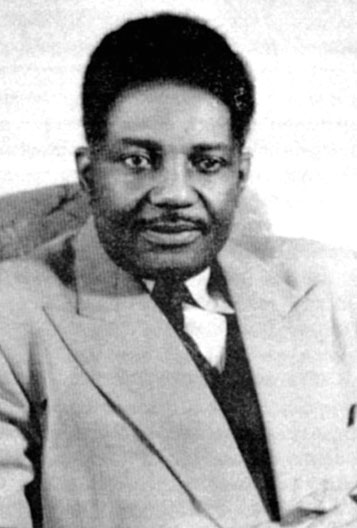
(Born [?]1900, Buxton, Guyana; dies 18 Dec 1983, Nairobi, Kenya) Geologist, historian and influential Africa World intellectual, co-organiser, with Kwame Nkrumah and others, of the landmark 1945 Manchester (England) conference of leading African-descent intellectuals and contributes to the work on the formation of the Organisation of African Unity, 1963 Twitter @HerbertEkweEkwe
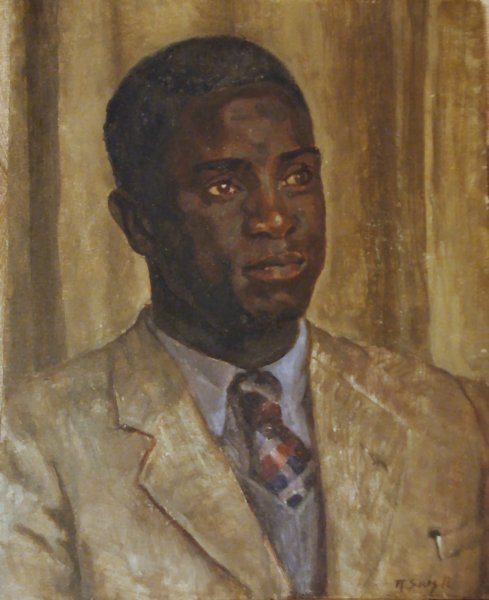
Historian, doyen of the Reconstructionary School of African Historical Studies in the aftermath of 400 years of the pan-European enslavement, conquest and occupation of the African world, lays the foundation of this restoration of the African as subject and agency in history in the 1956 publication of his classic, Trade and Politics in the Niger Delta, 1830-1885, inaugurates a stretch of an encompassing African heritage archive and becomes the first African vice-chancellor (president) of the University of Ibadan, and later, 1967-1969, travels the world as one of the envoys of eminent Biafran intellectuals who campaigns against the Igbo genocide waged by Nigeria and its allies, particularly Britain, in which 3.1 million Igbo people (one-quarter of this nation’s population) are murdered between 29 May 1966 and 12 January 1970 Twitter @HerbertEkweEkwe
Multifaceted drummer who, in 1957, joins the jazz workshop (often varying from a quintet, sextet, octet and dectet) of brilliant bassist, cellist and composer Charles Mingus, and both embark on one of the most enduring and resourceful artistic collaborations of recent times, recording over 30 albums in 22 years involving several influential instrumentalists in the repertoire
Charles
Mingus Sextet with Eric Dolphy Cornell 1964, “Orange was the color
of her dress, then blue silk” [personnel: Mingus, bass; Johnny Coles, trumpet;
Dolphy, bass clarinet; Clifford Jordan, tenor saxophone; Dannie Richmond, drums;
recorded live, CornellUniversity, 18 March 1964])
Brilliant
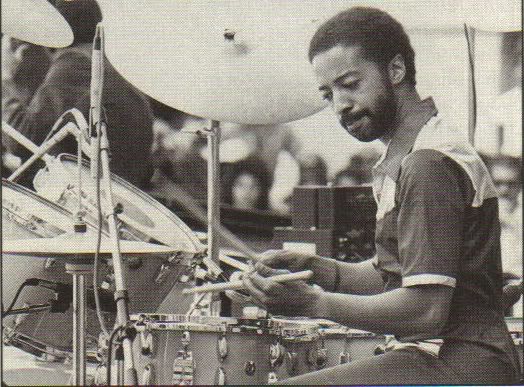
drummer, composer and bandleader, child prodigy who, in 1963, just 17, joins
the Miles Davis Second Great Quintet (full personnel: Davis, trumpet; Wayne Shorter, tenor
saxophone; Herbie Hancock, piano; Ron Carter, bass; Williams, drums)
(Tony
Williams Quartet, “Extras” [personnel: Williams, drums; Wayne Shorter, tenor
saxophone; Sam Rivers, tenor saxophone; Gary Peacock, bass; recorded: Van
Gelder Studio, Englewood Cliffs, NJ, US, 12 August 1965])
(Born 11 December 1938, Philadelphia, United States)
One of the most influential pianists since the 1960s, occupies the piano chair of the classic John Coltrane Quartet (full personnel: Coltrane, tenor and soprano saxophones; Tyner, piano; Jimmy Garrison, bass; Elvin Jones, drums), 1960-1965, and subsequently records own key signature albums (Real McCoy, Time for Tyner, Extensions, Tender Moments, Sahara, Blues for Coltrane, plays John Coltrane at The Village Vanguard, Remembering John, Revelations, Infinity, 44th Street Suite, Illuminations, Expansions, Live in Warsaw, Round Midnight, Soliloquy, plays Duke Ellington, Today and Tomorrow, Nights of Ballads and Blues, Love and Peace, Land of the Giants) in varying group contexts such as trios, quartets, quintets, sextets, nonets, big band, solo
(McCoy Tyner Quartet, “Contemplation” [personnel: Tyner, piano; Joe Henderson, tenor saxophone; Ron Carter, bass; Elvin Jones, drums; recorded: Van Gelder Studio, Englewood Cliffs, NJ, US, 21 April 1967])
The
egomaniacal Nigerian genocidist commander in south Igboland (1968-1970) who
murdered hundreds of thousands of Igbo, destroyed innumerable Igbo towns and
villages in the region, and ordered the shooting down of a relief-bearing
international Red Cross aircraft to the besieged Igbo (June 1969), has just
published another of his signature “My”-escapades! Page after page in his first
“My”, released in 1980, the génocidaire unwittingly (some would be less
charitable in their choice of adverb) implicates himself, severally, in this
heinous crime. His has since become one of the most predictable sources of the
raw temperament of evil interpellated in the planning and execution of this
foundational genocide of post-(European)conquest Africa in which 3.1 million
Igbo people or one-quarter of this nation’s population were murdered by
Nigeria.
Igbo
genocide scholars and researchers will surely be poring over the latest “My” to
unearth any follow-up insights on the crime from this treasure trove.
(JohnColtrane Quartet, “Ogunde” [personnel: Coltrane, tenor saxophone; Alice Coltrane, piano; Jimmy Garrison, bass; Rashied Ali, drums; recorded: Van Geldar Studio, Englewood Cliffs, NJ, US, 7 March 1967])
Herbert Ekwe-Ekwe is specialist on the state and on genocide & wars in Africa in the post-1966 epoch – beginning with the Igbo genocide, 29 May 1966-present day, the foundational and most gruesome genocide of post-(European)conquest Africa. 3.1 million Igbo or 25 per cent of this nation’s population were murdered by Nigeria and its allies, principally Britain. Africa and the rest of the world largely stood by and watched as the perpetrators enacted this horror most ruthlessly. The world could have stopped this genocide; the world should have stopped this genocide. This genocide inaugurated Africa’s current age of pestilence. During the period, 12 million additional Africans have been murdered in further genocide in Rwanda (1994), Zaïre/DRCongo (variously, since the late 1990s) and Darfur – west of the Sudan – (since 2004) and in other wars in Africa. African peoples have, presently, no other choice but exit/dismantle the extant genocide-state (the bane of their existence & progress) & construct own nation-centred states that serve their interests. He is author of several books & papers on the subject and his new book is entitled The longest genocide – since 29 May 1966 (2019).