Wednesday, 10 May 2017

83rd birthday of Jayne Cortez

(Born 10 May 1934, Fort Huachuca, Arizona, US)
DISTINGUISHED prolific poet and word-performing artist, freedom activist, publisher
(1. Mother and son: Jayne Cortez Duo, “Find your own voice” [personnel: Cortez, voice; Denardo Coleman, drums; recorded: live, The Sanctuary for Independent media, Troy, New York, US, 23 October 2010])
 (2. Mother and son: Jayne Cortez Duo, “She got he got” [personnel: Cortez, voice; Coleman, drums; recordings and other details as in “1” above])
Twitter @HerbertEkweEkwe

Tuesday, 9 May 2017

Now’s the time! Review of John Coltrane Quartet, “Vigil” or “Modal excursion” in the light of the ongoing breathtaking resilient insistence of the Biafra freedom movement


Herbert Ekwe-Ekwe

(Review of John Coltrane Quartet, “Vigil” or “Modal excursion”, live performance, Comblain-La-Tour, Belgium, 1 August 1965 [personnel: Coltrane, tenor saxophone; McCoy Tyner, piano; Jimmy Garrison, bass; Elvin Jones, drums])

BASSIST Jimmy Garrison (below) appears to have just walked onto the bandstand, steadying and steadying that instrument of his as he plays with deftness and assiduousness as Coltrane, on tenor, begins the timely conversation with Elvin Jones on drums. Coltrane soars and soars in this continuously creative polytonal torrent of sound that is unmistakeably his signature. His commentary on the crucial challenges of his day is profoundly honest, insistent, multilayered and optimistic, a mood shared equally by the exhilarating inventiveness of Jones’s drumming. Note the resultant sweating and sheer exhaustion of the duo even before Coltrane’s brief break!

As McCoy Tyner, on piano, joins the conversation, he takes 20-30 seconds of dizzying phrasing to restate the cardinal theme of the excursion and then essays his own contribution along a serene plateau of disarming contemplation, punctuated by Garrison’s impeccable percussive engagement and Jones’s continuing testament.

COLTRANE finally returns for the quartet to studiously sum up the goal for the vigil by declaring firmly and unreservedly: “Now’s the time!”

Today, we are most honoured and privileged to have inherited the priceless legacy of these selfless geniuses.
(Here, John Coltrane Quartet plays “Vigil”, live, Comblain-La-Tour, Belgium, 1 August 1965)
 Twitter @HerbertEkweEkwe

103rd birthday of Mbonu Ojike

(Born 5 May 1914, Arundizuogu, Biafra)
Herbert Ekwe-Ekwe

CELEBRATED AFRICAN peoples-centred intellectual, graduate of University of Chicago, arguably the profoundest political economic thinker in the provisional restoration-of-independence government of (British occupied) east region Nigeria, home of the historic Igbo village republican democratic states that had flourished for over a millennium; minister of economic development and planning and architect of the 1947-1966 transformation of this pre-Igbo genocide political economy to Africa’s most dynamic with immense possibilities.

The Ojike Plan had envisaged a 20-year timeframe, beginning in 1954, during which the east would be transformed into an advanced multifaceted industrial and agricultural economy. Such was the impressive pace of this programme that, by 1964, ten years later, the overall economic performance of the east had not only outstripped the rest of Nigeria but was in fact Africa’s fastest growing economy. The east had the best schools and the first independent university system in the country, the best humanpower development in the country across a range of fields including, crucially, engineering, medicine, the arts, and the middle-range technical cadre. 

The region also had the most integrated infrastructural development in Nigeria and its manufacturing, distributive and extractive enterprises centred in the Enuugwu-Nkalagu-Emene conurbation to the north, Onicha (commercial capital and home to the future Oshimili stock exchange and index) to the west and Igwe Ocha-Aba-Calabar to the south were clearly the hubs of the making of this African industrial revolution of recent history. But for the Igbo genocide, launched by Britain and its Hausa-Fulani islamist north region-led Nigeria client state on 29 May 1966 and continuing as these lines are written, 51 years on, with the murder of 3.1 million Igbo or 25 per cent of the Igbo population during the first three phases of the crime (29 May 1966-12 January 1970), the east was on course to construct the “Taiwan” or the “China” or the “South Korea” or the “India” in Africa – 20 years before these post-World War II much-vaunted “economic transformational miracles” of the era emerged...

The main thrust of this plan is still valid and should be retrieved from the archives, reworked, and adapted by the ongoing Biafra freedom movement to 21st century priorities and the advantage of new technologies. This phase would appropriately be Ojike Plan II.
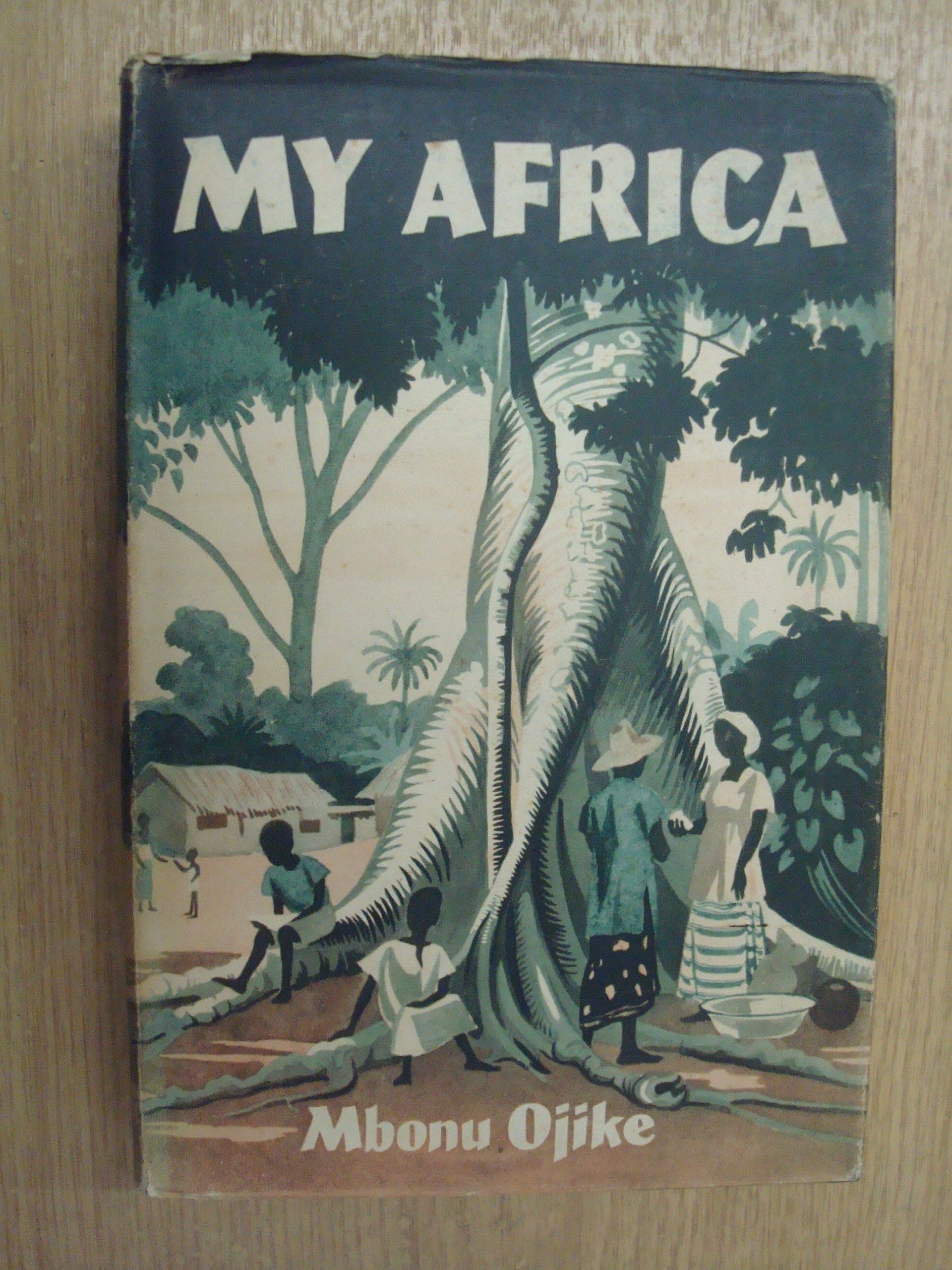
(Mbonu Ojike, My Africa, 1946)
(Sam Rivers Quintet, “Mellifluous cacaphony” [personnel: Rivers, tenor saxophone; Freddie Hubbard, trumpet;  Herbie Hancock, piano; Ron Carter, bass; Joe Chambers, drums; recorded: Van Gelder Studio, Englewood Cliffs, NJ, US, 21 May 1965])
 Twitter@HerbertEkweEkwe

202nd birthday of Martin Delany

(Born 6 May 1815, Charles Town, Virginia, US)
INFLUENTIAL African freedom nationalist, physician, writer, who notes, memorably, “every people should be originators of their own destiny” – the very breathtaking resilient resolve that powers the ongoing Biafra freedom movement in southwestcentral Africa
(Charles Mingus Sextet – with Eric Dolphy, Cornell University 1964, “Meditations” [personnel: Mingus, bass; Johnny Coles, trumpet; Dolphy, flute, bass clarinet; Clifford Jordan, tenor saxophone; Jaki Byard, piano; Dannie Richmond, drums; recorded: live, Cornell University, 18 March 1964]) 
Twitter@HerbertEkweEkwe

80th birthday of Ron Carter

(Born 4 May 1937, Ferndale, Michigan, US)
BASSIST, cellist, composer, bandleader, academic, arguably the most recorded jazz bassist and member of Miles Davis Second Great Quintet, 1963-1968 (Davis, trumpet; Wayne Shorter, tenor saxophone; Herbie Hancock, piano; Carter, bass; Tony Williams, drums)
(Miles Davis Quintet plays Ron Carter’s composition, “RJ” [personnel: Davis, trumpet; Shorter, tenor saxophone; Hancock, piano; Carter, bass; Williams, drums; recorded: Columbia Studios, Hollywood, Los Angeles, US, 20 January 1965])
Twitter @HerbertEkweEkwe

Monday, 8 May 2017

97th birthday of John Lewis

(Born 3 May 1920, La Grange, Illinois, US)
DISTINGUISHED pianist, composer, arranger and musical director of the seminal Modern Jazz Quartet (Lewis, piano; Milt Jackson, vibraphone; Percy Heath, bass; Connie Kay, drums) for over 40 years beginning in 1952
(Modern Jazz Quartet, “Django” [personnel: Lewis, piano; Jackson, vibraphone; Heath, bass; Kay, drums; recorded: Music Inn, Lenox, Mass and Capitol Studios, New York, US, 22, 25 August and 21 December 1959 and 15 January 1960)
Twitter @HerbertEkweEkwe

173rd birthday of Elijah McCoy

(Born 2 May 1844, Colchester, Ontario, Canada)
Mechanical engineer, versatile inventor (especially lubricants) with over 50 recorded (US) patents
(Sam Rivers Sextet, “Helix” [personnel: Rivers, tenor saxophone; Donald Byrd, trumpet; James Spaulding, alto saxophone;  Cecil McBee, bass; Steve Ellington, drums; recorded: Van Gelder Studio, Englewood, NJ, US, 17 March 1967])
Twitter @HerbertEkweEkwe