Rethinking Africa is a forward looking blog dedicated to the exchange of innovative thinking on issues affecting the advancement of African peoples wherever they are. We provide rigorous and insightful analyses on the issues affecting Africans and their vision of the world.
Showing posts with label “Gary’s notebook”. Show all posts
Showing posts with label “Gary’s notebook”. Show all posts
Herbert Ekwe-Ekwe PHARMACIST and one of Africa’s most prolific writers with particular interest in the exploration of urban life and its immense challenges – may have inaugurated the Onicha (Biafra Oshimili Delta) market literary genre with his 1947-published Ikolo the Wrestler and other Igbo Tales and When Love Whispers (see Emmanuel Obiechina, An African Popular Literature,1973: 3), subsequently publishing over 20 novels (including People of the City [1954], The Drummer Boy [1960], Jagua Nana [1961], Burning Grass [1961], Beautiful Feathers [1963], Iska [1966], Jagua Nana’s Daughter [1993]), innumerable short stories (including several adapted for radio and television), and children’s books
(Lee Morgan Quartet, “Gary’s notebook” [personnel: Morgan, trumpet; Joe Henderson, tenor saxophone; Barry Harris, piano; Bob Cranshaw, bass; Billy Higgins, drums; recorded: Van Gelder Studio, Englewood Cliffs, NJ, US, 21 December 1963])
TOWERING goalkeeper of the indomitable Enuugwu Rangers International, the football club, during the 1970s-1980s, which, arguably, most symbolises the dogged and resilient spirit of Igbo people in the wake of the cataclysmic genocide, 29 May 1966-12 January 1970, the foundational genocide of post-(European)conquest Africa, when Nigeria and its suzerain state Britain led by Prime Minister Harold Wilson murder 3.1 million Igbo or 25 per cent of this nation’s population
(Lee Morgan Quintet, “Gary’s notebook” [personnel:Morgan,trumpet; Joe Henderson, tenor saxophone;Barry Harris, piano;Bob Cranshaw, bass; Billy Higgins, drums; recorded: Van Geldar Studio, Englewood Cliffs, NJ, US, 21 December 1963])
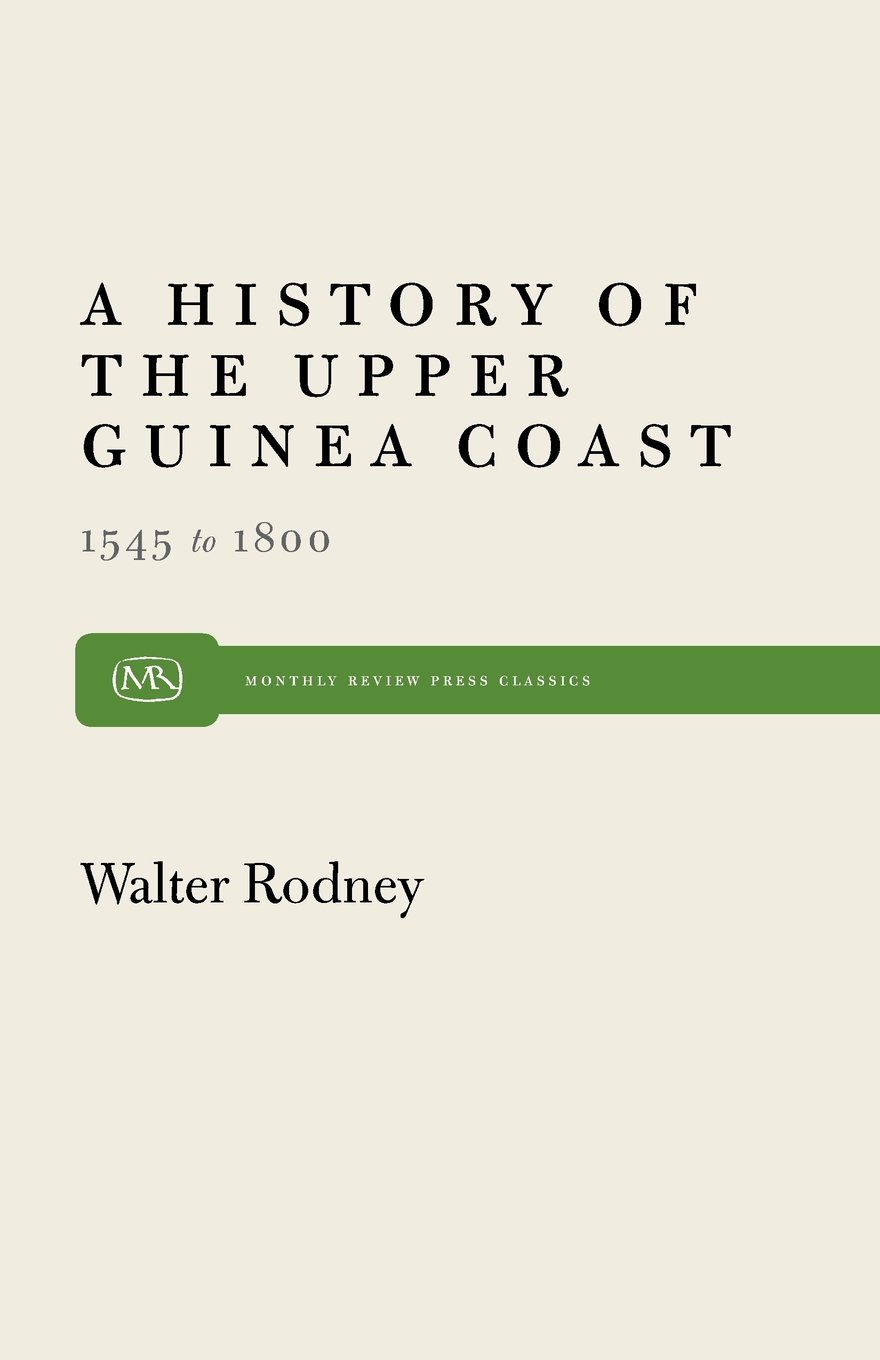
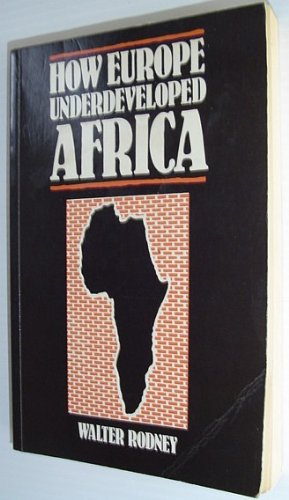
One of Africa’s preeminent historians whose A History of the Upper Guinea Coast, 1545-1800 (1970) and How Europe Underdeveloped Africa (1972) are compulsory references in the study of Africa and African peoples worldwide of the past 500 years
(Lee Morgan Quartet, “Gary’s notebook” [personnel: Morgan, trumpet; Joe Henderson,
tenor saxophone; Barry Harris,
piano; Bob Cranshaw,
bass; Billy Higgins,
drums; recorded: Van Gelder Studio, Englewood Cliffs, NJ, US, 21 December
1963])
Herbert Ekwe-Ekwe WHATEVER HAPPENED to Sweden-Norway, Czarist Russia,
Austro-Hungarian empire, the Ottoman empire, the British empire, British India, French
Indo-China, Portuguese empire, Spanish empire and, more latterly, Anglo-Egyptian Sudan, Malaysian Federation, West Indian Federation, Central African Federation, British Cameroons, United Arab Republic, Senegambia Confederation, the Soviet Union, the Warsaw Treaty states, Czechoslavakia, Josip
Broz Tito’s Yugoslavia, etc., etc?
Each and everyone of these no longer exists. Gone! Each of them collapsed,
somewhere, along their march in history… What happened to the constituent
peoples in these states that no longer exist? The constituent peoples exist in
innumerable new states with names beginning with and from “A” to “Z”. Kosovo vs Fegge, Onicha WHY did
the Polish state disappear from the world map for 123 years (yes, one hundred
and twenty-three years!) until its reappearance in 1918? Answer: Gobbled up by predator
states, chiefly Czarist Russia. What happened to the Polish people during this
century and twenty-three years of varying conquest and occupation? The Poles
survived, bidding their time for the restoration of their independence. What
could happen to the United
Kingdom as from September 2014? The United Kingdom could cease to exist as the world
has known it as a “union” incorporating Scotland since 1707, if a simple majority
of the 5 million Scottish people votes “yes” in a restoration-of-independence
referendum to be held in the country then. If the Scots leave the UK later on in the year, their state will be the
25th new state that would emerge in Europe
since 1991. The last one, in 2008, is Kosovo, with a population of 1.8 million which
is less than that of the Fegge district of Onicha, the great market town on the
Oshimili River of southwest Biafra. In history, therefore, states have actually
been transient formations. It is to human beings that survival belongs, provided
no genocidist amalgam plans to wipe out a targeted group of them…
(John
Coltrane Quartet, “The promise” [personnel: Coltrane, soprano saxophone; McCoy
Tyner, piano; Jimmy Garrison, bass; Elvin Jones, drums; recorded: live radio
broadcast, Liederhalle, Stuttgart, Germany, 4 November 1963])
Inalienable, 1001 states
The right to self-determination is for every people.
It is inalienable and is guaranteed by the United Nations. No people is exempt
from exercising this right. This is why
the slogan that proclaims such gibberish as “indivisibility”/“indissolubility”/“indestructibility”
of a state, any state, is not really worth the paper it is written on except of
course it is an embedded code by a slaughtering-horde for the plot of the next
pogrom or the reinforcement of the terror of an ongoing genocide. As everyone knows, the states that Europe created in Africa, in
the aftermath of its 1884-1885 Berlin
conqueror-conference, cannot provide the fundamental needs of Africans. This “Berlin-state”, with its bumbling ahistorical name (Nigeria, Niger, Guinea, the Sudan, Chad,
whatever!), cannot lead Africans to the
reconstructive changes they deeply yearn for after the tragic history of
centuries of occupation. Such change was and never is the mission of this state
but instruments to expropriate and despoil Africa
by the conquest. Essentially, the
“Berlin-state” still serves the interests of its creators and those of the
ruthless cabal of African-overseers which polices the dire straits of existence
that is the lot of Africans currently.
AS IN BERLIN,
the state is not a gift from the gods. On the contrary, the state is a
relationship painstakingly formulated and constructed by groups of human beings
on our planet earth to pursue aspirations and interests envisioned by these same
human beings within a shared historical and geographical articulation. The African humanity
is presently gripped in a grave crisis for survival. It is now time that it
abandoned the contrived “Berlin-state” in order to survive. This state is a bane of African existence. African nations,
namely the Igbo, Ijo, Wolof, Ibibio, Asante,
Baganda, Bakongo, Gĩkũyũ, Bambara, Luo, etc., etc, remain the basis for the
regeneration of Africa’s development. These
nations are the sites of the continent’s intellectual and other cultural
creativity. What is being stressed here is that African peoples, themselves,
must each decide on the issue of sovereignty in the post-“Berlin-state” epoch even
if the outcome were to lead to the creation of 1001 states in Africa–
or more. IN THIS epoch of freedom, any African peoples who, for instance,
wishes to chart a future based on the precepts of their forebears in the 12th
century Contemporary Era (CE) or even way back to say, 8th century Before Contemporary Era (BCE), has the
right to pursue this goal. Equally any African peoples who believes that their
aspirations lie in working through challenges of the 21st century CE and
projecting targets of creativity and transformations subsequently, must
exercise this right. To achieve the
goal(s) of any of the stipulated paths does not require anyone embarking on
murdering someone else or having themselves murdered. For the future survival of the African
humanity, let no more die for the path to the civilisation, howsoever this civilisation a people chooses is construed. It surely can be attained and sustained without committing a crime, particularly genocide –
a crime against humanity. THE FLOURISHING age of organically articulated African-own states to really transform
depressing African fortunes in the contemporary world has already begun.
(Lee Morgan Quintet, “Gary’s notebook” [personnel: Morgan, trumpet; Joe Henderson, tenor saxophone; Barry Harris, piano; Bob Cranshaw, bass; Billy Higgins, drums; recorded: Van Gelder Studio, Englewood Cliffs, NJ, US, 21 December 1963])
Herbert Ekwe-Ekwe is specialist on the state and on genocide & wars in Africa in the post-1966 epoch – beginning with the Igbo genocide, 29 May 1966-present day, the foundational and most gruesome genocide of post-(European)conquest Africa. 3.1 million Igbo or 25 per cent of this nation’s population were murdered by Nigeria and its allies, principally Britain. Africa and the rest of the world largely stood by and watched as the perpetrators enacted this horror most ruthlessly. The world could have stopped this genocide; the world should have stopped this genocide. This genocide inaugurated Africa’s current age of pestilence. During the period, 12 million additional Africans have been murdered in further genocide in Rwanda (1994), Zaïre/DRCongo (variously, since the late 1990s) and Darfur – west of the Sudan – (since 2004) and in other wars in Africa. African peoples have, presently, no other choice but exit/dismantle the extant genocide-state (the bane of their existence & progress) & construct own nation-centred states that serve their interests. He is author of several books & papers on the subject and his new book is entitled The longest genocide – since 29 May 1966 (2019).