Twitter @HerbertEkweEkwe
Showing posts with label 29 May 1966-12 January 1970. Show all posts
Showing posts with label 29 May 1966-12 January 1970. Show all posts
Sunday, 3 May 2015
May is Igbo genocide month of remembrance – Salute to intellectuals who worked tirelessly in defence of the people during this most catastrophic epoch in Igbo history (29 May 1966-12 January 1970)
Chukwuemeka Odumegwu-Ojukwu Flora Nwapa Louis Mbanefo Chinua Achebe Christopher Okigbo Michael Echeruo Ifeagwu Eke SJ Cookey Sam Mbakwe Janet Mokelu Obiora Udechukwu Uche Chukwumerije Kalu Ezera Philip Efiong Kamene Okonjo Ignatius Kogbara Alvan Ikoku Celestine Okwu Benedict Obumselu Donatus Nwoga NU Akpan Adiele Afigbo Michael Okpara Chukwuka Okonjo Akanu Ibiam Bede Okigbo Okoko Ndem Agwu Okpanku Tim Onwuatuegwu Chudi Sokei Pol Ndu Ben Gbulie Boniface Offokaja Chuks Ihekaibeya Conrad Nwawo Dennis Osadebe Osita Osadebe Eme Awa Chuba Okadigbo Okechukwu Ikejiani Uzo Egonu Winifred Anuku Anthony Modebe Alex Nwokedi Zeal Onyia Chukwuedo Nwokolo Pius Okigbo Godian Ezekwe Felix Oragwu Ogbogu Kalu Kevin Echeruo Emmanuel Obiechina Uche Okeke Chukwuma Azuonye Onuora Nzekwu Chukuemeka Ike Eddie Okonta Cyprian Ekwensi Nkem Nwankwo John Munonye Gabriel Okara Kenneth Onwuka Dike Eni Njoku Okechukwu Mezu William Achukwu Kalu Nsi
Twitter @HerbertEkweEkwe
Twitter @HerbertEkweEkwe

Tuesday, 4 February 2014
Tuesday, 18 December 2012
Who is my friend with my history?
Last night friends, colleagues
and families converged on the picturesque market town of Henley-on-Thames, west
of London, to celebrate Chinua Achebe’s incomparable and irrepressible There
was a Country. A spontaneous rendering by all gathered of a popular Igbo
chorus on a variation on the theme of “Happy Survival”, appropriately the Igbo
post-genocide survival anthem, launched the party.
There was a Country is an
indefatigable reminder to an oft-complacent world of the gruesome and
devastating Igbo genocide of 29 May 1966-12 January 1970 and the incredible
survival of Igbo people. 3.1 million Igbo or a quarter of this nation’s
population were murdered by the Nigeria state and its domestic and foreign
allies during these 44 months of the foundational genocide of
post-(European)conquest Africa. It is precisely this dual-track mission of There
was a Country that has been most troubling to those fanged assailants of
Achebe’s memoirs. Any reminder of the Igbo genocide and, particularly, the Igbo
survival therefrom, riles the sensibilities of assailants whose life’s quest is
to continue to dart around the crumbling edifice of a doubtful sage, more
demonstrably a genocidist “theorist” who insensately advocated and co-supervised the
murder of 3.1 million children, women and men. This marks the beginning of
Africa’s current age of pestilence. What a burden of a legacy for anyone to
wish to prop up; truly, a dreadfully punishing ordeal.
It is instantly recognisable by
everyone that the Igbo survival from the genocide is a monumental repudiation
of this legacy whatsoever guises it appears to be recycled. This is pointedly
what the assailants of There was a Country are struggling to come to
terms with.
Igbo will never forget. Happy
Survival! Land of the Rising Sun.
Tuesday, 16 November 2010
Andrew Young, Obasanjo and the Nobel
(originally published in nigeriaworld.com, 5 March 2007)
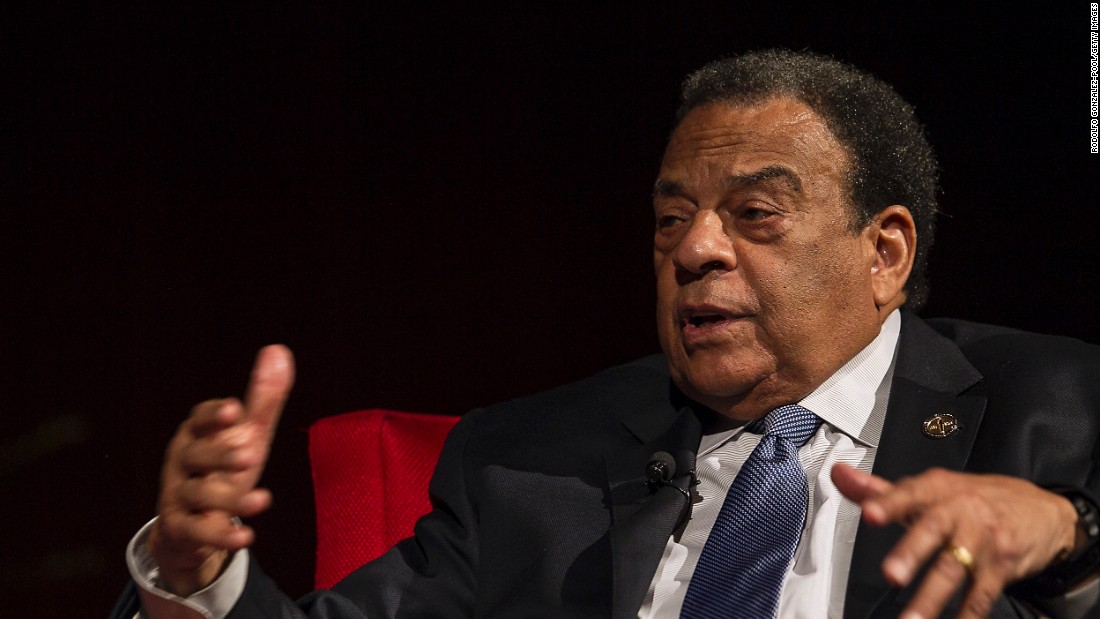
Herbert Ekwe-Ekwe
Primer genocide state
THE RECENT declaration by Andrew Young, the US-based pro-Obasanjo lobbyist, confidant and business associate, that he and other members of his obusonjoist lobbying/contracting outfit are campaigning for Olusegun Obasanjo, Nigeria’s head of regime, to be awarded the 2007 Nobel Prize for Peace is arguably the most outrageous intervention in African affairs of the past 12 months.
For the Nobel award committee to even begin to consider giving its distinguished peace prize to any leader of Africa’s genocide-states is utterly inconceivable. This is more seriously the case if the leader being so considered is from Nigeria, the continent’s primer genocide-state and inaugurator of the grave emergency that threatens African existence currently. The Nigeria state carried out the Igbo genocide of 1966-1970 in which 3.1 million Igbo people were murdered. Since then, 12 million other Africans have been slaughtered in genocidal rampages and other murders sponsored/perpetrated by African regimes and their allies from Sierra Leone and Liberia in the west, through to the Sudan, Rwanda and the Congos in the centre and Uganda in the east.
One would be forgiven if one thought that this “Obasanjo-for-Nobel” initiative was the brainchild of the founder of a neo-Broederbond executive who gloated over the dreadful existence that African peoples have been reduced to by the ruthless African-led regimes in their midst, and not by a close ally of Martin Luther King, one of the most outstanding African leaders of all time.
IT SHOULD be recalled, to underscore the irony that interpellates the very nexus of the Andrew Young-Olusegun Obasanjo relationship of 30 years, that as Young marched alongside King and other great Africans across US towns and cities 10 years earlier heroically proclaiming and demanding freedom and liberation for America’s oppressed African populations, Obasanjo and his pulverising league of sergeants and brigadiers and corporals and colonels and majors and troopers and the like at the other side of the African Atlantic were engrossed in the encirclement and the fire-storming of Igbo towns, cities, villages, everything “that moves or doesn’t move”, to quote the outburst of one of his notorious comrades-in-arms at the time: murdering, raping, burning, looting, wasting 3.1 million Igbo lives in four long years of genocide not seen in Africa since Belgian King Leopold II’s ravages of the countries of the Congo basin during the 19th century. The Young-Obasanjo pact is therefore a relationship that Martin Luther King would have found horrifying; he would have denounced it outright … It is an association that has undoubtedly inflicted an incalculable damage on trans-Atlantic African relations. In the light of the above, Young cannot fail to contend with the distinct possibility that instead of his business associate heading for the European city with the spelling that starts with the alphabet “o”, Oslo, to collect his coveted “peace prize” later this year, he could well terminate his journey at a different city further south – still in Europe, but name beginning with “t”, The Hague: to answer charges at the international criminal court house situated there for genocide and crimes against humanity, committed during the Igbo genocide of 1966-1970. Given Young’s three decades of friendship with Obasanjo, it is not unlikely that either the prosecution team or indeed the Obasanjo’s defence panel might wish to summon Young to The Hague to testify as witness during proceedings.
Young’s 13-step march to the Nobel award committee
SO, as Young prepares his Obasanjo-support dossier for the Nobel award committee, it is unthinkable that he would omit the cardinal features of the Obasanjo legacy in 40 years of “public life” deeply embedded in the Igbo genocide. Young must ensure that he covers the following areas of his subject’s life, as this will be of immense interest to the committee:
1. What is the nature of the Mathew Olusegun Okikiola Aremu Obasanjo-Andrew Jackson Young relationship since it began in the 1970s?
2. What is the nature and extent of Young’s business interests in Nigeria since the 1970s?
3. What does Young know of the infamous fertiliser-import scandal in Nigeria of the 1970s?
4. As Obasanjo’s friend and confidant for 30 years, what does Young know about Obasanjo’s involvement in the Igbo genocide of May 1966-January 1970?
5. In May 1969, at the height of the Igbo genocide, Captain Gbadamosi King of the Nigeria air force, who was attached to an Obasanjo-led rampaging unit in south Igboland, deliberately shot down an International Committee of the Red Cross plane carrying urgently-needed relief supplies to the encircled Igbo, killing all crew on board. Obasanjo, who had known Gbadamosi King for three years before this outrage, remembers the latter with nostalgia – a “dare-devil-pilot”, as Obasanjo notes, quite affectionately, in his memoirs (see, Olusegun Obasanjo, My Command [Lagos and London: Heinemann, 1980], p. 78). Prior to Gbadamosi King’s destruction of the ICRC aircraft, Obasanjo had “challenged” the pilot, as the former recalls sardonically (My Command, p. 78), that Gbadamosi King should “produce results” to stop further international relief flights to break the Nigerian blockade of the Igbo, a crucial plank of the genocidal campaign, to which the pilot “promised to do his best”. A few days after the request, “within a week”, Obasanjo reveals meticulously, “[Gbadamosi King] redeemed his promise” (My Command, p. 79). In the end, Obasanjo’s response to Gbadamosi King’s grim crime was that of perverse satisfaction as he, himself, recalls in My Command: “The effect of [this] singular achievement of the Air force especially on 3 Marine Commando Division [name of Obasanjo-commanded slaughtering unit] was profound. It raised morale of all service personnel, especially of the Air Force detachment concerned and the troops they supported in [my] 3 Marine commando Division” (p. 79). Has advisor Young ever read Obasanjo’s My Command? What does he think? What does advisor Young think should be the world’s response to those who plan and/or approve of the destruction of a clearly marked Red Cross aircraft on a humanitarian mission? What does advisor Young think should be the world’s response to someone who acknowledges the staggering crime of ordering the destruction of a Red Cross plane with such grotesque relish in his memoirs? What does advisor Young think should be the world’s response to Obasanjo and his fellow Nigerian perpetrators, military and civilian, who carried out the Igbo genocide between May 1966 and January 1970?
6. What does advisor Young know of Obasanjo’s pernicious anti-Igbo socio-economic and military programme of 1999-2007? What has been Young’s advice on this policy, which singularly defines the catastrophic tenure of a vile regime?
7. Young has been an unofficial advisor to Obasanjo since 1999. He has an elaborate executive office located at the head of regime residency in Abuja. There is no local (Nigerian) legislative oversight involved in the appointment or maintenance of this position or over the resultant benefits in cash or kind. How much has Young received for these services since Obasanjo was sworn in as head of regime of Nigeria in 1999? Is there a fixed or a more flexible salary? From what budget provisions has he been paid? Who has approved this budget? Whilst Young was an elected 2-term mayor of the US city of Atlanta, could he have appointed a foreigner, say from Turkmenistan, as advisor without approval and oversight from the city council? If not, why not? Could a US president appoint a foreigner, perhaps an Azeri, as his/her advisor with a well-furnished office and support staff at some wing of the White House in Washington without any oversight from Congress and the wider democratic institutions of the US? If not, why not? Would Andrew Jackson Young be able to procure his Abuja-brand appointment in Pretoria, Dakar, Gaborone, Brussels, London, Nouakchott, Ottawa or Alma Ata? If not, why not? What is it about Nigeria and/or Olusegun Obasanjo that ensures that such a crass anti-democratic and illegal process of public office abuse could prevail with impunity?
8. Young is an Obasanjo lobbyist in Washington. How much is he paid annually for his service? How much has he been paid since this assignment began? What exactly does this job entail?
9. In 2005, Obasanjo launched a so-called presidential library in his hometown in west Nigeria. Millions of dollars worth of “donations”, including from corporate organisations especially in oil and engineering-contracting firms located in Nigeria, were raised. Was Young involved in this project? Is Young still involved in this project?
10. Obasanjo has been Nigeria’s minister of petroleum – the key ministry in regime day-to-day business – for most of these eight years of his 2-term tenure of his regime. Does advisor Young know how the hundreds of billions of dollars that accrued to the Nigeria treasury have been spent?
11. Since 1999, 10,000 people have been murdered in Nigeria by the state and its allies. These include a number of prominent public figures such as intellectuals (Chimere Ikoku, Victor Nwankwo) and politicians (Ayo Daramola, Bola Ige, Funsho Williams). In 2003, Chuba Okadigbo, an ex-head of senate and leading Obasanjo critic, died suddenly. Okadigbo’s family has still not ruled out the possibility that the senator was the victim of another political murder of the era. In 2004, Obasanjo ordered an armed attack on the Anambra region of Igboland. It was led by Chris Uba, a self-confessed obusonjoist-operative, during which every conceivable asset of the region’s executive, legislative, judicial, information/communication infrastructure was destroyed. The total cost of this rampage ran into millions of dollars. 30 Igbo people were murdered during the brigandage. Since then, the regime has placed the entire Igbo country under a quasi-state of siege. Of those 10,000 murdered during the life of this regime, the overwhelming majority, possibly 9,000, are Igbo. Does advisor Young know the circumstances of these murders and brigandage?
12. What does advisor Young know of Obasanjo’s expansive plot during 2005-2006 to illegally extend his 2-term regime duration? According to reports in the Nigerian media at the time, the regime resorted to bribing members of the central legislative assembly (US$500,000 for senator; US$400,000 for member of lower house) for the enterprise. The venture collapsed ultimately due to sustained countrywide opposition. Did Young support or was he opposed to the Obasanjo extension scheme?
13. As these lines are written, Obasanjo is feverishly engaged in rigging the forthcoming (April 2007) head of regime elections for his self-appointed “successor”. He had earlier rigged the results of the 2006 countrywide census. Obasanjo has already tagged these elections, quite ominously, as a “do-or-die” affair. Is advisor Young aware of these developments? What does he know? What doesn’t he know?
ANDREW JACKSON YOUNG must now inform an eagerly awaiting world of what his behind-the-scene role has been in the cataclysm that is Nigeria during this long-drawn out age of pestilence – particularly in its obusonjoist 1999-2007 phase.
(Andrew Young ... that Young-Obasanjo pact would have been denounced outright by Martin Luther King)
Herbert Ekwe-Ekwe
Primer genocide state
THE RECENT declaration by Andrew Young, the US-based pro-Obasanjo lobbyist, confidant and business associate, that he and other members of his obusonjoist lobbying/contracting outfit are campaigning for Olusegun Obasanjo, Nigeria’s head of regime, to be awarded the 2007 Nobel Prize for Peace is arguably the most outrageous intervention in African affairs of the past 12 months.
For the Nobel award committee to even begin to consider giving its distinguished peace prize to any leader of Africa’s genocide-states is utterly inconceivable. This is more seriously the case if the leader being so considered is from Nigeria, the continent’s primer genocide-state and inaugurator of the grave emergency that threatens African existence currently. The Nigeria state carried out the Igbo genocide of 1966-1970 in which 3.1 million Igbo people were murdered. Since then, 12 million other Africans have been slaughtered in genocidal rampages and other murders sponsored/perpetrated by African regimes and their allies from Sierra Leone and Liberia in the west, through to the Sudan, Rwanda and the Congos in the centre and Uganda in the east.
One would be forgiven if one thought that this “Obasanjo-for-Nobel” initiative was the brainchild of the founder of a neo-Broederbond executive who gloated over the dreadful existence that African peoples have been reduced to by the ruthless African-led regimes in their midst, and not by a close ally of Martin Luther King, one of the most outstanding African leaders of all time.
IT SHOULD be recalled, to underscore the irony that interpellates the very nexus of the Andrew Young-Olusegun Obasanjo relationship of 30 years, that as Young marched alongside King and other great Africans across US towns and cities 10 years earlier heroically proclaiming and demanding freedom and liberation for America’s oppressed African populations, Obasanjo and his pulverising league of sergeants and brigadiers and corporals and colonels and majors and troopers and the like at the other side of the African Atlantic were engrossed in the encirclement and the fire-storming of Igbo towns, cities, villages, everything “that moves or doesn’t move”, to quote the outburst of one of his notorious comrades-in-arms at the time: murdering, raping, burning, looting, wasting 3.1 million Igbo lives in four long years of genocide not seen in Africa since Belgian King Leopold II’s ravages of the countries of the Congo basin during the 19th century. The Young-Obasanjo pact is therefore a relationship that Martin Luther King would have found horrifying; he would have denounced it outright … It is an association that has undoubtedly inflicted an incalculable damage on trans-Atlantic African relations. In the light of the above, Young cannot fail to contend with the distinct possibility that instead of his business associate heading for the European city with the spelling that starts with the alphabet “o”, Oslo, to collect his coveted “peace prize” later this year, he could well terminate his journey at a different city further south – still in Europe, but name beginning with “t”, The Hague: to answer charges at the international criminal court house situated there for genocide and crimes against humanity, committed during the Igbo genocide of 1966-1970. Given Young’s three decades of friendship with Obasanjo, it is not unlikely that either the prosecution team or indeed the Obasanjo’s defence panel might wish to summon Young to The Hague to testify as witness during proceedings.
Young’s 13-step march to the Nobel award committee
SO, as Young prepares his Obasanjo-support dossier for the Nobel award committee, it is unthinkable that he would omit the cardinal features of the Obasanjo legacy in 40 years of “public life” deeply embedded in the Igbo genocide. Young must ensure that he covers the following areas of his subject’s life, as this will be of immense interest to the committee:
1. What is the nature of the Mathew Olusegun Okikiola Aremu Obasanjo-Andrew Jackson Young relationship since it began in the 1970s?
2. What is the nature and extent of Young’s business interests in Nigeria since the 1970s?
3. What does Young know of the infamous fertiliser-import scandal in Nigeria of the 1970s?
4. As Obasanjo’s friend and confidant for 30 years, what does Young know about Obasanjo’s involvement in the Igbo genocide of May 1966-January 1970?
5. In May 1969, at the height of the Igbo genocide, Captain Gbadamosi King of the Nigeria air force, who was attached to an Obasanjo-led rampaging unit in south Igboland, deliberately shot down an International Committee of the Red Cross plane carrying urgently-needed relief supplies to the encircled Igbo, killing all crew on board. Obasanjo, who had known Gbadamosi King for three years before this outrage, remembers the latter with nostalgia – a “dare-devil-pilot”, as Obasanjo notes, quite affectionately, in his memoirs (see, Olusegun Obasanjo, My Command [Lagos and London: Heinemann, 1980], p. 78). Prior to Gbadamosi King’s destruction of the ICRC aircraft, Obasanjo had “challenged” the pilot, as the former recalls sardonically (My Command, p. 78), that Gbadamosi King should “produce results” to stop further international relief flights to break the Nigerian blockade of the Igbo, a crucial plank of the genocidal campaign, to which the pilot “promised to do his best”. A few days after the request, “within a week”, Obasanjo reveals meticulously, “[Gbadamosi King] redeemed his promise” (My Command, p. 79). In the end, Obasanjo’s response to Gbadamosi King’s grim crime was that of perverse satisfaction as he, himself, recalls in My Command: “The effect of [this] singular achievement of the Air force especially on 3 Marine Commando Division [name of Obasanjo-commanded slaughtering unit] was profound. It raised morale of all service personnel, especially of the Air Force detachment concerned and the troops they supported in [my] 3 Marine commando Division” (p. 79). Has advisor Young ever read Obasanjo’s My Command? What does he think? What does advisor Young think should be the world’s response to those who plan and/or approve of the destruction of a clearly marked Red Cross aircraft on a humanitarian mission? What does advisor Young think should be the world’s response to someone who acknowledges the staggering crime of ordering the destruction of a Red Cross plane with such grotesque relish in his memoirs? What does advisor Young think should be the world’s response to Obasanjo and his fellow Nigerian perpetrators, military and civilian, who carried out the Igbo genocide between May 1966 and January 1970?
6. What does advisor Young know of Obasanjo’s pernicious anti-Igbo socio-economic and military programme of 1999-2007? What has been Young’s advice on this policy, which singularly defines the catastrophic tenure of a vile regime?
7. Young has been an unofficial advisor to Obasanjo since 1999. He has an elaborate executive office located at the head of regime residency in Abuja. There is no local (Nigerian) legislative oversight involved in the appointment or maintenance of this position or over the resultant benefits in cash or kind. How much has Young received for these services since Obasanjo was sworn in as head of regime of Nigeria in 1999? Is there a fixed or a more flexible salary? From what budget provisions has he been paid? Who has approved this budget? Whilst Young was an elected 2-term mayor of the US city of Atlanta, could he have appointed a foreigner, say from Turkmenistan, as advisor without approval and oversight from the city council? If not, why not? Could a US president appoint a foreigner, perhaps an Azeri, as his/her advisor with a well-furnished office and support staff at some wing of the White House in Washington without any oversight from Congress and the wider democratic institutions of the US? If not, why not? Would Andrew Jackson Young be able to procure his Abuja-brand appointment in Pretoria, Dakar, Gaborone, Brussels, London, Nouakchott, Ottawa or Alma Ata? If not, why not? What is it about Nigeria and/or Olusegun Obasanjo that ensures that such a crass anti-democratic and illegal process of public office abuse could prevail with impunity?
8. Young is an Obasanjo lobbyist in Washington. How much is he paid annually for his service? How much has he been paid since this assignment began? What exactly does this job entail?
9. In 2005, Obasanjo launched a so-called presidential library in his hometown in west Nigeria. Millions of dollars worth of “donations”, including from corporate organisations especially in oil and engineering-contracting firms located in Nigeria, were raised. Was Young involved in this project? Is Young still involved in this project?
10. Obasanjo has been Nigeria’s minister of petroleum – the key ministry in regime day-to-day business – for most of these eight years of his 2-term tenure of his regime. Does advisor Young know how the hundreds of billions of dollars that accrued to the Nigeria treasury have been spent?
11. Since 1999, 10,000 people have been murdered in Nigeria by the state and its allies. These include a number of prominent public figures such as intellectuals (Chimere Ikoku, Victor Nwankwo) and politicians (Ayo Daramola, Bola Ige, Funsho Williams). In 2003, Chuba Okadigbo, an ex-head of senate and leading Obasanjo critic, died suddenly. Okadigbo’s family has still not ruled out the possibility that the senator was the victim of another political murder of the era. In 2004, Obasanjo ordered an armed attack on the Anambra region of Igboland. It was led by Chris Uba, a self-confessed obusonjoist-operative, during which every conceivable asset of the region’s executive, legislative, judicial, information/communication infrastructure was destroyed. The total cost of this rampage ran into millions of dollars. 30 Igbo people were murdered during the brigandage. Since then, the regime has placed the entire Igbo country under a quasi-state of siege. Of those 10,000 murdered during the life of this regime, the overwhelming majority, possibly 9,000, are Igbo. Does advisor Young know the circumstances of these murders and brigandage?
12. What does advisor Young know of Obasanjo’s expansive plot during 2005-2006 to illegally extend his 2-term regime duration? According to reports in the Nigerian media at the time, the regime resorted to bribing members of the central legislative assembly (US$500,000 for senator; US$400,000 for member of lower house) for the enterprise. The venture collapsed ultimately due to sustained countrywide opposition. Did Young support or was he opposed to the Obasanjo extension scheme?
13. As these lines are written, Obasanjo is feverishly engaged in rigging the forthcoming (April 2007) head of regime elections for his self-appointed “successor”. He had earlier rigged the results of the 2006 countrywide census. Obasanjo has already tagged these elections, quite ominously, as a “do-or-die” affair. Is advisor Young aware of these developments? What does he know? What doesn’t he know?
ANDREW JACKSON YOUNG must now inform an eagerly awaiting world of what his behind-the-scene role has been in the cataclysm that is Nigeria during this long-drawn out age of pestilence – particularly in its obusonjoist 1999-2007 phase.
(John Coltrane Quartet, “Consequences” – 4th movement in First Meditations {for Quartet} [personnel: Coltrane, tenor saxophone; McCoy Tyner, piano; Jimmy Garrison, bass; Elvin Jones, drums; recorded: Van Gelder Studio, Englewood Cliffs, NJ, US, 2 November 1965])
Twitter @HerbertEkweEkwe
Thursday, 7 October 2010
Freedom, survival and the future
The major preoccupation of an aggressor/conqueror state is to seek to effectuate a process of memory erasure over its overrun nation and land. This is the opportunity for the conqueror to begin to construct a bogus narrative of possession and control of the targeted society that arrogates it to the fictive role of primary agent of the course of history.
The enduring success of Chinua Achebe’s Things fall Apart is that the classic not only anticipates this conqueror’s predilection but it subverts the triumphalism of the latter’s pyrrhic victory. Despite the District Commissioner’s bombastically-titled anthropological treatise at the end of the novel, heralding the latest European “possession and control” of another region of Africa, this time Igboland, the future direction of history here neither lies with the administrator nor his evolving occupation regime – nor indeed with his conquering capital back home in Europe!
To locate the source for change and transformation in Igboland, subsequently, we need to examine, carefully, the import and circumstance of historian Obierika’s address to the administrator on the life and times of his friend and people’s hero, Ogbuefi Okonkwo, who had recently committed suicide. We are reminded that as he speaks, two full sentences into a third, Obierika’s voice “trembled and choked his words”, trailing off into gasps and silences of deep contemplation. It is precisely within the context of these kaleidoscopic frames of Obierika’s recalls and introspection that we discern the sowing of the nation’s regenerative seeds of resistance and quest for the restoration of lost sovereignty. It is therefore not surprising that Okonkwo’s grandchildren would spearhead the freeing of Nigeria, to which Igboland had since been arbitrarily incorporated by the conquest, from the British occupation.
For the aggressor state with a clear genocidal goal, memory erasure of the crime scene at the targeted nation is even more frantically pursued. On the morrow of the conclusion of its execution of the second phase of the Igbo genocide in January 1970, genocidist Nigeria wheeled out pretentious cartographers to embark on erasing the illustrious name, Biafra, from all maps and records that it could lay its hand on! During its meetings, the Gowon genocidist junta in power banned the words “sun”, “sunlight”, “sunshine”, “sundown”, “sunflower”, “sunrise” or any other word-derivatives from the sun star that unmistakably reference the inveterate Land of the Rising Sun. This task and symbolism of “sun-banning” and “sun-bashing” were of course bizarre if not daft as the junta itself was to discover much sooner than later – and from a most unlikely source indeed…
At the time, a British military advisor to the junta, who was out dinning with a senior member of the council in Lagos, unwittingly compared Igbo national consciousness and tenacity with that of the Pole. The advisor, who had studied modern history at university and was a great admirer of the exceptional endurance of Polish people in history, stated that the Igbo had demonstrated similar courage in the latter’s defence of Biafra and that a “rebirth of Biafra is a distinct possibility in my lifetime” – this was unlike the 123 years it took the Polish state to re-appear in history after its disappearance from the world map! The advisor was then in his early 30s and the obvious implications of his Igbo-Polish analysis were not lost on his host. The junta member co-diner was understandably most outraged by the advisor’s crass insensitivity on the subject which he readily shared with his junta colleagues. Predictably, the immediate consequence of the hapless advisor’s impudence was an early recall home to Britain.
There were other bouts of farcical treats on display in Nigeria during the period aimed at erasing the memory of the Igbo genocide. Junta and other state publications and those of their sympathisers would print the name Biafra, a proper noun, with a lower case “b” or box the name in quotes or even invert the “b” to read “p”, such was the intensity of the schizophrenia that wracked the minds of the members of the council over the all important subject of the historic imprint of Igbo resistance and survival.
The Awolowoists and Awolowoids on the junta even toyed with the idea of abolishing money altogether in the economy of the resourceful and enterprising Igbo. They reasoned that this would deliver the final solution that had eluded them during the “encirclement, siege, pounding, and withering away”-strategy of the previous 44 months… They ended up with the “compromise” pittance of £20.00 per the surviving male-head of the Igbo family – a derisory sum, which, they reckoned, stood no chance of averting the catastrophe of social implosion they envisaged would occur in Igboland subsequently. We mustn’t fail to note that the £20.00- handout excluded the hundreds of thousands of Igbo families whose male-heads had been murdered during the period… Dreadfully, the accent placed by Nigeria on this third phase of the genocide, starting from 12 January 1970, was the economic strangulation of the 9 million Igbo survivors… 3.1 million Igbo had been murdered in the genocide between 29 May 1966 and 12 January 1970.
Igbo survival from the genocide is arguably the most extraordinary feature for celebration in an otherwise depressing and devastating age of pestilence in Africa of the past 50 years. Few people believed that the Igbo would survive their ordeal, especially from September 1968 when 8-10,000 Igbo, mostly children and older people, died each day as the overall brutish conditions imposed by the genocidist siege deteriorated catastrophically…
The Igbo were probably the only people in the world who were convinced that they would survive. And when they did, the aftermath was electrifying. In spontaneous celebration, the Igbo prefaced their exchange of greetings with each other for quite a while with the exaltation, “Happy Survival!”: “Happy Survival! Nne”, “Happy Survival! Nna”, “Happy Survival! Nwannem”, “Happy Survival! Nwanna”, “Happy Survival! Nwunyem”, “Happy Survival! Oriaku”, “Happy Survival! Dim”, ‘Happy Survival! Kedu?”, “Happy Survival! Ndeewo”, “Happy Survival! Ke Kwanu?”, “Happy Survival! Odogwu”, “Happy Survival! Okee Mmadu”, “Happy Survival! Dianyi”, “Happy Survival! Umu Igbo”, “Happy Survival! Ndiigbo”.
Igbo survival, at the end, does represent the stunning triumph of the human spirit over the savage forces that had tried determinably for four years to destroy it. Forty years on, first and second generations removed from their parents and grandparents respectively who freed British-occupied Nigeria in 1960 and survived the follow-up genocide, Ogbuefi Okonkwo’s progeny are once again tasked and poised to restore Igbo lost sovereignty. Everyone knows of their firm resolve and ability to achieve this goal. The Igbo can feel it; they feel it. Surely, the successful outcome of this endeavour is the most eagerly awaited news in Africa presently.
The enduring success of Chinua Achebe’s Things fall Apart is that the classic not only anticipates this conqueror’s predilection but it subverts the triumphalism of the latter’s pyrrhic victory. Despite the District Commissioner’s bombastically-titled anthropological treatise at the end of the novel, heralding the latest European “possession and control” of another region of Africa, this time Igboland, the future direction of history here neither lies with the administrator nor his evolving occupation regime – nor indeed with his conquering capital back home in Europe!
To locate the source for change and transformation in Igboland, subsequently, we need to examine, carefully, the import and circumstance of historian Obierika’s address to the administrator on the life and times of his friend and people’s hero, Ogbuefi Okonkwo, who had recently committed suicide. We are reminded that as he speaks, two full sentences into a third, Obierika’s voice “trembled and choked his words”, trailing off into gasps and silences of deep contemplation. It is precisely within the context of these kaleidoscopic frames of Obierika’s recalls and introspection that we discern the sowing of the nation’s regenerative seeds of resistance and quest for the restoration of lost sovereignty. It is therefore not surprising that Okonkwo’s grandchildren would spearhead the freeing of Nigeria, to which Igboland had since been arbitrarily incorporated by the conquest, from the British occupation.
For the aggressor state with a clear genocidal goal, memory erasure of the crime scene at the targeted nation is even more frantically pursued. On the morrow of the conclusion of its execution of the second phase of the Igbo genocide in January 1970, genocidist Nigeria wheeled out pretentious cartographers to embark on erasing the illustrious name, Biafra, from all maps and records that it could lay its hand on! During its meetings, the Gowon genocidist junta in power banned the words “sun”, “sunlight”, “sunshine”, “sundown”, “sunflower”, “sunrise” or any other word-derivatives from the sun star that unmistakably reference the inveterate Land of the Rising Sun. This task and symbolism of “sun-banning” and “sun-bashing” were of course bizarre if not daft as the junta itself was to discover much sooner than later – and from a most unlikely source indeed…
At the time, a British military advisor to the junta, who was out dinning with a senior member of the council in Lagos, unwittingly compared Igbo national consciousness and tenacity with that of the Pole. The advisor, who had studied modern history at university and was a great admirer of the exceptional endurance of Polish people in history, stated that the Igbo had demonstrated similar courage in the latter’s defence of Biafra and that a “rebirth of Biafra is a distinct possibility in my lifetime” – this was unlike the 123 years it took the Polish state to re-appear in history after its disappearance from the world map! The advisor was then in his early 30s and the obvious implications of his Igbo-Polish analysis were not lost on his host. The junta member co-diner was understandably most outraged by the advisor’s crass insensitivity on the subject which he readily shared with his junta colleagues. Predictably, the immediate consequence of the hapless advisor’s impudence was an early recall home to Britain.
There were other bouts of farcical treats on display in Nigeria during the period aimed at erasing the memory of the Igbo genocide. Junta and other state publications and those of their sympathisers would print the name Biafra, a proper noun, with a lower case “b” or box the name in quotes or even invert the “b” to read “p”, such was the intensity of the schizophrenia that wracked the minds of the members of the council over the all important subject of the historic imprint of Igbo resistance and survival.
The Awolowoists and Awolowoids on the junta even toyed with the idea of abolishing money altogether in the economy of the resourceful and enterprising Igbo. They reasoned that this would deliver the final solution that had eluded them during the “encirclement, siege, pounding, and withering away”-strategy of the previous 44 months… They ended up with the “compromise” pittance of £20.00 per the surviving male-head of the Igbo family – a derisory sum, which, they reckoned, stood no chance of averting the catastrophe of social implosion they envisaged would occur in Igboland subsequently. We mustn’t fail to note that the £20.00- handout excluded the hundreds of thousands of Igbo families whose male-heads had been murdered during the period… Dreadfully, the accent placed by Nigeria on this third phase of the genocide, starting from 12 January 1970, was the economic strangulation of the 9 million Igbo survivors… 3.1 million Igbo had been murdered in the genocide between 29 May 1966 and 12 January 1970.
Igbo survival from the genocide is arguably the most extraordinary feature for celebration in an otherwise depressing and devastating age of pestilence in Africa of the past 50 years. Few people believed that the Igbo would survive their ordeal, especially from September 1968 when 8-10,000 Igbo, mostly children and older people, died each day as the overall brutish conditions imposed by the genocidist siege deteriorated catastrophically…
The Igbo were probably the only people in the world who were convinced that they would survive. And when they did, the aftermath was electrifying. In spontaneous celebration, the Igbo prefaced their exchange of greetings with each other for quite a while with the exaltation, “Happy Survival!”: “Happy Survival! Nne”, “Happy Survival! Nna”, “Happy Survival! Nwannem”, “Happy Survival! Nwanna”, “Happy Survival! Nwunyem”, “Happy Survival! Oriaku”, “Happy Survival! Dim”, ‘Happy Survival! Kedu?”, “Happy Survival! Ndeewo”, “Happy Survival! Ke Kwanu?”, “Happy Survival! Odogwu”, “Happy Survival! Okee Mmadu”, “Happy Survival! Dianyi”, “Happy Survival! Umu Igbo”, “Happy Survival! Ndiigbo”.
Igbo survival, at the end, does represent the stunning triumph of the human spirit over the savage forces that had tried determinably for four years to destroy it. Forty years on, first and second generations removed from their parents and grandparents respectively who freed British-occupied Nigeria in 1960 and survived the follow-up genocide, Ogbuefi Okonkwo’s progeny are once again tasked and poised to restore Igbo lost sovereignty. Everyone knows of their firm resolve and ability to achieve this goal. The Igbo can feel it; they feel it. Surely, the successful outcome of this endeavour is the most eagerly awaited news in Africa presently.
Subscribe to:
Posts (Atom)
