Rethinking Africa is a forward looking blog dedicated to the exchange of innovative thinking on issues affecting the advancement of African peoples wherever they are. We provide rigorous and insightful analyses on the issues affecting Africans and their vision of the world.
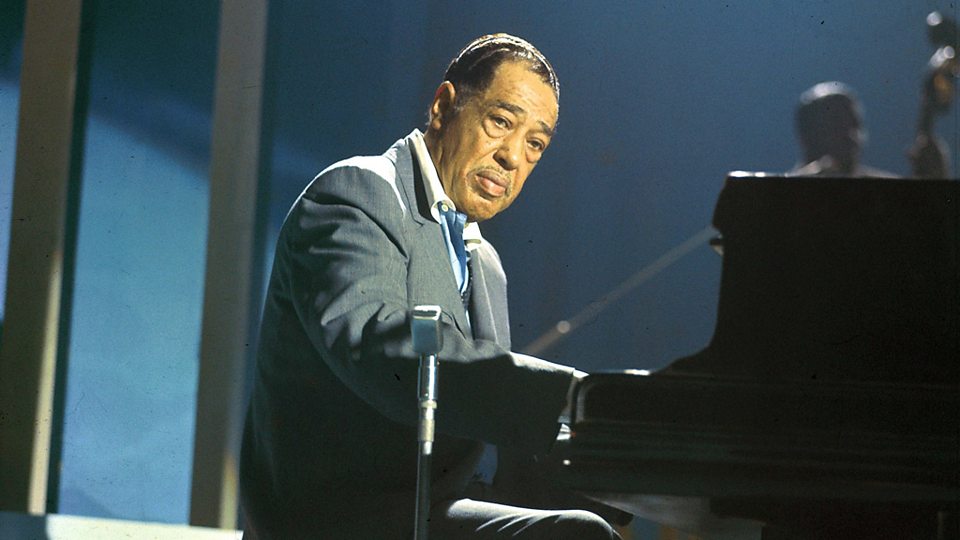
(Born 29 April 1899, Washington, DC, United States)
Pianist and bandleader and one of the preeminent composers of the 20th century
(1. Two masters at work: Duke Ellington & John Coltrane, “Take the Coltrane”) [personnel: Ellington, piano; Coltrane, tenor saxophone; Jimmy Garrison, bass; Elvin Jones, drums; recorded: Van Gelder Stdudios, Englewood Cliffs, NJ, US, 26 September 1962)])
(2. Three masters at work: Duke Ellington Trio, “Fleurette Africaine” {“African flower”} [personnel: Ellington, piano; Charles Mingus, bass; Max Roach, drums; recorded: Sound Makers Studios, (New York, US, 17 September 1962)])
(3.Three masters at work: Duke Ellington Trio, “Warm valley” [personnel: Ellington, piano; Mingus, bass; Roach, drums; recording and other details as in“2” above])
(4.Three masters at work: Duke Ellington Trio, “Money jungle” [personnel: Ellington, piano; Mingus, bass; Roach, drums; recording and other details as in “2” above])
(Born 29 April 1899, Washington, DC, United States)
Pianist and bandleader and one of the preeminent composers of the 20th century
(1. Two masters at work: Duke Ellington & John Coltrane, “Take the Coltrane”) [personnel: Ellington, piano; Coltrane, tenor saxophone; Jimmy Garrison, bass; Elvin Jones, drums; recorded: Van Gelder Stdudios, Englewood Cliffs, NJ, US, 26 September 1962)])
(2. Three masters at work: Duke Ellington Trio, “Fleurette Africaine” {“African flower”} [personnel: Ellington, piano; Charles Mingus, bass; Max Roach, drums; recorded: Sound Makers Studios, (New York, US, 17 September 1962)])
(3.Three masters at work: Duke Ellington Trio, “Warm valley” [personnel: Ellington, piano; Mingus, bass; Roach, drums; recording and other details as in“2” above])
(4.Three masters at work: Duke Ellington Trio, “Money jungle” [personnel: Ellington, piano; Mingus, bass; Roach, drums; recording and other details as in “2” above])
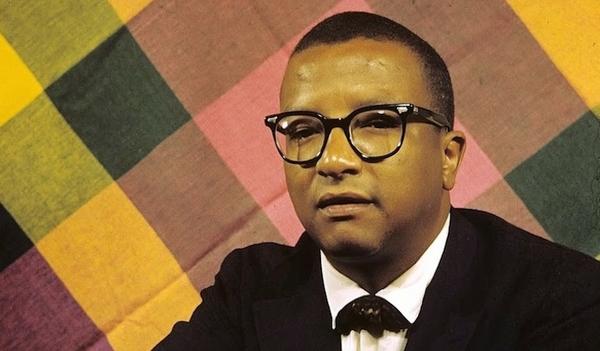
Renowned composer, pianist and arranger whose near 30 years (1938-1967) of collaborative work with composer, pianist and bandleader Duke Ellington has been the focus of expansive recordings, research and publications
(Charles Mingus Sextet, featuring Eric Dolphy, plays theBilly Strayhorn classic composition, “Take the ‘A’ train” [Mingus, bass;Johnny Coles, trumpet; Dolphy, bass clarinet;Clifford Jordan, tenor saxophone; Jaki Byard, piano;Dannie Richmond, drums; recorded: live, University Aula, Oslo, 12 April 1964])
Herbert Ekwe-Ekwe It is no mean achievement that Charles Mingus’s music encapsulates all the critical junctures of jazz. His work with the pioneering geniuses of Charlie Parker, Duke Ellington, Louis Armstrong, Lionel Hampton and Art Tatum in New York of the early 1950s gives Mingus the compositional and arranging insights that would soon be the bassist’s forte.
Few jazz scholars would now disagree that the success of that much discussed May 1953 concert at Toronto’s Massey Hall featuring the Parker Quintet (Parker, alto; Dizzy Gillespie, trumpet; Bud Powell, piano; Mingus, bass; Max Roach, drums) is not just a Parkerian triumph but equally that of the iconoclastic bassist from Los Angeles.
Beginning with Mingus, the bass ceases to be merely an “accompanying” time-keeping, harmonic instrument in jazz. It still has to contend with “time-keeping”, but it has entered into the interplay as a polyphonic participant. The work of subsequent bassists particularly Paul Chambers, Ron Carter, Jimmy Garrison, Scott La Faro, Gary Peacock, Eddie Khan, Charles Haden and Dave Holland attest to this Mingusian redesignation
In 1954, Mingus launched his Jazz Workshop experimentation which was to emphasise more of “group” or “collective” improvisation in jazz, away from what was then increasingly becoming the tedious and formularised “theme-solo-theme” structures of the bebop revolution that had been launched in the 1940s by the Parker-Gillespie-Thelonious Monk troika. As a critic once observed, it was not that Mingus was “avoiding Bebop, he straddled it”. He still had to absorb the great jazz heritage to move the music forward to wrestle with the new possibilities.
Creativity and rehearsals and creativity
It is therefore the case of Mingus trying to return jazz to the “group feeling” of those years of its early development in the closing decades of the 1800s. The soloist still has a great deal of space in Mingus’s thinking but their musical concepts has to develop in anticipation and in response to the polyphony of collective interaction; there are now multisided and multiple centres of creativity soon after that infectious bass intro! The act of creativity is no longer dependent on some space and time limitation. The workshops could not distinguish between rehearsals, for instance, and real performances! Creativity during rehearsals becomes rehearsals of creativity occurring at bandstands with or without an audience (for the latter, listen to the ethereal 1962 album Mingus Presents Mingus, featuring multiinstrumentalist Eric Dolphy). The music is always in a state of flux: evolving, developing, maturing, breaking up, only to form the nucleus of another centre of activity, itself interacting with other centres of the medley.
With the classic Pithecanthropus Erectus album (1956), Mingus gives notice to this sense of continuous creativity – after all, this composition is his portrait of the formulaic development of a cataclysmic human form and the (predictable?) resultant chaos that this produces in the world by the end of the 20th century. Using distinct but unusual forms of squeals, grunts, duets and harmony, the composition exacts a coherent understanding of this tragic travelogue that a 1996 earth inhabitant would perhaps be familiar with (exhaustion/appropriation/destruction of the world’s limited resources, rupture of the ozone layer) than their counterpart 40 years before. The impassioned crystalline-striking lyricism of altoist Jackie McLean, the Rollinsesque rebuttals of tenorist J R Monterose and the plodding, haunting echoes of pianist Mal Waldron strokes keep the narrative of the age on course and there is relief, at the final movement, when the pulverising destroyer falls, is destroyed.
In Blues and Roots album that follows suit, Mingus pays homage to the sacred music of his roots. The rhythmic tension at play by soloists McLean, Booker Ervin (tenor), John Handy (alto) and Jimmy Knepper (trombone) over such compositions as “Tensions”, “Moanin’”, “Cryin’ Blues” and “E’s Flat Ah’s Flat Too” always calls for new insights, ever more challenging interpretations on replays. “Wednesday Night Prayer Meeting” is predictably such a joy and by the time this composition is confronted yet again by a new Mingus personnel line up live in Antibes, Juan-Les-Pins (France) in 1960, detailing Mingus (bass and piano), Ted Curson (trumpet), Dolphy (alto), Ervin (tenor) and Dannie Richmond (drums), it has become the launching pad for intuitive flights and virtuosity.
Commentary
Mingus’s vivid commentaries on contemporary American life and worldwide developments are prolific. These samples range from ballads (“Sue’s Changes”, “1 X-Love”, “Bemoanable Lady”, “Celia”) to the very humorous (“Eat that Chicken”, “Hog Callin Blues”, “Wham Bam Thank You Ma’am”, “Old’ Blues for Walt’s Torin”, “My Jelly Roll Soul”), sentimental/sensuous (“Portrait of Jackie”, “Love Chant”, “Orange was the Color of her Dress, then Blue Silk”, “Peggy’s Blue Skylight”) to outright, politically serious (“Pithecanthropus Erectus”, “Ecclusiastics”, “Passions of a Man”, “Wednesday Night Prayer Meeting”,“Letter to Duke”, “MDM – Monk, Duke, Mingus”, “Oh Lord Don’t Let Them Drop That Atomic Bomb On Me”, “Meditations on Integration”, “All the Things You Could Be By Now If Sigmund Freud’s Wife Was Your Mother”, “Fables of Faubus”, “Haitian Fight Song”, “Weird Nightmare”, “So Long Eric”) and dirge – “Goodbye Pork Pie Hat”, Mingus’s salute to tenorist Lester Young, and of course Epitaph, his 127-minute long composition which was performed posthumously by a 30-piece orchestra at the New York’s Lincoln Center in 1989.
Nearly a decade before critics would use the term “free jazz” to describe the music of revolutionaries such as Ornette Coleman and Don Cherry, John Coltrane, Albert Ayler, Cecil Taylor, etc., etc., the Mingus workshops were already redefining and laying the foundation of new points of departure for jazz. Names of workshops’ alumni read like the priority core zone of the restless and most adventurous innovators of the jazz directory of the era: drummers Willie Jones and Dannie Richmond; trumpeters Clarence Shaw, Richard Williams, Ted Curson and Johnny Coles; altoists Jackie McLean, Charlie Mariano, John Handy, Eric Dolphy (also flute and bass clarinet virtuoso), Charles McPherson; tenorists Teo Marcero, J R Monterose, Roland Kirk, Booker Ervin and Clifford Jordan; trombonist Jimmy Knepper; pianists Mal Waldron, Jaki Byard, Horace Parlan, Roland Hanna.
*****This essay was first published 20 years ago to the day in the African Peoples Review (Vol. V, No. 3, September-December 1996, p. 22) under the signature of Nnamdi Nzegwu. It is reissued here in the original – HE-E
(Charles Mingus Sextet – with Eric Dolphy, Cornell University 1964, “Meditations” [personnel: Mingus, bass; Johnny Coles, trumpet; Dolphy, flute, bass clarinet; Clifford Jordan, tenor saxophone; Jaki Byard, piano; Dannie Richmond, drums; recorded: live, Cornell University, 18 March 1964])
*****{{{{{CAUTION – statement by Rethinking
Africa: This Intersociety report has accompanying VERY DISTURBING
IMAGES OF VIDEO & STILL PICTURES which have
not been included here but are found in the original in the following link which
should
only be viewed at one’s discretion – link to Intersociety Report including graphic images: https://www.thenigerianvoice.com/news/219530/genocide-across-the-niger-how-over-90-biafran-heroes-day-ac.html, accessed 6 June 2016 CAUTION}}}}}*****
International Society for Civil Liberties & Rule of Law
GENOCIDE ACROSS THE NIGER: How Over
90 Biafran Heroes Day Activists Were Massacred By Security Forces & Buried
In Military Cemetery Inside Onitsha Army Barracks
(Onitsha Nigeria, 6th of June
2016)-The leadership of International
Society for Civil Liberties & the Rule of Law (Intersociety) is
deeply alarmed and saddened over the rising shocking casualty figures from the
last Monday (30th of May, 2016) massacre and genocidal butchering of over
120 unarmed and nonviolent citizens of Southeast and South-south regions of
Nigeria by security forces while converging in Onitsha to mark the 2016 session
of the decades old “Igbo (Biafran) Heroes Day Anniversary”.
The widespread State violence
resulting to the genocide, was perpetrated by security forces through
presidential and gubernatorial directives of President Mohammadu Buhari and
Governor Willie Obiano of Anambra State and it was operationally led by Major
C.O. Ibrahim of the Nigerian Military Police at Onitsha Army Barracks, for
Nigerian Army; followed by DCP J.B. Kokomo (DC OPS, Anambra State Police
Command) and DCP Makama (2i/c Anambra State Police Command) and ACP H. Ezekiel
(Onitsha Area Commander) for Nigeria Police Force as well as operational heads
of other members of the Anambra State Joint Security Taskforce.
The general coordination of the
massacre operation was administratively overseen by the Onitsha Military
Cantonment Commander, Col Isah M. Abdullahi (still the Onitsha Army commander)
and Commissioner of Police, Mr. Hosea Karma. The Divisional Police Officers of
Fegge (SP Rabiu Garba), CPS (CSP Jafaru), Inland Town (SP Mark Ijaradu), Okpoko
(CSP Kayode Olabanji) and Ogidi also participated. The operation was conducted
by the Joint Security Taskforce (JTF) of the Government of Anambra State,
involving Nigerian Army in Onitsha; Nigeria Police Force, Anambra State Command
and its SARS Unit; Nigerian Navy, Ogbaru Post; DSS, Nigerian Security &
Civil Defense Corps and the National Drugs Law Enforcement; but was hijacked by
soldiers of the Onitsha Military Cantonment with reinforcements from the 82nd Division
of the Nigerian Army in Enugu; leading to most of the killings perpetrated by
soldiers; most of them jihadist citizens of northern Muslim extraction. The JTF
security operations in the State are funded and chaired by Governor Willie
Obiano in his capacity as the Chief Security Officer of Anambra State.
The vicarious and individual
responsibilities of President Muhammadu Buhari, the Nigerian Army through its
Chief of Army Staff (Lt Gen Tukur Buratai), the Nigeria Police Force through
its IGP (Mr. Solomon Arase) and the Government of Anambra State through its
Governor (Willie Obiano) are expressly contained in their violent orders and
directives against peaceful assemblies and free speeches in Nigeria. The
President, in his capacity as Commander-in-Chief of the Nigerian Armed Forces,
recently issued a violent order to Nigeria’s security forces particularly the
Nigerian Army, to “crush and quell” “unwarranted”, “provoked” and “uncivilized”
assemblies of nonviolent and unarmed nature organized by self determination and
indigenous rights activists in southeast and south-south Nigeria or in any part
of the country. The Nigerian Army, on its part, has operationally tagged such
nonviolent and constitutional assemblies as a “threat to national security” and
“insurrection” or violent uprising against the Federal Republic of Nigeria.
This is contained in its November 2015 operational guidelines.
The Nigeria Police Force, through its
retiring IGP, Mr. Solomon Arase, has also issued two violent directives on 1st December
2015 and 31st May 2016; directing all its zonal and State heads in the
Southeast and the South-south zones to “violently crack down on such
assemblies”; “arrest and charge their organizers for treason”; and “disarm them
and charge them for murder”. Till date, no pro Biafran or Igbo indigenous
rights activist has been caught bearing arms or using or advocating violence in
Nigeria or any part thereof. The Anambra State Police Commissioner, Mr. Hosea
Karma, on his part, has also issued a public statement recently, claiming that
“the activities (peaceful protests and processions) of MASSOB and IPOB in the
State are one of his greatest security challenges”.
Governor Willie Obiano, too, has
severally described peaceful and nonviolent protests and processions organized
by IPOB and its sister bodies as “activities of the hoodlums threatening the
security of Anambra State”. There have been several invasions of meeting places
of IPOB and its sister groups across the State including Nkpor and Obosi by
SARS and soldiers, acting under the directives of the Governor and execution of
their ethnic cleansing agenda against the Igbo Race.
All the violent orders and directives
above mentioned, are unknown to the 1999 Constitution; which firmly guarantees
democratic free speeches and freedoms of peaceful and lawful movement and
assembly. Indigenous and self determination rights and their campaigns are also
guaranteed by the African Charter on Human & Peoples Rights of AU of 1981
as well as the UN Universal Rights Declaration of 1948 and International
Covenants on Civil & Political Rights and the Economic, Social and Cultural
Rights of 1976; provided they are nonviolent and outside the purview of armed
struggle and where armed struggle is resorted to, it is strictly guided by the
Geneva Conventions of 1949, which include the Doctrines of Rules of
Engagement, Use of Force and Self Defense. Nigeria is a State Party to
the above rights treaties till date. These sacred rights and international
obligations are also entrenched in the Principles and Purposes of the United
Nations for the promotion and advancement of international peace and security
as well as the basic standards of international law and other international
human rights and humanitarian treaties.
From our updated casualty records,
apart from over 120 unarmed and nonviolent activists so massacred, over 130
others were deadly injured with automatic rifles loaded and fired with live
bullets; shot at close range and targeted at terminal parts of their bodies.
Scores have gone missing till date while over one hundred of them were arrested
and presently held in the Onitsha Army Barracks, the Special Anti Robbery Squad
(SARS) at Awkuzu, the Nigerian Prisons in Onitsha and the State CID at Awka,
etc. For instance, Twenty-Five of them were dumped in the Onitsha Prisons from
Onitsha Army Barracks and 24 are presently at the State CID. Scores of others
are also held at SARS in Awkuzu and the Onitsha Military Cantonment in Onitsha.
These updates on casualty figures have arisen from facts gathered so far from
our ongoing investigations as well as information ascertained from confided
army, military police and DSS sources.
Generally, from our investigated and
updated accounts, over 200 innocent, nonviolent and defenseless citizens of
mostly Igbo Ethnic Nationality in Nigeria have been shot and killed by the
security forces particularly the Nigerian Army since 30th of August 2015;
a period of nine months and under the Buhari’s Presidency. Sixty percent of
them or at least 120 were massacred on 30th of May 2016 at Nkpor and its
surroundings, Onitsha; and Asaba in Delta State. In the same genocide of 30th of
May, over 130 others were critically shot and wounded; out of which, 79 names
are in our advocacy possession with 29 of them in Asaba alone.
Among those went missing is Citizen
Chikezie Nwodo, who resides in Enugu. Over a dozen late night invasions and
raids have also been carried out by soldiers and SARS operatives in various
homes with scores of them arrested, detained or made to disappear. In all, over
200 innocent and unarmed Igbo indigenous rights and Biafran self determination
activists have been killed the Buhari administration through its security forces
and over 300 others have been deadly shot and wounded within the same period or
in the past nine months. Over 600 have been arrested, tortured and detained
unconstitutionally across the country with many languishing in different
prisons under magistrate court remands after arraigned for capital related
offences such as “treason and treasonable felonies”.
The most dangerous and shocking of it
all is criminal and abominable resort to use of State coercive instruments by
the Buhari administration to organize genocide against citizens of the Igbo
Ethnic Nationality in Nigeria. The State atrocity of last Monday 30th of
May 2016 in Onitsha was and is still shocking and alarming. It can only be
compared to “the Tiananmen Square Massacre” or “June 4 Democracy Massacre” in
China in 1989. Yet, it is worse than the Tiananmen Square Massacre in that
those that were massacred were not of the same tribe or massacred at the same;
which is why Onitsha Massacre of 30th of May 2016 is clearly “an act of
ethnic cleansing and genocide”. Unlike other massacres of 2ndand 17th December
2015 in Onitsha and 9th of February 2016 in Aba; the 30th May 2016
massacre is chillingly horrifying in enormity and governmentally barbarous.
How Over 90 Igbo (Biafran) Heroes Day
Celebrants Were Massacred & Mass-Buried Inside Onitsha Military Cemetery:
A DSS Source: The source who was part of the last Monday (30th of May 2016)
joint operation, hijacked by soldiers; told Intersociety that
the massacre, leading to mass death in the hands of soldiers of over 120
unarmed and nonviolent citizens and injuring of over 130 others was well
coordinated and a joint security operation sanctioned by the Government of
Anambra State, which was hijacked and turned into a slaughter field by soldiers
with ethnic cleansing agenda. That the operation started with medium use of
force (outlawed) in the late night of 29thof May 2016 and in the morning of 30th of
May 2016, the joint security taskforces moved from the Onitsha Army Barracks
and stormed the event venue along Nkpor-Umuoji Road where they met hundreds of
IPOB activists and others who had converged for the Biafran Heroes Day
Anniversary. That they met many of them wailing and crying profusely over the
soldiers’ late night invasion, shooting and killing of some of their members
who squatted and slept at St Edmunds Catholic Primary School Premises.
That at that point, the JTF retreated
to Onitsha Barracks. That their retreat infuriated the Onitsha Military
Cantonment Commander, Col Issah M. Abdullahi, who ordered them back, saying
that they were under a firm order from the C-in-C and the State Governor to
quell the event and ensure it never took place. That he ordered them to clear
the place and all roads, of those “miscreants and hoodlums” and “waste” them if
they proved stubborn and recover their bodies as ordered by the Army and
Government of Anambra State.
That with the firm directive of the
Commander; the JTF, dominated by soldiers and led Major C.O. Ibrahim of the
Nigerian Military Police; stormed the streets and the event venue. That while
other members of the JTF were minimizing the use of force, soldiers recklessly
opened fire at the activists at close range, shooting them indiscriminately and
“wasting “ them mercilessly. That passerby and those in their homes and shops
were not spared. That it got to a point where the activists having seen dozens
of their comrades already laid dead refused to run and offered to be shot and
killed.
That they were massacred mercilessly
by soldiers and that before God, none of the activists was armed. That under
heavy security and panicky atmosphere, the soldiers and police personnel
ensured that all the dead corpses were recovered and taken to Onitsha Barracks.
That by evening of 30th of May 2016, at least 90 bodies of murdered
Biafran Heroes Day celebrants had been taken to Onitsha Barracks and heaped in
batches. That there are two cemeteries inside the Onitsha Army Barracks;
originally reserved for fallen soldiers. That the 90 dead activists are most
likely buried in one of the two cemeteries; preferably the one close to Yahweh
Church inside the Barracks and that the possibility of the dead activists
buried outside the Barracks is very slim.
That in same evening, when the
massacre ended and JTF agencies returned to their bases, 19 citizens including
12 deadly shot victims and their seven relatives and friends were forcefully
taken away from their hospital beds at the Nnewi Teaching Hospital and brought
before the Commissioner of Police, CP Hosea Karma. That the CP addressed his
security sub commanders, labeling them “arrested hoodlums threatening the
security of the State”. That he ordered the 12 deadly shot victims to be
returned to the Nnewi Teaching Hospital and ordered the SARS Commander to take
away for “confessional interrogation” (torture) the seven arrested relatives
and friends of the 12 deadly shot victims. That the corpse of a dead activist
was also brought to the State Command Headquarters at Awka same time and dumped
in its premises; to be thrown off later in the night. That on Thursday, 2nd of
June 2016, between 10.30am and 11am the soldiers stormed the Nnewi Teaching
Hospital again and abducted eight of the deadly shot victims from their
hospital beds and took them to unknown destination till date. That on Friday, 3rd of
June 2016, five citizens with severe bullet wounds were transferred by soldiers
from Onitsha Army Barracks to the State CID and that they were dumped inside
its cell without any form of treatment till date.
A Military Source: That the bodies of over 90 murdered Biafran Heroes Day celebrants
and other members of the public were given secret mass burial inside the
Barracks in one of the two military cemeteries on Wednesday, 1st of June
2016. That it was a noon event under tight security. That the secret mass
burial attracted top army and police officers including DCP OPS (J.B. Kokomo)
and that Anambra State Government was represented by its Commissioner for
Information, Mr. Tony Nnacheta, who arrived the Barracks at about 11.30am. That
a number of graves were dug and the remains of over 90 murdered celebrants
dumped and buried in their numbers.
A Military Police Source: That indeed over 90 dead celebrants and activists received a
secret mass burial in one of the two military cemeteries located inside Onitsha
Barracks, near Yahweh Church, leading to Obosi Town. That the secret mass
burial was performed moments after the arrival of the representative of the
Government and Governor of Anambra State, Mr. Tony Nnacheta, who is also the State
Commissioner for Information. That he also supervised the graves before the
commencement of the secret mass burial. That a total of fifteen graves were dug
with some shallow and others deep and that some graves contained as much as ten
corpses and others as low as five depending on the depth of each grave.
A DSS Source Corroboration: That closed calls made for certainty clearly confirmed the mass burial
inside the Onitsha Army Barracks and on the said date, time, space and place.
A Rescued Citizen’s Corroboration: Mr. Henry Ibebuike Enekwe is an electrical engineer and 32 years
old. He was declared missing in our Coalition (Southeast Based Coalition of
Human Rights Organizations) public statement of 3rd of June 2016
after his abduction by soldiers of the Onitsha Military Cantonment in the
morning of 30th of May 2016 on his way to Enugu, from his Eke-Nkpor base.
Engineer Henry was rushing to Enugu to seal a house wiring contract with a
Lagos based businessman. Happily, Engineer Henry Enekwe regained his freedom in
the evening of Saturday, 4th of June 2016, following our advocacy
intervention and a distress call by the Ebonyi State Directorate of DSS to its
Anambra State counterpart, which led to his rescue from five days captivity and
torture in the hands of his soldiers’ captors. Engineer Henry Enekwe’s younger
sister and her husband are serving DSS operatives. He had hours after his
release, spoken to Intersociety and confirmed the mass burial
inside the Onitsha Barracks of over 90 murdered Biafran Heroes Day celebrants
on Wednesday, 1stof June 2016. He further told Intersociety that
some soldiers of northern origin guarding their cells, had in the night of same
Wednesday, 1st of June 2016, around 8.30pm, violently or harshly
communicated to them in their cells: “we don give your brothers mass
burial today and if you people mess up, you will join them and nothing will
happen”.
Rescued Citizen’s Account: Narrating his ordeal in the hands of his captor-soldiers, Engineer
Henry Enekwe told Intersociety that he regretted bringing his
young son into this country called “Nigeria” where beasts are perpetually in
charge of the affairs of Nigerian people. That the greatest shock of his life
was his encounter with soldiers on 30th of May 2016 in front of the street
leading to St Edmunds Catholic, Nkpor-Agu. He said before his very eyes, three
innocent citizens going home from an early morning church service at St Edmunds
Catholic were shot and killed by soldiers.
That the soldiers, having arrested
him and pushed him into their military truck, corked their guns and pointed
them at the worshippers coming from the Church and violently shouted at them,
forcing three of them to run for safety out of fear and panic, only for the
soldiers to open fire on them, killing them instantly. That the soldiers were
of Hausa-Fulani tribe and that they recovered the corpses and dumped them in
their van and zoomed off to the Onitsha Military Barracks, in company of
himself and others abducted alive. That he sat beside the dead corpses and the
soldiers kept mocking them and their tribe.
That when they got to the Barracks,
he saw a heap of dead bodies and those who were deadly wounded were dumped on
top of dead ones. That the soldiers moved him, alongside others to open cells
from where he saw more dead bodies being brought in and dumped. That later in
the evening, the corpses were moved in the direction of a certain nursery and
primary school inside the Barracks, from where they were never sighted again
till the cell guards violently mentioned to them that they had been given mass
burial.
That in the early hours of Friday 3rd of
June 2016, around 1.30am, soldiers stormed their cells and took away 27 of his
fellow captives and six deadly wounded citizens to unknown destinations. That
the abducted citizens were never returned to the Barracks till Saturday
evening, 4th of June 2016, when he regained his freedom. That while in the
captivity of the soldiers of the Onitsha Military Cantonment, himself and
others were tortured every morning and soldiers called it “morning tea”;
whereby each of them was laid on a bench chair, flogged with “koboko”, with
sachet water poured on the parts of their bodies where flogging or torture was
being inflicted. That many innocent citizens were still being held in the
Barracks amidst torture as at the time he regained his freedom. That the DSS
operatives that rescued him told him that they had been in the Barracks six
times with his name and soldiers kept denying the existence of such name among
their captives. That torture was a routine and the wounded were left unattended
to and that extra judicial killing of some captives including those with
terminal gunshot wounds may most likely have taken place.
Some of the deadly shot victims who
ran out of hospitals to their homes courtesies of their friends and relatives,
following incessant invasions of hospitals and their abductions by soldiers are
Chidi Nwigwe, Uchenna Odaa, Ezeaka Ejike, Chima Anamuasonye and Nwaowe John.
Some who were rescued by their friends and relatives and taken to Abia State
for safety and adequate treatments are Ifeanyi C. Azubuike and Ugochukwu Nnamu
and some of those rescued and taken to Enugu State are Ifeanyi Ogumma and
Arinze Aja. Dozens of others with deadly gunshot wounds who escaped for safety
have not been traced till date. Some may have died in the process owing to
untreated wounds and other medical challenges.
The names of 29 citizens, out of
those that were terminally shot by soldiers and police in Asaba are Ichoku Ndu,
Ebere Obidike, Nwabueze Uzonna, Okey Roland, Chukwudi Ifenna, Isaac Uzochukwu,
Eberima Aguh, Henry Gideon, Efion Apani, Abuchi Obi, Ozoemena Chukwuma, Lotenna
Ifeajuna, Ifebuchi Okenwa, Wisdom Omota, Ejike Abunchukwu, Ozobu Ogbonna, Emeka
Madueke, Paschal Gideon, Afam Onyeburu, Izu Onwubiewe, Okey Agubata, Celestine
Nnamdi, Obieke Lotenna, Nwabueze Oti, Chijioke Ozoro, Nwadike Chibuzo, Azuka
Ifeake, Chioma Nkemjika and Obiora Okonkwo. In all, out of at least
130 that were deadly shot and wounded, 79 are cited.
Also, out of over 120 Biafran Heroes
Day celebrants and other members of the public massacred by soldiers and their
cohorts on 30th of May 2016, over 90 of their corpses were abducted by
soldiers and buried inside the Onitsha Army Barracks military cemetery. As it
stands now, the corpses of ten of over 120 murdered activists are presently in
the custody of their families and some mortuaries. The ten corpses of over 120
murdered activists under reference are part of those saved from being abducted
by soldiers. Out of the ten, six have been identified by name and traced to
their families. They include four saved in Asaba: late Citizens Hero Vincent,
Okeke Obiora, Apam Oyi and Nwabueze Uzonna) and two saved in Onitsha: late
Citizens Ernest Uzor and Chika Uka. The identities of four others are yet to be
ascertained and they include two at Crown Hospital in Nkpor, one at St Charles
Borrowmeo Hospital in Onitsha and one sighted at the State Police Command
Headquarters at Awka in the evening of Monday, 30th of May 2016.
Investigations and searches are continuing.
It is recalled that we had earlier
condemned the basket-load of lies cooked up by the trio of the Nigerian Army, the
Nigeria Police Force and the Government of Anambra State over their vicarious
and individual ignoble and abominable roles in the massacre under reference. We
also promised to rubbish their lies and falsehoods with undiluted facts and
figures so as to de-contaminate and de-pollute the minds of all Nigerians and
the international watchers who might have been fed and contaminated with same
as well as shaming the serial liars including the Government Of Governor Willie
Obiano and Anambra State Police Command which have continued with their
gargantuan falsehood and brazen denials. Attachments below contain over 45
photos depicting the State horror and Genocide across the Niger under
reference. Each of the photos is titled and pictorially described. They range from
military trucks conveying recovered corpses of massacred activists to Onitsha
Army Barracks to those of dead and deadly wounded victims, etc.
Signed:
For: International Society for Civil
Liberties & the Rule of Law
(Duke
Ellington and his Orchestra plays “Blood count”, a composition by Billy
Strayhorn [personnel: Ellington, piano; Cootie Williams,
trumpet; Cat Anderson, trumpet; Herbie Jones, trumpet; Clark
Terry, fluegelhorn; Lawrence Brown, trombone; Buster Cooper,
trombone; Chuck Connors, bass trombone; Johnny Hodges, alto
saxophone; Russell Procope, alto saxophone; Paul Gonsalves, tenor
saxophone; Harry Carney, baritone saxophone; Aaron Bell, bass;
Steve Little, drums; recorded: RCA Studio A, New York, US, 28 August 1967/15
November 1967])
(Born 29 April 1899, Washington, DC, United States)
Pianist and bandleader and one of the preeminent composers of the 20th century
(1. Three masters at work: Duke Ellington Trio, “Fleurette Africaine” {“African flower”} [personnel: Ellington, piano; Charles Mingus, bass; Max Roach, drums; recorded: Sound Makers Studios, New York, US, 17 September 1962)])
(2.Three masters at work: Duke Ellington Trio, “Warm valley” [personnel: Ellington, piano; Mingus, bass; Roach, drums; recording and other details as in“1” above])
(3.Three masters at work: Duke Ellington Trio, “Money jungle” [personnel: Ellington, piano; Mingus, bass; Roach, drums; recording and other details as in “1” above])
(Born 29 April 1899, Washington, DC, United States)
Pianist and
bandleader and one of the preeminent composers of the 20th century
(1. Three masters at work: Duke Ellington Trio,
“Fleurette Africaine” {“African flower”} [personnel: Ellington, piano; Charles Mingus,
bass; Max Roach, drums; recorded: Sound
Makers Studios, New York, 17 September 1962)])
(2.Three masters at work: Duke Ellington Trio, “Warm valley” [personnel: Ellington, piano; Mingus, bass; Roach, drums; recording and other details as in“1” above])
(3.Three masters at work: Duke Ellington Trio, “Money jungle” [personnel: Ellington, piano; Mingus, bass; Roach, drums; recording and other details as in “1” above])
In this
week that the world celebrates the 115th birthday anniversary of Duke Ellington
(29 April 1899, Washington DC, US), one of the preeminent composers of the 20th
century, pianist and bandleader, bassist Charles Mingus, himself a
distinguished composer, writes an “Open Letter to Duke” (personnel: Mingus,
bass; Willie Dennis, trombone; Shafi Hadi, alto saxophone; Booker Ervin, tenor
saxophone; Horace Parlan, piano; Dannie
Richmond, drums; recorded at Columbia 30th Street Studio, New York, US, 12 May
1959)
It is no mean achievement that Charles Mingus’s music encapsulates all the critical junctures of jazz. His work with the pioneering geniuses of Charlie Parker, Duke Ellington, Louis Armstrong, Lionel Hampton and Art Tatum in New York of the early 1950s gives Mingus the compositional and arranging insights that would soon be the bassist’s forte.
Few jazz scholars would now disagree that the success of that much discussed May 1953 concert at Toronto’s Massey Hall featuring the Parker Quintet (Parker, alto; Dizzy Gillespie, trumpet; Bud Powell, piano; Mingus, bass; Max Roach, drums) is not just a Parkerian triumph but equally that of the iconoclastic bassist from Los Angeles. Beginning with Mingus, the bass ceases to be merely an “accompanying” time-keeping, harmonic instrument in jazz. It still has to contend with “time-keeping”, but it has entered into the interplay as a polyphonic participant. The work of subsequent bassists particularly Paul Chambers, Ron Carter, Jimmy Garrison, Scott La Faro, Charles Haden and Dave Holland attest to this Mingusian redesignation
In 1954, Mingus launched his Jazz Workshop experimentation which was to emphasise more of “group” or “collective” improvisation in jazz, away from what was then increasingly becoming the tedious and formularised “theme-solo-theme” structures of the bebop revolution that had been launched in the 1940s by the Parker-Gillespie-Thelonious Monk troika. As a critic once observed, it was not that Mingus was “avoiding Bebop, he straddled it”. He still had to absorb the great jazz heritage to move the music forward to wrestle with the new possibilities.
Rehearsals of creativity
It is therefore the case of Mingus trying to return jazz to the “group feeling” of those years of its early development in the closing decades of the 1800s. The soloist still has a great deal of space in Mingus’s thinking but their musical concepts have to develop in anticipation and in response to the polyphony of collective interaction; there are now multisided and multiple centres of creativity soon after that infectious bass intro! The act of creativity is no longer dependent on some space and time limitation. The Workshops could not distinguish between rehearsals, for instance, and real performances! Creativity during rehearsals becomes rehearsals of creativity occurring at bandstands with or without an audience (for the latter, listen to the 1962 album Mingus Presents Mingus, featuring multiinstrumentalist Eric Dolphy). The music is always in a state of flux: evolving, developing, maturing, breaking up, only to form the nucleus of another centre of activity, itself interacting with other centres of the medley.
With the classic Pithecanthropus Erectus album (1956), Mingus gives notice to this sense of continuous creativity – after all, this composition is his portrait of the formulaic development of a cataclysmic human form and the (predictable?) resultant chaos that this produces in the world by the end of the 20th century. Using distinct but unusual forms of squeals, grunts, duets and harmony, the composition exacts a coherent understanding of this tragic travelogue that a 1996 earth inhabitant would perhaps be familiar with (exhaustion/appropriation/destruction of the world’s limited resources, rupture of the ozone layer) than their counterpart 40 years before. The impassioned crystalline-striking lyricism of altoist Jackie McLean, the Rollinsesque rebuttals of tenorist J R Monterose and the plodding, haunting echoes of pianist Mal Waldron strokes keep the narrative of the age on course and there is relief, at the final movement, when the pulverising destroyer falls, is destroyed.
In Blues and Roots album that follows suit, Mingus pays homage to the sacred music of his roots. The rhythmic tension at play by soloists McLean, Booker Ervin (tenor), John Handy (alto) and Jimmy Knepper (trombone) over such compositions as “Tensions”, “Moanin’”, “Cryin’ Blues” and “E’s Flat Ah’s Flat Too” always calls for new insights, ever more challenging interpretations on replays. “Wednesday Night Prayer Meeting” is predictably such a joy and by the time this composition is confronted yet again by a new Mingus personnel line up live in Antibes (France) in 1960, detailing Ervin, Dolphy (alto, bass clarinet, flute), Ted Curson (trumpet), Mingus himself and Danny Richmond (drums), it has become the launching pad for intuitive flights and virtuosity.
Mingus’s vivid commentaries on contemporary American life and worldwide developments are prolific. These samples range from ballads (“Sue’s Changes”, “1 X-Love”, “Bemoanable Lady”, “Celia”) to the very humorous (“Eat that Chicken”, “Hog Callin Blues”, “Wham Bam Thank You Ma’am”, “Old’ Blues for Walt’s Torin”, “My Jelly Roll Soul”), sentimental (“Portrait of Jackie”, “Love Chant”, “Orange was the Color of her Dress, then Blue Silk”, “Peggy’s Blue Skylight”) to outright, politically serious (“Pithecanthropus Erectus”, “Ecclusiastics”, “Passions of a Man”, “Wednesday Night Prayer Meeting”,“Letter to Duke”, “MDM – Monk, Duke, Mingus”, “Oh Lord Don’t Let Them Drop That Atomic Bomb On Me”, “Meditations on Integration”, “All the Things You Could Be By Now If Sigmund Freud’s Wife Was Your Mother”, “Fables of Faubus”, “Haitian Fight Song”, “Weird Nightmare”, “So Long Eric”) and dirge – “Goodbye Pork Pie Hat”, Mingus’s salute to tenorist Lester Young, and of course Epitaph, his 127-minute long composition which was performed posthumously by a 30-piece orchestra at the New York’s Lincoln Centre in 1989.
Nearly a decade before critics would use the term “free jazz” to describe the music of revolutionaries such as Ornette Coleman and Don Cherry, John Coltrane, Albert Ayler, Cecil Taylor, etc., etc., the Mingus Workshops were already redefining and laying the foundation of new points of departure for jazz. Names of Workshops’ alumni read like the priority core zone of the restless and most adventurous innovators of the jazz directory of the era: drummers Willie Jones and Danny Richmond; trumpeters Clarence Shaw, Richard Williams, Ted Curson and Johnny Coles; altoists Jackie McLean, Charlie Mariano, John Handy, Eric Dolphy (also flute and bass clarinet virtuoso), Charles McPherson; tenorists Teo Marcero, J R Monterose, Roland Kirk, Booker Ervin and Clifford Jordan; trombonist Jimmy Knepper; pianists Mal Waldron, Jaki Byard, Horace Parlan and Roland Hanna.
*This essay was first published in the African Peoples Review (September-December 1996, Vol V, No. 3, p. 22) under the signature of Nnamdi Nzegwu. It is reissued here in the original – HE-E
It is no mean achievement that Charles Mingus’s music encapsulates all the critical junctures of jazz. His work with the pioneering geniuses of Charlie Parker, Duke Ellington, Louis Armstrong, Lionel Hampton and Art Tatum in New York of the early 1950s gives Mingus the compositional and arranging insights that would soon be the bassist’s forte.
Few jazz scholars would now disagree that the success of that much discussed May 1953 concert at Toronto’s Massey Hall featuring the Parker Quintet (Parker, alto; Dizzy Gillespie, trumpet; Bud Powell, piano; Mingus, bass; Max Roach, drums) is not just a Parkerian triumph but equally that of the iconoclastic bassist from Los Angeles. Beginning with Mingus, the bass ceases to be merely an “accompanying” time-keeping, harmonic instrument in jazz. It still has to contend with “time-keeping”, but it has entered into the interplay as a polyphonic participant. The work of subsequent bassists particularly Paul Chambers, Ron Carter, Jimmy Garrison, Scott La Faro, Gary Peacock, Eddie Khan, Charles Haden and Dave Holland attest to this Mingusian redesignation
In 1954, Mingus launched his Jazz Workshop experimentation which was to emphasise more of “group” or “collective” improvisation in jazz, away from what was then increasingly becoming the tedious and formularised “theme-solo-theme” structures of the bebop revolution that had been launched in the 1940s by the Parker-Gillespie-Thelonious Monk troika. As a critic once observed, it was not that Mingus was “avoiding Bebop, he straddled it”. He still had to absorb the great jazz heritage to move the music forward to wrestle with the new possibilities.
Creativity and rehearsals and creativity
It is therefore the case of Mingus trying to return jazz to the “group feeling” of those years of its early development in the closing decades of the 1800s. The soloist still has a great deal of space in Mingus’s thinking but their musical concepts have to develop in anticipation and in response to the polyphony of collective interaction; there are now multisided and multiple centres of creativity soon after that infectious bass intro! The act of creativity is no longer dependent on some space and time limitation. The Workshops could not distinguish between rehearsals, for instance, and real performances! Creativity during rehearsals becomes rehearsals of creativity occurring at bandstands with or without an audience (for the latter, listen to the 1962 album Mingus Presents Mingus, featuring Eric Dolphy). The music is always in a state of flux: evolving, developing, maturing, breaking up, only to form the nucleus of another centre of activity, itself interacting with other centres of the medley.
With the classic Pithecanthropus Erectus album (1956), Mingus gives notice to this sense of continuous creativity – after all, this composition is his portrait of the formulaic development of a cataclysmic human form and the (predictable?) resultant chaos that this produces in the world by the end of the 20th century. Using distinct but unusual forms of squeals, grunts, duets and harmony, the composition exacts a coherent understanding of this tragic travelogue that a 1996 earth inhabitant would perhaps be familiar with (exhaustion/appropriation/destruction of the world’s limited resources, rupture of the ozone layer) than their counterpart 40 years before. The impassioned crystalline-striking lyricism of altoist Jackie McLean, the Rollinsesque rebuttals of tenorist J R Monterose and the plodding, haunting echoes of pianist Mal Waldron strokes keep the narrative of the age on course and there is relief, at the final movement, when the pulverising destroyer falls, is destroyed.
In Blues and Roots album that follows suit, Mingus pays homage to the sacred music of his roots. The rhythmic tension at play by soloists McLean, Booker Ervin (tenor), John Handy (alto) and Jimmy Knepper (trombone) over such compositions as “Tensions”, “Moanin’”, “Cryin’ Blues” and “E’s Flat Ah’s Flat Too” always calls for new insights, ever more challenging interpretations on replays. “Wednesday Night Prayer Meeting” is predictably such a joy and by the time this composition is confronted yet again by a new Mingus personnel line up live in Antibes, Juan-Les-Pins (France) in 1960, detailing Mingus (bass and piano), Ted Curson (trumpet), Dolphy (alto), Ervin (tenor) and Danny Richmond (drums), it has become the launching pad for intuitive flights and virtuosity.
Commentary
Mingus’s vivid commentaries on contemporary American life and worldwide developments are prolific. These samples range from ballads (“Sue’s Changes”, “1 X-Love”, “Bemoanable Lady”, “Celia”) to the very humorous (“Eat that Chicken”, “Hog Callin Blues”, “Wham Bam Thank You Ma’am”, “Old’ Blues for Walt’s Torin”, “My Jelly Roll Soul”), sentimental/sensuous (“Portrait of Jackie”, “Love Chant”, “Orange was the Color of her Dress, then Blue Silk”, “Peggy’s Blue Skylight”) to outright, politically serious (“Pithecanthropus Erectus”, “Ecclusiastics”, “Passions of a Man”, “Wednesday Night Prayer Meeting”,“Letter to Duke”, “MDM – Monk, Duke, Mingus”, “Oh Lord Don’t Let Them Drop That Atomic Bomb On Me”, “Meditations on Integration”, “All the Things You Could Be By Now If Sigmund Freud’s Wife Was Your Mother”, “Fables of Faubus”, “Haitian Fight Song”, “Weird Nightmare”, “So Long Eric”) and dirge – “Goodbye Pork Pie Hat”, Mingus’s salute to tenorist Lester Young, and of course Epitaph, his 127-minute long composition which was performed posthumously by a 30-piece orchestra at the New York’s Lincoln Center in 1989.
Nearly a decade before critics would use the term “free jazz” to describe the music of revolutionaries such as Ornette Coleman and Don Cherry, John Coltrane, Albert Ayler, Cecil Taylor, etc., etc., the Mingus Workshops were already redefining and laying the foundation of new points of departure for jazz. Names of Workshops’ alumni read like the priority core zone of the restless and most adventurous innovators of the jazz directory of the era: drummers Willie Jones and Danny Richmond; trumpeters Clarence Shaw, Richard Williams, Ted Curson and Johnny Coles; altoists Jackie McLean, Charlie Mariano, John Handy, Eric Dolphy (also flute and bass clarinet virtuoso), Charles McPherson; tenorists Teo Marcero, J R Monterose, Roland Kirk, Booker Ervin and Clifford Jordan; trombonist Jimmy Knepper; pianists Mal Waldron, Jaki Byard, Horace Parlan, Roland Hanna.
*This essay was first published in the African Peoples Review (Vol. V, No. 3, September-December 1996, p. 22) under the signature of Nnamdi Nzegwu. It is reissued here in the original – HE-E
Herbert Ekwe-Ekwe is specialist on the state and on genocide & wars in Africa in the post-1966 epoch – beginning with the Igbo genocide, 29 May 1966-present day, the foundational and most gruesome genocide of post-(European)conquest Africa. 3.1 million Igbo or 25 per cent of this nation’s population were murdered by Nigeria and its allies, principally Britain. Africa and the rest of the world largely stood by and watched as the perpetrators enacted this horror most ruthlessly. The world could have stopped this genocide; the world should have stopped this genocide. This genocide inaugurated Africa’s current age of pestilence. During the period, 12 million additional Africans have been murdered in further genocide in Rwanda (1994), Zaïre/DRCongo (variously, since the late 1990s) and Darfur – west of the Sudan – (since 2004) and in other wars in Africa. African peoples have, presently, no other choice but exit/dismantle the extant genocide-state (the bane of their existence & progress) & construct own nation-centred states that serve their interests. He is author of several books & papers on the subject and his new book is entitled The longest genocide – since 29 May 1966 (2019).