Showing posts with label Igbo pogrom Kano 1953. Show all posts

Saturday, 18 November 2017

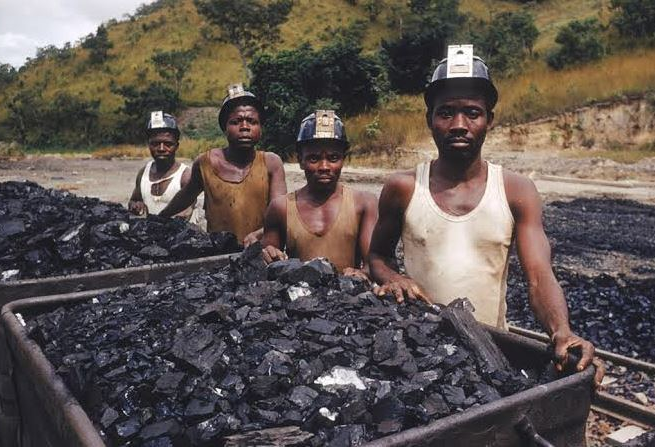
68th anniversary of the Enuugwu, Biafra, colliery massacre

(Miners at the Enuugwu colliery, undated)
Herbert Ekwe-Ekwe

ON 18 NOVEMBER 1949, 21 coal miners at the Iva Valley colliery, Enuugwu, Biafra, were shot dead by the British occupation police in response to the miners’ peaceful, popular protest for a pay increase, improvement in working and safety mine provisions, and support for the ongoing restoration-of-independence movement, begun in the 1930s and spearheaded by the Igbo, to terminate 64 years of Britain’s conquest of the constellation of states and peoples of this southwestcentral region of Africa. 

The Enuugwu massacre, in addition to the organised pogroms against Igbo people in June 1945 (Jos, northcentral Nigeria) and May 1953 (Kano, north Nigeria) by the Hausa-Fulani/islamist political leadership of north Nigeria, strategic on the ground client of the occupation, were dreadful precursors to the Igbo genocide of 29 May 1966-12 January 1970 (phases I-III) – in which Britain and Nigeria murdered 3.1 million Igbo, 25 per cent of this nation’s population, in the foundational genocide of post-(European)conquest Africa.
(Sam Rivers Trio, “Afflatus” [personnel: Rivers, tenor saxophone; Cecil McBee, bass; Steve Ellington, drums; recorded: Van Gelder Studio, Englewood, NJ, US, 17 March 1967])
Twitter @HerbertEkweEkwe

Wednesday, 19 April 2017

April is genocide awareness and prevention month: The sardauna, Igbo genocide, Biafra freedom movement


Herbert Ekwe-Ekwe

IGBO TENACITY, resilience,  and relentless optimism to pursue and terminate the British conquest and occupation of their homeland and embark on a societal reconstruction and transformational aftermath are acutely an affront to both the sardauna of Sokoto (northwest Nigeria) and British occupation sensibilities in Nigeria. This is particularly evident during the 1930s-1960s epoch when Igbo people spearhead the termination of the British occupation of the states and peoples of southwestcentral Africa.

The sardauna interview (video below) must have been recorded in the late 1950s/early 1960s – definitely after both the 1945 and 1953 north Nigeria-organised pogroms against Igbo immigrant populations in Jos and Kano respectively. Hundreds of Igbo were murdered during the pogroms and tens of thousands of pounds sterling worth of their property were looted/destroyed at the time. Each pogrom was carried out because of the Igbo vanguard role in the restoration-of-independence movement to free Nigeria from the British conquest and occupation, begun in the mid-1930s. North Nigeria’s sociopolitical leaderships, effectively British regional clients, were opposed to the restoration of African freedom. No other leadership across the entire Southern World (Africa, Asia, the Caribbean/South America) has such an unenviable record during this unprecedented epoch of transglobal freedom charge. 

Invading Fulani and British armies and aftermaths

North Nigeria leaderships, indeed, were disposed to the continuing British occupation of Nigeria. These Fulani islamist-Arabo-“Africans”, originating from the Fouta Djallon highlands in northwestcentral Africa, had, at the turn of the 19th century, embarked on the grand-scale invasion of the stretches of states and peoples to the east of this Sahelian African region (largely contemporary north/northcentral Nigeria) with its conquering army ultimately “converging” with Britain’s own, separate invading force at the time (and France’s to the Fulani’s west and north/northeast operational flanks on the ground). It is the meeting of these two invading armies – the British, from Europe, and the Fulani, from northwestcentral Africa – and the rationalisation of their dual long-term strategic goals of the conquest and occupation of these prized African states and peoples (what emerged as conquered Nigeria) that is key, central, in our understanding of the inner workings of the British-Hausa Fulani islamist/Arabo north Nigeria relations today, 2017, 200 years after. 

SOME SCHOLARS in the past have tended to ignore the epochal catastrophic consequences of this Fulani invasion on Africa subsequently as if the cataclysmic outcome wrought by an invader “originating from Africa” rather than from outside the continent (Europe, Asia, the Americas...) is somehow “more tolerable”, less of historical ruinous significance. On the contrary. Following this Anglo-Fulani 19th century accord, the sardauna, Ahmadu Bello, himself the great grandson of Usman dan Fodio, the head of Fulani invasion force, is adamant, less than a forthnight after Britain’s presumed departure from Nigeria of precisely what “post”-(British)conquest Nigeria presents for the Fulani: Nigeria should be an estate of our great grandfather, Uthman Dan Fodio. We must ruthlessly prevent a change of power. We use the minorities in the North [region] as willing tools, and the South [region] as conquered territory and never allow them to rule over us and never allow them to have control over their future” (The Parrot, 12 October 1960, quoted in Remi Oyeyemi“The Northern Agenda”, NigeriaWorld, 24 October 2002). This is the context, not unpredictable as the video below demonstrates, that the sardauna is again adamant that as leader of north Nigeria he would rather offer his British interviewer an appointment in his region (“an expatriate like yourself, as the sardauna puts it in the interview), than to an Igbo or any other (Nigerian) nationals from south Nigeria.

It is therefore not in the least surprising that, in year 2015, 55 years after the essentially bogus sovereignty that Nigeria exercises, this “country’s current head of regime, a genocidist and putschist operative, is imposed on the peoples, thanks to a raft of machinations in which Britain (this time under the premiership of David Cameron), in keeping with its Anglo-Fulani early 19th century accord/pact, plays a critical role.

Enslaved spaces and 20th/21st centuries replicas

Earlier, we must stress, it was as result of this Anglo/Fulani accord that the British occupation regime did not apprehend or prosecute anyone in north Nigeria for either the 1945 or 1953 north leadership-planned Igbo pogroms and the outrages became the “dress rehearsals” for the 29 May 1966-12 January 1970 Igbo genocide when the Nigeria state (as a wholeinvolving other constituent nations including the Yoruba, the Edo and Urhobo of the west region) with full Britain involvement, and others, murdered 3.1 million Igbo or 25 per cent of this nation’s population domiciled in Nigeria and in their Biafra homeland. Britain, nor in fact any of the other pan-European conquerors of Africa (France, Portugal, Belgium, Spain, Germany), did not create a Nigeria, or whatever bogus names these “Berlin states” in Africa are called, as precursor for African emancipation. On the contrary, the Nigerias of Africa are more of replicas of the enslaved plantations of the Americas (in the previous epoch of nearly 400 years) to perpetuate European World control and exploitation of Africa and Africans in perpetuity.

The enslaved Igbo encountered this with unrelenting courage and defiance in the enslaved estates in the Americas (north, south and the Caribbean), as history shows, and wouldn’t have it either at home! Evidently, the sardauna interview should be part of History/Politics 101 course on Africa because it does tell one, in a nutshell, the “fate” of the Igbo in Nigeria that north Nigeria, with firm support of Britain, had, carefully, contrived right back in the 1950s. Except the Igbo people had signed up for a concerted suicide, they definitely coudn’t see their destiny emplaced in this space of certain death and immiseration.

Neither race nor geography is “primary”

This has been the cardinal lesson of the Igbo genocide. Thankfully, some Igbo who were still not sure of the long term implications of the continuing Nigerian occupation of their homeland (since 13 January 1970) have had a baptism of enlightenment since the video of the sardauna interview was released! Suddenly, historical records become opportunities for rare streams of conscientisation... Alas, neither the British nor the Fulani invasions should ever have been categorised tactically as  “primary” and the other  “secondary” by the Igbo resistance or any of the other African nations and states attacked during the course of this devastating history. Each invasion aftermath, Fulani, British,  has been equally gruesome and calamitous; surely, the aftermath of the invasion and occupation of a people is not necessarily dictated by the geographical nor racial origin of the invading agency...
(...passage of mass murder and tribulation foretold...)
Twitter @HerbertEkweEkwe

Friday, 18 November 2016

67th anniversary of the Enuugwu colliery massacre

(Miners at the Enuugwu colliery, undated)
Herbert Ekwe-Ekwe

ON 18 NOVEMBER 1949, 21 coal miners at the Iva Valley colliery, Enuugwu, Biafra, were shot dead by the British occupation police in response to the miners’ peaceful, popular protest for a pay increase, improvement in working and safety mine provisions, and support for the ongoing restoration-of-independence movement, begun in the 1930s and spearheaded by the Igbo, to terminate 64 years of Britain’s conquest of the constellation of states and peoples of this southwestcentral region of Africa. 

The Enuugwu massacre, in addition to the organised pogroms against Igbo people in June 1945 (Jos, northcentral Nigeria) and May 1953 (Kano, north Nigeria) by the Hausa-Fulani islamist political leadership of north Nigeria, strategic on the ground client of the occupation, were dreadful precursors to the Igbo genocide of 29 May 1966-12 January 1970 (phases I-III) – in which Britain and Nigeria murdered 3.1 million Igbo, 25 per cent of this nation’s population, in the foundational genocide of post-(European)conquest Africa.
(Sam Rivers Trio, “Afflatus” [personnel: Rivers, tenor saxophone; Cecil McBee, bass; Steve Ellington, drums; recorded: Van Gelder Studio, Englewood, NJ, US, 17 March 1967])
Twitter @HerbertEkweEkwe


Friday, 1 April 2016

April is genocide awareness and prevention month: The sardauna, Britain, Nigeria and Biafra

Igbo tenacity, drive and relentless optimism to pursue and overcome life’s challenges were acutely an affront to both the sardauna of Sokoto (northwest Nigeria) and British occupation sensibilities in Nigeria. This was particularly evident during the 1930s-1960s epoch when Igbo people spearhead the termination of the British occupation of these lands and peoples of southwestcentral Africa.

The sardauna interview (video below) must have been recorded in the late 1950s/early 1960s – definitely after both the 1945 and 1953 north Nigeria-organised pogroms against Igbo immigrant populations in Jos and Kano respectively. Hundreds of Igbo were murdered during the pogroms and tens of thousands of pounds sterling worth of their property were looted/destroyed at the time. Each pogrom was carried out because of the Igbo vanguard role in the restoration-of-independence movement to free Nigeria from the British conquest and occupation, begun in the 1930s. North Nigeria’s sociopolitical leaderships, effectively British regional clients, were opposed to the restoration of African freedom. No other leadership across the entire Southern World (Africa, Asia, the Caribbean/South America) has such an unenviable record during this unprecedented epoch of transglobal freedom charge. North Nigeria leaderships, indeed, were disposed to the continuing British occupation of Nigeria. It is therefore not in the least surprising that, in year 2015, fifty-five years after the essentially bogus sovereignty that Nigeria exercises, this state’s current head of regime, a genocidist and putschist operative, is imposed on the peoples, thanks to a raft of machinations in which Britain plays a critical role.

Enslaved spaces and 20th/21st centuries replicas

As a result, the occupation regime did not apprehend or prosecute anyone for either the 1945 or 1953 pogroms and the outrages became the “dress rehearsals” for the 29 May 1966-12 January 1970 Igbo genocide when the Nigeria state (as a whole, involving other constituent nations including the Yoruba, the Edo and Urhobo of the west region) with full Britain involvement, and others, murdered 3.1 million Igbo or one-quarter of this nation’s population domiciled in Nigeria and in their Biafra homeland. Britain, nor in fact any of the other pan-European conquerors of Africa (France, Portugal, Belgium, Spain, Germany), did not create a Nigeria, or whatever bogus names these “Berlin states” in Africa are called, as precursor for African emancipation. On the contrary, the Nigerias of Africa are more of replicas of the enslaved plantations of the Americas (in the previous epoch of nearly 400 years) to perpetuate European World control and exploitation of Africa and Africans in perpetuity.

The enslaved Igbo encountered this with unrelenting courage and defiance in the enslaved estates in the Americas (north, south and the Caribbean), as history shows, and wouldn’t have it either at home! The sardauna interview should be part of History/Politics 101 course on Africa because it does tell one, in a nutshell, the “fate” of the Igbo in Nigeria that north Nigeria, with firm support of Britain, had, carefully, contrived right back in the 1950s. Except the Igbo people have signed up for a concerted suicide, they surely cannot see their destiny emplaced in this space of certain death and immiseration.

This has been the cardinal lesson of the Igbo genocide. Thankfully, some Igbo who were still not sure of the long term implications of the continuing Nigerian occupation of their homeland (since 12 January 1970) have had a baptism of enlightenment since the video of the sardauna interview went viral! Suddenly, historical records become opportunities for rare streams of conscientisation...
(...passage of mass murder and tribulation foretold...)
Twitter @HerbertEkweEkwe

Thursday, 3 September 2015

The sardauna of Sokoto, Nigeria, Britain and the restoration of Igbo independence

Igbo tenacity, drive and relentless optimism to pursue and overcome life’s challenges are acutely an affront to both the sardauna of Sokoto (northwest Nigeria) and British occupation sensibilities in Nigeria. This is particularly evident during the 1930s-1960s epoch when Igbo people spearhead the termination of the British occupation of these lands and peoples of southwestcentral Africa.

This sardauna interview (video below) must have been recorded in the late 1950s/early 1960s – definitely after both the 1945 and 1953 north Nigeria-organised pogroms against Igbo immigrant populations in Jos and Kano respectively. Hundreds of Igbo were murdered during the pogroms and tens of thousands of pounds sterling worth of their property were looted/destroyed at the time. Each pogrom was carried out because of the Igbo vanguard role in the restoration-of-independence movement to free Nigeria from the British conquest and occupation, begun in the 1930s. North Nigeria’s sociopolitical leaderships, effectively British regional clients, were opposed to the restoration of African freedom. No other leadership across the entire Southern World (Africa, Asia, the Caribbean/South America) has such an unenviable record during this unprecedented epoch of transglobal freedom charge. North Nigeria leaderships, indeed, were disposed to the continuing British occupation of Nigeria. It is therefore not in the least surprising that, in year 2015, fifty-five years after the essentially bogus sovereignty that Nigeria exercises, this state’s current head of regime, a genocidist and putschist operative, is imposed on the peoples, thanks to a raft of machinations in which Britain plays a critical role.

Enslaved spaces and 20th/21st centuries replicas

As a result, the occupation regime did not apprehend or prosecute anyone for either the 1945 or 1953 pogroms and the outrages became the “dress rehearsals” for the 29 May 1966-12 January 1970 Igbo genocide when the Nigeria state (as a whole, involving other constituent nations including the Yoruba, the Edo and Urhobo of the west region) with full Britain involvement, and others, murdered 3.1 million Igbo or one-quarter of this nation’s population. Britain, nor in fact any of the other pan-European conquerors of Africa (France, Portugal, Belgium, Spain, Germany), did not create a Nigeria, or whatever names these “Berlin states” in Africa are called, as precursor for African emancipation. On the contrary, the Nigerias of Africa are more of replicas of the enslaved plantations of the Americas (in the previous epoch of nearly 400 years) to perpetuate European World control and exploitation of Africa and Africans in perpetuity.

The enslaved Igbo encountered this with unrelenting courage and defiance in the enslaved estates in the Americas (north, south and the Caribbean), as history shows, and wouldn’t have it either at home! The sardauna interview should be part of History/Politics 101 course on Africa because it does tell one, in a nutshell, the “fate” of the Igbo in Nigeria that north Nigeria, with firm support of Britain, had, carefully, contrived right back in the 1950s. Except the Igbo people have signed up for a concerted suicide, they surely cannot see their destiny emplaced in this space of certain death and immiseration.

This has been the cardinal lesson of the Igbo genocide. Thankfully, some Igbo who were still not sure of the long term implications of the continuing Nigerian occupation of their homeland (since 12 January 1970) have had a baptism of enlightenment since the video of the sardauna interview went viral! Suddenly, historical records become opportunities for rare streams of conscientisation...

Twitter @HerbertEkweEkwe

Thursday, 2 April 2015

April is Genocide Awareness and Prevention Month (1): The sardauna, Britain, Nigeria and the Igbo

Igbo tenacity, drive and relentless optimism to pursue and overcome life’s challenges were acutely an affront to both the sardauna of Sokoto (northwest Nigeria) and British occupation sensibilities in Nigeria. This sardauna interview (video below) must have been recorded in the late 1950s/early 1960s – definitely after both the 1945 and 1953 north Nigeria-organised pogroms against Igbo immigrant populations in Jos and Kano respectively. Hundreds of Igbo were murdered during the pogroms and tens of thousands of pounds sterling worth of their property were looted/destroyed at the time. Each pogrom was carried out because of the Igbo vanguard role in the restoration-of-independence movement to free Nigeria from the British conquest and occupation, begun in the 1930s. North Nigeria’s sociopolitical leaderships, effectively British regional clients, were opposed to the restoration of African freedom. No other leadership across the entire Southern World (Africa, Asia, the Caribbean/South America) has such an unenviable record during this unprecedented epoch of transglobal freedom charge. North Nigeria leaderships, indeed, were disposed to the continuing British occupation of Nigeria.

Enslaved spaces and replicas

As a result, the occupation regime did not apprehend or prosecute anyone for either the 1945 or 1953 pogroms and the outrages became the “dress rehearsals” for the 29 May 1966-12 January 1970 Igbo genocide when the Nigeria state (as a whole, involving other constituent nations including the Yoruba, the Edo and Urhobo of the west region) with full Britain involvement, and others, murdered 3.1 million Igbo or one-quarter of this nation’s population. Britain, nor in fact any of the other pan-European conquerors of Africa (France, Portugal, Belgium, Spain, Germany), did not create a Nigeria, or whatever names these “Berlin states” in Africa are called, as precursor for African emancipation. On the contrary, the Nigerias of Africa are more of replicas of the enslaved plantations of the Americas (in the previous epoch of nearly 400 years) to perpetuate European World control and exploitation of Africa and Africans in perpetuity.

The enslaved Igbo encountered this with unrelenting courage and defiance in the enslaved estates in the Americas (north, south and the Caribbean), as history shows, and wouldn’t have it either at home! The sardauna interview should be part of History/Politics 101 course on Africa because it does tell one, in a nutshell, the “fate” of the Igbo in Nigeria that north Nigeria, with firm support of Britain, had, carefully, contrived right back in the 1950s. Except the Igbo people have signed up for a concerted suicide, they surely cannot see their destiny emplaced in this space of certain death.

This has been the cardinal lesson of the Igbo genocide. Thankfully, some Igbo who were still not sure of the long term implications of the continuing Nigerian occupation of their homeland (since 12 January 1970) have had a baptism of enlightenment since the video of the sardauna interview went viral! Suddenly, historical records become opportunities for rare streams of conscientisation...
Twitter @HerbertEkweEkwe

Thursday, 19 April 2012

This phase of the Igbo genocide*

The concept “failed-state” carries an understandable melodramatic import! It refers to the inability or failure of a state to fulfil some of its key roles and responsibilities to its people(s) and others domiciled within its territory and consequently to its neighbours and the wider global community of states. State failure materialises at three broad spheres of the lives of the people(s): social, political and economic. The following would feature among the key empirical determinants of this failure:

1. The state’s inability to provide security to its population – crucially, a catastrophic failure as the state’s primary existence is predicated on this provision of security to its citizens. This failure may have arisen because the state no longer exercises control across part/parts or all of its territory. Several factors could account for this including, for instance, calamitous breakdowns in vital internal sociopolitical and economic relations, intra-regime fractionalism and rivalries and the unmanageability of natural disasters. As we shall note shortly, it could also be due to the state’s actively pursued violation of the human rights of the people(s) including, most gravely, a deliberate state policy to embark on the destruction of one or more of its constituent nations/peoples/religious groups, etc., etc.

2. The state’s inability to provide essential social services (communication infrastructure, health care, education, housing and recreation, development of culture) to its people(s) or the state’s deliberate policy to deny or partially offer such services to some of its constituent nations/peoples/religious groups…

There remains a lack of consensus among scholars studying the failed states of contemporary Africa on the terms of the evaluative parameters of this enterprise including the critical constitutive timeframes of assessing and therefore concluding when this or that African state ‘began to fail’ or/and when indeed it “failed”. There is a tendency by many to arbitrarily circumscribe the limit of the focus of interrogation to the so-called African post-conquest epoch (i.e., post-1 January 1956, following the presumed restoration of independence date in the Sudan) with the underlying presumption that the state, as formulated and constituted on the eve of the “restoration of independence”, has a definitive and enduring internal logic to its being. Of course what such a staggeringly ahistorical arbitrariness does to this scholarship is that it attempts to freeze layers and layers of vital record and practice off sustained scrutiny as it wishes to project this era of all-Africa external conquest and occupation as “largely unproblematic”. Undoubtedly, as has been demonstrated all too clearly since January 1956, a post-(European)conquest African Studies corpus built on such a blatantly contrived edifice is hopelessly trapped in a debilitating and eventual terminal crisis.

1945 & 1953

For Nigeria, the country at the focus of this roundtable, it is at once a failed and genocide state. It is in Jos, a city in its northcentral region, that we locate the start of the trajectory to its “failed state” status. The year is not 2000 or 2001 or any other year in this last decade nor indeed in any of the three years of the current decade but 1945, eleven years before 1956 and fifteen years before 1960 – the year of the “termination” of the British occupation of the country. In October 1945, in the wake of a very successful anti-occupation countrywide strike, Hausa-Fulani muslim north regional leaders, those much endeared clients of the occupation-regime who were not only opposed to this strike but also the ultimate goal of Nigeria’s liberation from the British conquest in which Igbo people played a vanguard role, organised and launched a pogrom against Igbo immigrants in Jos and the surrounding tin mining towns and villages on the plateau. Hundreds of Igbo were murdered during the massacre and tens of thousands of pounds sterling worth of their property looted or destroyed. No perpetrators of these murders were ever apprehended or punished by the occupation-regime. As a result, emboldened Hausa-Fulani leaders organised yet another pogrom of Igbo immigrants in the north, this time in Kano, 180 miles further north, in May 1953, which coincided with the heightened debates among Nigerian politicians on the possible date for the formal termination of the occupation and the restoration of independence. Hundreds of Igbo were murdered during this massacre and tens of thousands of pounds sterling worth of their property looted or destroyed. Once again, no perpetrators of these murders were apprehended or punished by the occupation-regime.

1966-2012

On the contrary, as the world would witness 13 years later, these dual pogroms became dreadful dress rehearsals for the most gruesome, most devastating, and most expansive stretch of state-organised mass murders of a people not seen in Africa since the German-organised genocide of the Herero, Nama and Berg Damara peoples of contemporary Namibia in the early 1900s. Beginning 29 May 1966 to 12 January 1970, the composite aggregation of the Nigeria state – military officers, the police, Hausa-Fulani emirs, muslim clerics and intellectuals, students, civil servants, journalists, politicians and other public figures – planned and executed the Igbo genocide, the foundational genocide of post-(European)conquest Africa. This is also Africa’s most destructive genocide of the 20th century. A total of 3.1 million Igbo people, a quarter of this nation’s population at the time, were murdered during those harrowing 44 months. Most Igbo were slaughtered in their homes, offices, businesses, schools, colleges, hospitals, markets, churches, shrines, farmlands, factories/industrial enterprises, children’s playground, town halls, refugee centres, cars, lorries, and at bus stations, railway stations, airports and on buses, trains and planes and on foot, or starved to death – the openly propagated regime-“weapon” to achieve its heinous goal more speedily. In the end, the Igbo genocide was enforced, devastatingly, by Nigeria’s simultaneously pursued land, aerial and naval blockade and bombardment of Igboland, Africa’s highest population density region outside the Nile Delta. The genocidists also sequestrated and pillaged the multibillion-dollar Biafra economy, one of the most advanced and enterprising hubs in Africa of the era.

Most of Africa and the world stood by and watched, hardly critical or condemnatory of this wanton destruction of human lives, raping, sacking and plundering of towns, villages, community after community in Biafra and elsewhere... The consequences for Africa have been catastrophic. In this genocide of the Igbo, Nigeria inaugurated the “age of pestilence” that defines contemporary Africa. Several regimes elsewhere in Africa are “convinced” of the conclusions that they have drawn from this crime by their Nigerian counterpart: “We can murder targeted constituent people(s) at will within the state we control … Haul off their prized property and livelihood … Comprehensively destroy their cities, towns, villages, communities – precisely their agelong, priceless, inheritance ... There will be no sanctions from Africa – and the world”. As a result, the Igbo genocide becomes the clearing site for the haunting killing fields that would crisscross the African geographical landscape in the subsequent 40 years with the murders of additional 12 million Africans, since January 1970, by regimes in further genocide in Rwanda, Darfur and Zaïre/Democratic Republic of Congo and other killings in Liberia, Ethiopia, Congo Republic, Somalia, Uganda, Sierra Leone, Guinea, Côte d’Ivoire, Chad, south Sudan, Burundi.

One would perhaps be forgiven if they thought that, after such a frenzied indulgence in indescribable depravity in mass slaughtering and a trail of destruction, capped by its occupation of Biafra, Nigeria would tire out of its appetite to continue the murder of Igbo people. No, not really. This obligatory haematophagous creature continues its murder of the Igbo unabated – almost routinely and ritualistically during the course of subsequent years, signposted here by the eerie columns that chart the contours of fresh pogrom outrages: 1980 ... 1982 ... 1985 ... 1991 ... 1993 ... 1994 ... 1999 ... 2000 ... 2001 ... 2002 ... 2004 ... 2005 ... 2006 ... 2007 ... 2008 ... 2009 ... 2010 ... 2011 ... 2012. According to the December 2011 research by the International Society for Civil Liberties & the Rule Of Law, a human rights organisation based in Onicha, 90 per cent of the 54,000 people murdered in Nigeria by the state/quasi-state operatives and agents since 1999 are Igbo people. Since last Christmas Day, the Boko Haram islamist insurgent group spearheads these murders. At least 80 per cent of people murdered by the Boko Haram across swathes of lands in north/northcentral Nigeria since then are Igbo. Hundreds of thousands of Igbo families have abandoned homes and businesses in the affected region and have returned to Igboland. Arguably, the Igbo are the world’s most brutally targeted and most viciously murdered of peoples presently. Not since 29 May 1966-12 January 1970 has Igbo life in Nigeria acquired such a gripping existential emergency…

The Boko Haram now issues its threats to murder quite habitually, at times on a daily basis, and, true to its words, executes its mission most ruthlessly, most remorselessly. After each of its outrages, Boko Haram acknowledges responsibility and does this most dispassionately… The regime in Abuja appears cruelly powerless to protect Igbo people (and others) emplaced within the jurisdiction of the supposedly sovereign state it controls with the well-known consequences in international law that this shocking relegation of responsibility entails. Regime-head Goodluck Jonathan says as much in a recent astonishing radio and television broadcast to his country and the world: “Boko Haram is everywhere in the executive arm of [my] government, in the legislative arm of [my] government and even in the judiciary. Some are also in the armed forces, the police and other security [services] … Some continue to dip their hands and eat with you and you won’t even know the person who will point a gun at you or plant a bomb behind your house”. Following from Jonathan’s proclamation, it is conceivable that right there closeted in his regime, there are operatives deeply complicit in these ongoing murders. And it doesn’t appear that the regime can halt the
murdering nor the insurgency. On the contrary, Jonathan is essentially saying in his broadcast: “I don’t know how to solve this problem; I can’t solve this problem”. The seriousness of this situation cannot be exaggerated. Presently, Nigeria is a grave danger to itself. Nigeria is a grave danger to its constituent peoples and nations, to its neighbours, to the west Africa region, to Africa and the wider world. Nigeria has indeed now run the course of its bloody trail in history. The ongoing murders have exposed, particularly, the lethal fissures in a hitherto seemingly compact genocidist monolith. This fractionalisation cannot be contained.

Referendum and successor state(s)

Whilst Jonathan’s broadcast is undoubtedly a desperate acknowledgement of helplessness if not hopelessness, it however opens up an historic opportunity to overcome this tragedy. There is undoubtedly a silver lining over this cloud. What is critically at stake here is the right of the peoples domiciled in Nigeria, each and every constituent people, to democratically decide their future. This right to self-determination for every people is inalienable and is guaranteed by the United Nations. No people is exempt from exercising this right. To proceed to the realisation of this goal, two key features are called for forthwith:

1. The requisite institutions of the world must now embark on initiating the process for an internationally organised, supervised, and binding referendum across Nigeria for the peoples, themselves, as well as nationals of these constituent peoples who live abroad, in the diaspora, to decide whether they wish to remain in Nigeria or form new state(s) of their choice.

2. To support Igbo people’s participation in this referendum, Igbo intellectuals should double their efforts to work for the restoration of Igbo sovereignty, Biafra. The Igbo genocide is one of the most comprehensively documented crimes against humanity. Nonetheless, Igbo intellectuals must contribute, robustly, to continue to inform the entire world of the nature and extent of the genocide, examining, particularly, the variegated contours of the expansive trail of this crime, the parameters and strictures of the monstrosity of denialism of the crime (especially by some clusters of the core perpetrators of the crime in Nigeria and their collaborators abroad including some in academia and media) and the debilitating and oppressive burden of 40 years of occupation.

Let it never be forgotten that, four decades ago, Igbo intellectuals, many very talented and widely accomplished men and women in their varying fields of expertise (writers, academics, artists, diplomats, military officers, scientists, physicians, lawyers, engineers), contributed most profoundly to the eventual survival of the Igbo during phases I and II of the genocide, 29 May 1966-12 January 1970, when only few in the world thought that they would accomplish such an improbable feat. We surely have an historic legacy to contend with.

*(Paper presented at “Roundtable on Nigeria’s future: The challenges to security and economic development caused by Boko Haram and the way forward”, held at E. Franklin Frazier Center for Social Work Research, Howard University Law School, Washington, DC, United States, Thursday 12 April 2012. Roundtable moderator: Robin Renee Sanders, former US ambassador to Nigeria and Republic of Congo; other roundtable panellists – Pat Utomi, professor and senior fellow, Lagos Business School, Pan-African University, Lagos, Nigeria; Augustine (Gus) Fahey, senior desk officer for Nigeria, Bureau of African Affairs, US State Department, Washington, DC; Oguchi Nkwocha, physician, Biafra Foundation, Los Angeles; Michael Maduagwu, professor and senior fellow, National Institute for Policy and Strategic Studies, Kuru, Nigeria and Eric Guttschuss, Nigeria researcher, Human Rights Watch, Washington, DC; roundtable coordinator: Chima Korieh, professor of history, Marquette University, Milwaukee; roundtable co-sponsors: Apollos Nwauwa, president of Igbo Studies Association and professor of history, Bowling Green State University, Ohio; Kanayo Odeluga, physician and executive director, Igbo League, Chicago and Mike Mbanaso, professor and director, E. Franklin Frazier Center for Social Work Research, Howard University, Washington, DC.)

Twitter @HerbertEkweEkwe
Saturday, 17 December 2011

The sardauna, Britain, Nigeria and the Igbo

Igbo tenacity, drive and relentless optimism to pursue and overcome life’s challenges were acutely an affront to both the sardauna of Sokoto (northwest Nigeria) and British occupation sensibilities in Nigeria. This sardauna interview (video below) must have been recorded in the late 1950s/early 1960s definitely after both the 1945 and 1953 north Nigeria-organised pogroms against Igbo immigrant populations in Jos and Kano respectively. Hundreds of Igbo were murdered during the pogroms and tens of thousands of pounds sterling worth of their property were looted/destroyed at the time. Each pogrom was carried out because of the Igbo vanguard role in the restoration-of-independence movement to free Nigeria from the British conquest and occupation, begun in the 1930s. North Nigeria’s sociopolitical leaderships, effectively British regional clients, were opposed to the restoration of African freedom. No other leadership across the entire Southern World (Africa, Asia, the Caribbean/South America) has such an unenviable record during this unprecedented epoch of transglobal freedom charge. North Nigeria leadership, indeed, were disposed to the continuing British occupation of Nigeria.

Enslaved spaces and replicas

As a result, the occupation regime did not apprehend or prosecute anyone for either the 1945 or 1953 pogroms and the outrages became the “dress rehearsals” for the 29 May 1966-12 January 1970 Igbo genocide when the Nigeria state (as a whole, involving other constituent nations including the Yoruba, the Edo and Urhobo of the west region) with full Britain involvement, and others, murdered 3.1 million Igbo or one-quarter of this nation’s population. Britain, nor in fact any of the other pan-European conquerors of Africa (France, Portugal, Belgium, Spain, Germany), did not create a Nigeria, or whatever names these “Berlin states” in Africa are called, as precursor for African emancipation. On the contrary, the Nigerias of Africa are more of replicas of the enslaved plantations of the Americas (in the previous epoch of nearly 400 years) to perpetuate European World control and exploitation of Africa and Africans in perpetuity.

The enslaved Igbo encountered this with unrelenting courage and defiance in the enslaved estates in the Americas (north, south and the Caribbean), as history shows, and wouldn’t have it either at home! The sardauna interview should be part of History/Politics 101 course on Africa because it does tell one, in a nutshell, the “fate” of the Igbo in Nigeria that north Nigeria, with firm support of Britain, had, carefully, contrived right back in the 1950s. Except the Igbo people have signed up for a concerted suicide, they surely cannot see their destiny emplaced in this space of certain death.

This has been the cardinal lesson of the Igbo genocide. Thankfully, some Igbo who were still not sure of the long term implications of the continuing Nigerian occupation of their homeland (since 12 January 1970) have had a baptism of enlightenment since the video of the sardauna interview went viral just recently! Suddenly, historical records become opportunities for rare streams of conscientisation...