Rethinking Africa is a forward looking blog dedicated to the exchange of innovative thinking on issues affecting the advancement of African peoples wherever they are. We provide rigorous and insightful analyses on the issues affecting Africans and their vision of the world.
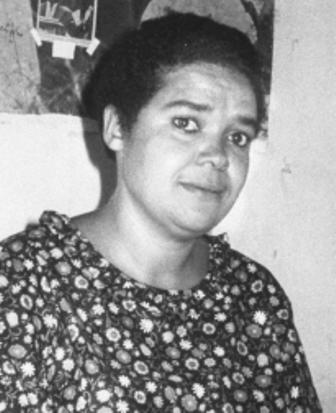
(Born 6 July 1937, Pietermaritzburg, South Africa)
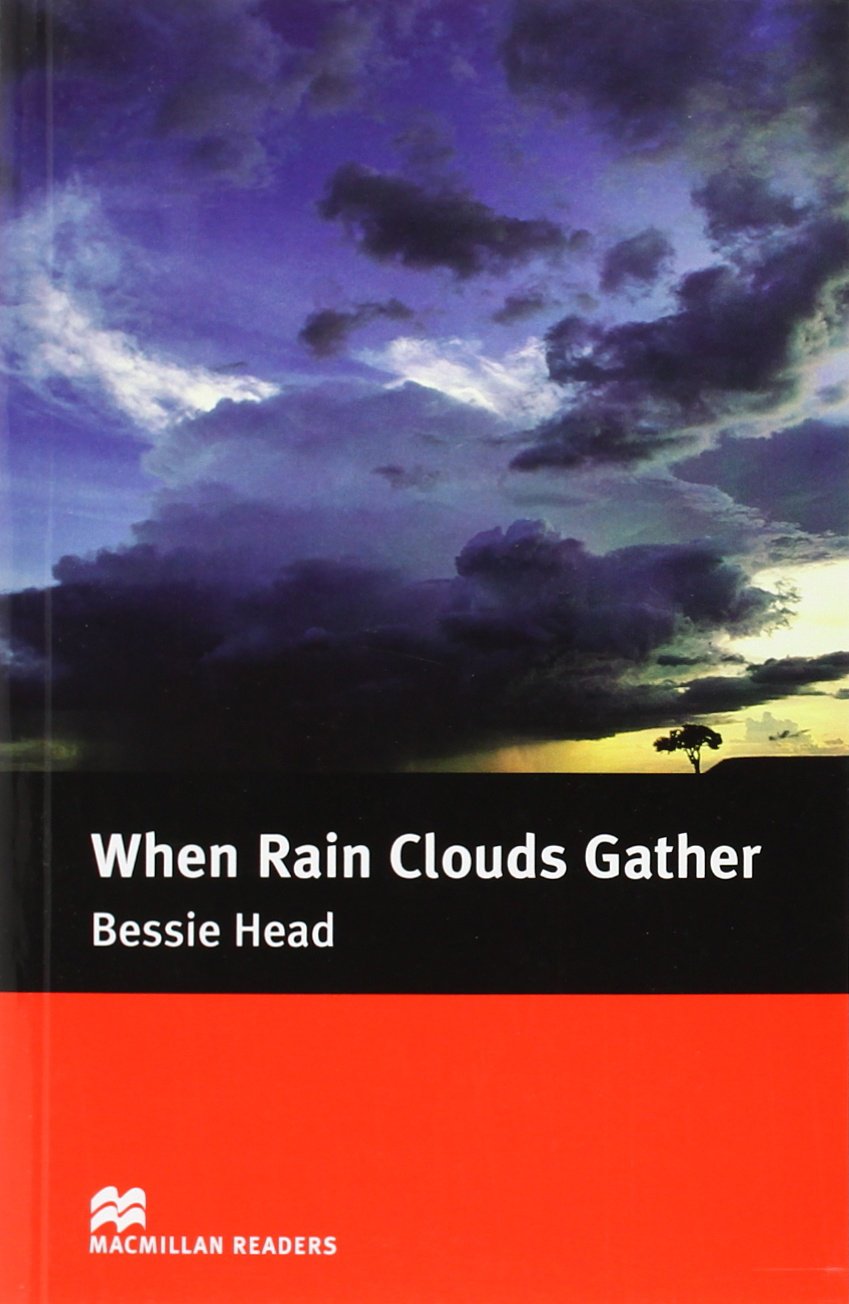
Arguably Botswana’s leading writer whose critically acclaimed publications include the novels When Rain Clouds Gather (1968), Maru (1971) and A Question of Power (1973) and the historical study, Serowe: Villageof the Rain Wind (1981)
The right to self-determination is for every people. It is inalienable and is guaranteed by the United Nations. No people, any peoples, is exempt from exercising this right. This is why the slogan that proclaims such gibberish or ahistoricism as “indivisibility”/”indissolubility”/“indestructibility” of a state, any state, is not really worth the paper it is written on except of course it is an embedded code by a slaughtering-horde for the plot of the next pogrom or the reinforcement of the terror of an ongoing genocide as a Nigeria, for instance, objectifies.
As everyone knows, the states that Europe created in Africa, in the aftermath of its 1884-1885Berlinconqueror-conference,cannotprovide the fundamental needs of Africans. This “Berlin-state”, with its cursed name (Nigeria,Niger, the Sudan,Central African Republic,Chad, whatever!),cannotlead Africans to the reconstructive changes they deeply yearn for after the tragic history of centuries of occupation. Such change was and never is the mission of this state but instruments to expropriate and despoilAfricaby the conquest. Essentially, the “Berlin-state” still serves the interests of its creators and those of the ruthless cabal of African-overseers, especially those from continental regions whose historical antecedents were anchored with studied content of being occupied indefinitely by the European conqueror (e.g., Hausa-Fulani north Nigeria vis-à-vis the British occupation of Nigeria), who police the dire straits of existence that is the lot of Africans currently.
(Oliver Nelson Septet, “Stolen moments” [personnel: Nelson, tenor saxophone; Freddie Hubbard, trumpet; Eric Dolphy, flute; George Barrow, baritone saxophone; Bill Evans, piano; Paul Chambers, bass; Roy Haynes, drums; recorded: Van Gelder Studio, Englewood Cliffs, NJ, US, 23 February 1961])
As inBerlin, the state is not a gift from the gods. On the contrary, the state is a relationship painstakingly formulated and constructed by groups of human beings on our planet Earth to pursue aspirations and interests envisioned by these same human beings within a shared historical and geographical articulation. The African humanity is presently gripped in a grave crisis for survival. It is now time that it abandoned the contrived “Berlin-state” in order to survive. This state is a bane of African existence. African nations, namely the Igbo, Ijo, Wolof, Ibibio,Asante, Baganda, Bakongo,Gĩkũyũ, Bambara, Luo, etc., etc, remain the basis for the regeneration ofAfrica’s redevelopment. These nations are the sites of the continent’s intellectual and other cultural creativity.
Path to civilisation
What is being stressed here is that African peoples, themselves, must decide on the issue of sovereignty in the post-“Berlin-state” epoch even if the outcome were to lead to the creation of 1001 states inAfrica –or more. In this epoch of freedom, any African peoples who, for instance, wishes to chart a future based on the precepts of their forebears in the 12th century Contemporary Era (CE) or even way back, to say, 8th century Before Contemporary Era (BCE), has the right to pursue this goal. Equally any African peoples who believes that their aspirations lie in working through challenges of the 21st century CE and projecting targets of creativity and transformations subsequently, must exercise this right. On the latter, Igbo intellectuals, whose people have been subjected to this catastrophic horror stretch of genocide by a Nigeria since 29 May 1966, couldn't have had their reconstructionary work cut out.
Yet to achieve the goal(s) of any of the stipulated paths above does not require anyone to embark on murdering someone else or have themselves murdered, as typified, again as an example, a contemporary Nigeria where the Boko Haram proto islamist state insurgency slaughters people so routinely as some hauntingly mandatory daily chore... For the future survival of the African humanity, the following declaration is unmistakeably forthright: let no more die for the path to the envisaged civilisation mapped out by any peoples of Africa or, in other words, howsoever this civilisation a people chooses is construed, let no one be murdered for its actualisation. It surely can be attained and sustained without committing a crime, particularly genocide – a crime against humanity.
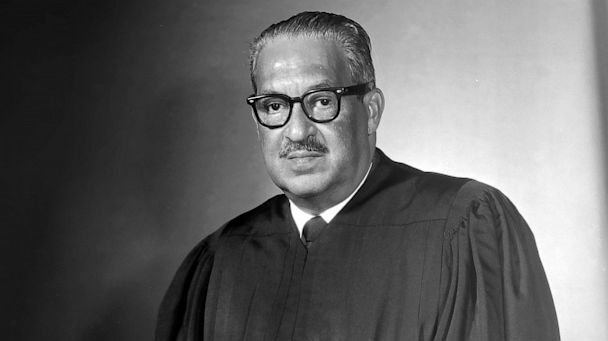
First class electrical engineer MIT-trained scientist and pilot, plays key role in expanded electrification programme in Igwe Ocha/Port Harcourt and elsewhere in Nigeria in the early 1950s, academic – particularly meritorious career at both Kumasi College of Technology School of Engineering (now Kwame Nkrumah University of Science and Technology), Ghana (1955-1958) and RAF Halton School of Technical Training, England, where he is also flying instructor (1959-1964), air force pilot, Royal Air Force (commissioned flying officer, July 1959; becomes flight lieutenant, 1962), pioneer air force pilot major and commander, Nigeria air force, September 1964
Louis
Armstrong
here sings Bob Thiele and George David Weiss’ composition, “What a wonderful
world”
Critically accomplished balladist who records widely, including the 1963 classic John Coltrane and Johnny Hartman with tenor and soprano saxophonist John Coltrane
(John Coltrane and Johnny Hartman, John Coltrane and Johnny Hartman
[personnel: Coltrane, tenor saxophone, Hartman, vocals; McCoy Tyner, piano;
Jimmy Garrison, bass; Elvin Jones, drums; recorded: Van Gelder Studio,
Englewood Cliffs, NJ, US, 7 March 1963])
Illustrious avant-garde drummer and educator who
joins the John Coltrane expanded band, beginning in 1965, and plays on the
saxophonist’s album, Meditations (1965), as well as numerous later recordings
including Cosmic Music (1966), Live at the Village Vanguard Again! (1966),
Coltrane in Japan (1966), John Coltrane: Live at Temple University (1966),
Stellar Regions (1967), Interstellar Space (1967), Expression (1967)
One of the obvious features any student of genocide picks up quite quickly about the perpetrator of this heinous crime is how open, less subtle, and often brazenly defiant they are with respect to their programme/policy towards a prescribed or targeted people. Nigeria, indeed, typifies this prototype but even more. Nigeria’s is crude, loathsome, vindictive, remorseless: read or listen to or examine the deeds of any genocidist Nigerian on this subject – from an Obafemi Awolowo to an Ibrahim Haruna or a Rilwan Akiolu or a Muhammadu Buhari, an Olusegun Obasanjo, a Yakubu Gowon... If anything, these attributes should and do alert the people so targeted – the Igbo, in this case. In effect, in its very words and deeds, the Nigeria agency aids Igbo freedom markedly despite itself.
(Wayne Shorter Sextet, “The soothsayer” [personnel: Shorter, tenor saxophone; Freddie Hubbard, trumpet; James Spaulding, alto saxophone; McCoy Tyner, piano; Ron Carter, bass; Tony Williams, drums; recorded: Van Gelder Studio, Englewood Cliffs, NJ, US, 4 March 1965])
Burden of history
If one goes through the copious analyses and papers by the Biafran leadership on the mindset of Nigerian génocidaires during 1966-1970, it is fascinating to note how the former’s very advanced thinking at the time has impacted contemporary genocide studies and the mode of pronouncement by many in international relations on the nature of the “global emergency” especially since 9 September 2001. Nearly 50 years ago, the Igbo, particularly their intellectuals, clearly articulated the existential threat they faced (and still face) and responded accordingly. The Igbo today, including their intellectuals, therefore do have a historical precedent. No one else, howsoever their altruistic credentials, resolves someone’s burden of history except themself. Surely the Igbo couldn’t think otherwise!
(Andrew Hill Septet, “Compulsion” [personnel:
Hill, piano; Freddie Hubbard, trumpet; John Gilmore, tenor saxophone; Cecil
McBee, bass; Joe Chambers, drums; Renaud Simmons, conga, percussion; Nadi
Qamar, percussion, African drums, thumb piano; recorded: Van Gelder Studio,
Englewood Cliffs, NJ, US, 8 October 1965])
Herbert Ekwe-Ekwe is specialist on the state and on genocide & wars in Africa in the post-1966 epoch – beginning with the Igbo genocide, 29 May 1966-present day, the foundational and most gruesome genocide of post-(European)conquest Africa. 3.1 million Igbo or 25 per cent of this nation’s population were murdered by Nigeria and its allies, principally Britain. Africa and the rest of the world largely stood by and watched as the perpetrators enacted this horror most ruthlessly. The world could have stopped this genocide; the world should have stopped this genocide. This genocide inaugurated Africa’s current age of pestilence. During the period, 12 million additional Africans have been murdered in further genocide in Rwanda (1994), Zaïre/DRCongo (variously, since the late 1990s) and Darfur – west of the Sudan – (since 2004) and in other wars in Africa. African peoples have, presently, no other choice but exit/dismantle the extant genocide-state (the bane of their existence & progress) & construct own nation-centred states that serve their interests. He is author of several books & papers on the subject and his new book is entitled The longest genocide – since 29 May 1966 (2019).