Rethinking Africa is a forward looking blog dedicated to the exchange of innovative thinking on issues affecting the advancement of African peoples wherever they are. We provide rigorous and insightful analyses on the issues affecting Africans and their vision of the world.
Brilliant political
scientist, academic, author, university administrator, pianist, corporate boards
member, influential statesperson: US presidential advisor on national security (2001-2005),
US secretary of state, 2005-2009 Twitter @HerbertEkweEkwe
Freedom is human right and could conceivably
mean different things to different people. In this epoch of febrile quest for
freedom in Africa, any African peoples who, for instance, wishes to chart a
future based on the precepts of their forebears in the 12th century
Contemporary Era (CE) or even way back, to, say, 8th century Before Contemporary
Era (BCE), has the right to pursue this goal. Equally, any African peoples who
believes that their aspirations lie in working through the immense challenges of the 21st century CE and
projecting targets of creativity and transformations subsequently, must
exercise this right. To achieve the goal(s) of any of the stipulated paths does
not therefore require anyone to embark on murdering someone else or have
themselves murdered in the process. For the future survival of the African
humanity, let no more die for the path to their envisaged civilisation or, in
other words, howsoever this civilisation a people chooses is construed. It, surely,
can be attained and sustained without committing a crime, particularly genocide
– heinous crime against humanity.
(Sonny Rollins Trio, “The freedom suite” [personnel: Rollins, tenor
saxophone; Oscar Pettiford, bass; Max Roach, drums; recorded: Riverside Records,
New York, US, 7 March 1958])
Influential pianist with
distinctly recognisable swing and stretch of feeling and author of Raise Up Off Me (1974), his critically-acclaimed
memoirs
(Hampton Hawes Quartet, “For
real!” [personnel: Hawes, piano; Harold Land, tenor saxophone; Scott La Faro,
bass; Frank Butler, drums; recorded: Contemporary Records, Los Angeles, 17
March 1958])
Herbert Ekwe-Ekwe, “Elections in Africa – the voter, the court, the outcome”, PENSAR-Revisita de Ciêcias Jurídicas, Vol. 18, Número 3, 2013, pp. 804-836.
(Born 9 November 1731,
Baltimore county, Maryland, US)
Influential
African-centred mathematician, astronomer, inventor, author, surveyor, farmer, human
rights activist, who documents his astronomical discoveries in his widely-circulated
almanacs as well as correspondences with
Thomas Jefferson (principal drafter of US constitution and future president) and others where he unambiguously asserts unfettered African
freedom
The
politics of Igbo public affairs has historically been conducted in largely
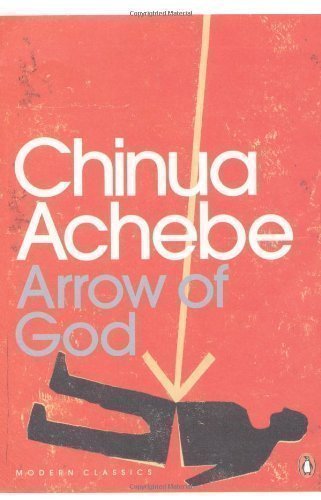
peaceful milieus. The classics indeed attest to this. A reading of that grand
debate in Chinua Achebe’s Arrow of God
between philosopher priest Ezeulu and ogbuefi Nwaka on the crucial subject of
the future direction of Umuaro exemplifies the trend. The debate rages and
rages with its dogged and at times agonising twists and turns but at no time
does either of the protagonists try to raise some army or employ any
extra-juridical agency to subvert the discourse or impose their will. It
remains to the very end an expansive engagement of intellect, a mutual
bombardment of ideas!
Professor Njoku in conversation
with a colleague, Smithsonian Institution, Washington, DC, circa 1967
(Born 6 November 1917, Ebem Ohaafia, Igboland)
Renowned botanist, foundational vice-chancellor (president) of University of Lagos, 1962, followed by University of Biafra vice-chancellorship, member of team of distinguished envoys appointed by the Biafran resistance government during the Igbo genocide, 29 May 1966-12 January 1970, to travel and inform the world of this raging first genocide of post-(European)conquest Africa Twitter @HerbertEkweEkwe
Herbert Ekwe-Ekwe is specialist on the state and on genocide & wars in Africa in the post-1966 epoch – beginning with the Igbo genocide, 29 May 1966-present day, the foundational and most gruesome genocide of post-(European)conquest Africa. 3.1 million Igbo or 25 per cent of this nation’s population were murdered by Nigeria and its allies, principally Britain. Africa and the rest of the world largely stood by and watched as the perpetrators enacted this horror most ruthlessly. The world could have stopped this genocide; the world should have stopped this genocide. This genocide inaugurated Africa’s current age of pestilence. During the period, 12 million additional Africans have been murdered in further genocide in Rwanda (1994), Zaïre/DRCongo (variously, since the late 1990s) and Darfur – west of the Sudan – (since 2004) and in other wars in Africa. African peoples have, presently, no other choice but exit/dismantle the extant genocide-state (the bane of their existence & progress) & construct own nation-centred states that serve their interests. He is author of several books & papers on the subject and his new book is entitled The longest genocide – since 29 May 1966 (2019).