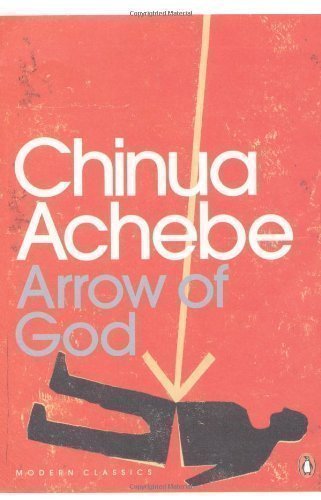
Showing posts with label Arrow of God. Show all posts

Thursday, 2 June 2016

FWD: Ayodele Fayose of Ekiti region administration, west Nigeria, unequivocally condemns continuing murder of Biafrans by Nigeria-occupation genocidist military in Biafra; Fayose warns: “Muhammadu Buhari is turning the people” of Biafra into “endangered species” (Vanguard, Lagos, Wednesday 1 June 2016)

(Ayodele Fayose: ... Buhari has made up his mind to eliminate as many [Biafrans] as possible”)
*****“The world will not be destroyed by those who do evil, but by those who watch them without doing anything” (Albert Einstein)

NO CURRENTLY serving public official in genocidist Nigeria has been as forthright in denouncing the present phase of the Igbo genocide, being directed by Muhammadu Buhari, as Ayodele Fayose. In his latest condemnation, Fayose reminds the world that well over 150 Igbo have been murdered by the Nigeria military under the Buhari regime since August 2015 and notably indicts: “It appears that … Buhari has made up his mind to eliminate as many [Biafran] people as possible … To even justify the killing by claiming [as regime spokespersons have been variously quoted] that Igbo youths protest was orchestrated in order to mar the first anniversary of Buhari’s [regime] is to say the least wicked and animalistic” (Vanguard, Lagos, 1 June 2016). Fayose ends his historic statement by appealing to the international community (pointedly a direct reference to David Cameron and Barack Obama administrations which imposed Buhari as head of Nigeria regime in March 2015) to take note of this gruesome murder campaign against Igbo people.

Fountain of ideas

Surely, no one would accuse Ayodele Fayose of overstating this ever deteriorating grave situation in Biafra... 

It is extraordinary, if not shocking, that, in contrast, there is a deafening silence on the ongoing genocide from the heads of the following administrative regimes in six regions of occupied Biafra – Abia, Anambra, Enuugwu, Delta, Ebonyi, Imo and Rivers, the epicentre of this unrelenting slaughtering of a peaceful, defenceless people. Are they not aware of the genocide? Do they dispute Fayose’s courageous, graphic narrative? Would they? What has happened to those who claim to be leaders from a people who gave the world such literary classics as Things Fall Apart, Arrow of God, There was a Country, Efuru, IduLabyrinths & Path to Thunder and who constructed and lived through advanced republican democracies for over a millennium whose variegated legacy constitutes a fountain of ideas for the contemporary world? Just what are these officials waiting for to tell the world that their people, Igbo people, are being murdered by a ruthless Nigeria-islamist genocidist regime headed by Muhammadu Buhari who, during phase-III of the Igbo genocide (6 July 1966-12 January 1970), was commander of a genocidist brigade in north/northcentral Biafra, slaughtering to the hilt?
(George Russell Sextet here plays “Nardis”, a composition by Miles Davis [personnel: Russell, piano; Don Ellis, trumpet; Dave Baker, trombone; Eric Dolphy, bass clarinet; Steve Swallow, bass; Joe Hunt, drums; recorded: Riverside Records, New York, US, 8 May 1961])
Twitter @HerbertEkweEkwe

Wednesday, 1 April 2015

Arrow of God (1964) and Igbo genocide (29 May 1966-12 January 1970)***

***Paper presented at the Arrow of God at 50 Symposium, Centre for African Studies/Igbo Conference, School of Oriental and African Studies, University of London (symposium conveners: Dr Kwadwo Osei-Nyame Jnr and Dr Louisa Uchum Egbunike), Saturday 4 October 2014

Twitter @HerbertEkweEkwe

Wednesday, 18 March 2015

Herbert Ekwe-Ekwe on “Does Chinua Achebe’s Arrow of God (1964) anticipate the Igbo genocide (29 May 1966-12 January1970)?”***

***Paper presented at the Arrow of God at 50 Symposium, Centre for African Studies/Igbo Conference, School of Oriental and African Studies, University of London (symposium conveners: Dr Kwadwo Osei-Nyame Jnr and Dr Louisa Uchum Egbunike), Saturday 4 October 2014

Twitter @HerbertEkweEkwe

Sunday, 9 November 2014

Reflection on debates and milieus

The politics of Igbo public affairs has historically been conducted in largely peaceful milieus. The classics indeed attest to this. A reading of that grand debate in Chinua Achebe’s Arrow of God between philosopher priest Ezeulu and ogbuefi Nwaka on the crucial subject of the future direction of Umuaro exemplifies the trend. The debate rages and rages with its dogged and at times agonising twists and turns but at no time does either of the protagonists try to raise some army or employ any extra-juridical agency to subvert the discourse or impose their will. It remains to the very end an expansive engagement of intellect, a mutual bombardment of ideas!


Twitter @HerbertEkweEkwe

Sunday, 5 October 2014

Does Arrow of God anticipate the Igbo genocide?*


Herbert Ekwe-Ekwe

QUITE EARLY in the new year, this 2014, I began to prepare for a paper on the role or involvement of Africa and Africans in the war of 1914-1918 or, alternatively, the Great War or the First World War. 2014 is the 100th anniversary of this war. The paper has since been published under the title, “The concatenation of the African role in the 1914-1918 war or World War I” (http://re-thinkingafrica.blogspot.co.uk/2014/08/the-concatenation-of-african-role-in.html, accessed 23 September 2014). Instructively, my research for the paper had led me to Chinua Achebe’s A Man of the People, by way of that memorable conversation on African history and future between Cheikh Anta Diop and Carlos Moore, published 20 years ago in the journal Présence Africaine. I will return to the Diop-Moore conversation shortly.

2014 is also the year of Arrow of God. This is why we are gathered here today at University of London’s School of Oriental and African Studies. 2014 is the 50th anniversary of the publication of Chinua Achebe’s tome. I had to reread it for the jubilee commemoration. And as I had earlier on reread A Man of the People, Achebe’s fourth novel, for the purposes of my 1914-1918 war paper, I suddenly found my follow-up Achebe reread of the season was Arrow of God, novel no. 3 – in other words, perhaps not aware of the trend and its consequence or consequences, I had been involved in alternating the sequencing of the epochs of the groundings of the two texts by appearing to reread Arrow of God backwards! The result is fascinating, as I will show. The discovery has been quite profound.

Prophet?

TO RECALL, Chinua Achebe publishes A Man of the People in early January 1966. This is a few days before the military coup d’état that overthrows the Abubakar Tafawa Balewa civilian government which the supposedly outgoing British occupation-governor James Robertson had imposed on the country in 1959, following a fractious election that the British rigged in favour of its north regional sociopolitical clients (Harold Smith, “Harold Smith’s Tribute Page”, http://haroldsmithmemorial.wordpress.com/harold-smith-fought-our-battle/, accessed 27 September 2014). The latter would, in turn, safeguard those vast expropriatory interests of Britain’s in the country subsequently (Herbert Ekwe-Ekwe, “Elections in Africa – the voter, the court, the outcome”, http://re-thinkingafrica.blogspot.co.uk/2014/03/elections-in-africa-voter-court-outcome.htmlaccessed 29 June 2014). 

A striking feature in the resolution of the grave crisis of this state that Achebe wrestles with in A Man of the People is its degeneration into a military coup and rampaging violence (“But the Army obliged us by staging a coup at that point and locking up every member of the Government” – Achebe, A Man of the People, 1966: 165), an extraordinary predictive insight, if ever there was one, that confronts the reader, considering the gruesome trajectory of politics in Nigeria, in 1966, the year this same state launches the Igbo genocide, the foundational genocide of post(European)conquest Africa, in which 3.1 million Igbo or one-quarter of this nation’s population, are murdered during the course of 44 subsequent devastating months. Indeed on the receipt of an advance copy of A Man of the People, poet and playwright John Pepper Clarke-Bekederemo observes, “Chinua, I know you are a prophet. Everything in this book has happened except a military coup” (emphasis in the original). Ken Post, a British academic working in west Africa at the time, recalls: “Chinua Achebe proved to be a better prophet than any of the political scientists”. Once again, “Prophet”! Is Chinua Achebe, the Father of African Literature, also a prophet?

Arrow of God, Achebe’s most complex novel, his “richest, most mysterious … one of the finest works of fiction in English written in this century”, according to Robert Wren (Robert Wren, Achebe’s World, 1990: 75), remains an inexhaustible farmland for bounty harvests. Fresh readings and re-readings of the novel bring forth ever more yields. This also applies to the examination/re-examination of the literature across the spectrum of distinguished critics of the novel. It is striking, right from the outset, that the certainties of Igbo national independence witnessed in the age of Things Fall Apart have now clearly dissipated as Ezeulu charts the paths and terms of the consequential relationship between him and Ulu, the god that he serves, and the key centres of bourgeoning European-conquest power in Umuaro and neighbouring Igbo states. Pointedly, Ezeulu instructs son Oduche to attend the mission school as his “eyes and ears” (Chinua Achebe, The African Trilogy, 1988: 365) in this power dispensation. But Oduche is much more important here than just a tactical tool in Ezeulu’s defence arsenal as this paper demonstrates.

Oeuvre

AS IN THE other texts of the Achebean oeuvre, including A Man of the People, which has been aptly illustrative, Arrow of God presents a highly imaginative and anticipatory power of Achebe’s insight to the turbulent trajectory of post-(European)conquest African history and politics. The paper will explore how this insight anticipates the catastrophe of the Igbo genocide. Thus, the Igbo double jeopardy of foreign conquest and occupation and genocide appears to sum up Achebe’s mission.

I have chosen Emmanuel Ngara’s study of Arrow of God in his Stylistic Criticism and the African Novel (1982) as an important text to employ to discuss Achebe’s crucial mission. Ironically, Ngara’s clearly stated conclusions in his work couldn’t be more appropriate in mapping out the parameters of Achebe’s project. Ngara is very unhappy with Arrow of God. He writes: “… Arrow of God is not a book that fascinates and engages the reader as soon as he picks it up to read” (Ngara, 1982: 79). He elaborates in four paragraphs and it is important to quote him at some length:
The narrator is the author himself who tells the story in the third person, giving himself the privilege of entering the characters’ minds and recording their innermost thoughts. The narrator is addressing both an African and a western English-speaking audience. He is very successful in his use of African idioms in an English novel – non-Igbo speakers are able to follow the story and to understand the Igbo proverbs and expressions used in the novel. There are, however, some minor shortcomings in the language. Achebe uses many Igbo terms such as chi, obi, ogene. These are not translated and the reader is expected to understand them in the context in which they are used. In some instances, however, these untranslated terms are somewhat obscure, the reader can only have a vague idea of what they stand for, and this tends to slow down his reading speed as he attempts to puzzle out what they mean … Arrow of God is too culture-bound and sociologically oriented. The emphasis on the multifarious aspects of Igbo society tends to distract the reader and to hamper the smooth flow of events … Yet another source of difficulty is the novel’s complexity of theme and plot and the large number of characters involved. Achebe tries to contain the whole cultural fabric of Igbo society and the various forces threatening it in one volume. This necessitates bringing in too many characters to whom the reader must be introduced before he can clearly see who is playing what role in the conflict. Also, many contradictions are involved… (79) 
SPECTACULARLY, Ngara lays out the constituent features of the history and geography  that have given rise to the conjunctural crisis, even existential (on this possibility, Ezeulu couldn’t be clearer when he refers to the symbolism of the sound of the tolling of the church bell, that overarching ideological signifier of the occupation regime, as the “song of extermination” [Achebe, 1988: 362]) that the Igbo are going through that gives rise to the artist’s, the novelist’s, Achebe’s stated mission – in the first place. One then wonders what problem the critic/scholar has in their own response to this pressing endeavour. Isn’t the scholar’s trade to labour, labour and labour and, at times without much success, try to understand life, and its complexities, society and the universe? When has this task ever been easy or easier? The scholar can’t afford to despair over the complexity of the challenge at stake; definitely he or she mustn’t give up; they must continue to labour; they must persist. Even Ezeulu, the half-person, half-spirit, the “Known and at the same time … Unknowable” (455), attests to the complexities of  understanding and responding to the challenges of the times when he beckons his people: “But you cannot know the Thing which beats the drum to which Ezeulu dances … [W]e have reached the very end of things … This is what our sages meant when they said that a man who has nowhere else to put his hand for support puts it on his knee” (455-457).

In the conversation between Cheikh Anta Diop and Carlos Moore that I referred to earlier, Diop asks the pertinent question of the age: “Who can deny that of all peoples, Africans have been the greatest victims of aggression, racism and oppression? The consequences can be seen today in the state of underdevelopment and technical backwardness of African societies” (Carlos Moore, “Conversations with Cheikh Anta Diop”, 1993: 418). The apogee of this devastation of a heritage for each and every African nation or people, without exception, is what Diop describes, to use his very words, “loss of national sovereignty” (Moore: 381; emphasis in the original). In Arrow of God, Chinua Achebe is examining not only the invasion of Igboland by a European state (this deleterious “loss of national sovereignty”) but the multitudinous layers and range of Igbo response to this unprecedented catastrophe which is ongoing, not over by any means. Thus, Ezeulu, the chief priest of Ulu, uses stark epidemiological referencing to describe this grave emergency facing his people: “A disease that has never been seen before cannot be cured with everyday herbs … [O]ur fathers have told us that it may even happen to an unfortunate generation that they are pushed beyond the end of things, and their back is broken and hung over a fire” (Achebe, 1988: 456-457). Yet in another breadth, the priest’s characterisation is bluntly existential as we have just indicated: “extermination” (362).
(John Coltrane Quartet, “Wise One” [personnel: Coltrane, tenor saxophone; McCoy Tyner, piano; Jimmy Garrison, bass; Elvin Jones, drums; recorded: Van Gelder Studios, Englewood Cliffs, NJ, US, 27 April 1964])
Abame or genocide or Abame

KOLE OMOTOSO has argued that, unlike the Yoruba who view the British invasion of their country as a “mere episode, a catalytic episode only” (Kole Omotoso, Achebe or Soyinka?, 1996: 17), the Igbo see the British invasion of Igboland as a confrontation with a “strange Difference, an Other, a Contradiction, an encounter that can only be negative in terms of the effects on Igbo culture and its ways” (Omotoso: 11). Umuofia, as we observe in Things Fall Apart, surely appreciates the startling implications of this archetypal “clash of civilisations” that Omotoso depicts. The Okonkwo-Obierika studied deliberations on the horrific massacre of the people of Abame by an ever-expanding British invading military force and the impact of the event on Umuofia’s national sovereignty is pointedly evident. Indeed, the continuing independence of Umuofia is threatened by this invasion. This gives rise to calls by Okonkwo for a steadfast defence of their homeland by its people, despite the military superiority and the ruthlessness of the enemy it faces as historian Obierika is keen to stress: “Have you not heard how the white man wiped out Abame?” (Achebe: 144). He adds, ominously, “They would go to Umuru and bring the soldiers, and we [Umuofia] would be like Abame” (Achebe: 144). Obierika and apparently the majority of the leadership of Umuofia want to avoid the Abameisation of their own country by the British. Even though he does not state it clearly in his studied philosophical ruminations in Arrow of God, it is implicit that one of the reasons, a very important consideration definitely, for Ezeulu’s decision to send son Oduche to the conquest  mission school is to preempt the Abame débâcle in Umuaro. For Okonkwo, though, the obvious overwhelming military odds against Umuofia notwithstanding, the country must defend its sovereignty resolutely: “We must fight these men and drive them from our land” (Achebe: 144). 

Okonkwo’s forthright response to Obierika’s reticence about how to respond to the impending British invasion of Umuofia shows clearly that years of enforced exile in the Mbanta country have not in any way diminished the hero’s patriotic instincts and distinctions. Even though Okonkwo subsequently commits suicide after killing the envoy sent by the British to disrupt the crucial Umuofia leadership assembly on the unfolding emergency in addition to his conviction that Umuofia is unwilling to deploy its forces to resist the impending attack on the country, I have argued, elsewhere (see Herbert Ekwe-Ekwe, “The Achebean Restoration”, 2013: 698), that Okonkwo’s suicide and its aftermath symbolise the sowing of the regenerative seeds of freedom for the restoration of Igbo national sovereignty.

As a result, this trope of freedom/national sovereignty transmutes to the post-Umuofia-Arrow of God epoch, evident, most assuredly if not defiantly, when Ezeulu turns down the occupation’s plans to induct him in the operationalising structure of the conquest regime. Again implicitly, perhaps, Ezeulu does not feel that the conquest’s mission is complete or definitive. He still hopes that his people’s independence would survive. This is why the priest informs occupation administrator Clarke, via the latter’s interpreter: “Tell the white man that Ezeulu will not be anybody’s chief, except Ulu” (Achebe: 498). Equally, the trope of Abame-murdering/wipe out transmutes to this new epoch. In the Anglo-Igbo confrontation in Umuaro and the contiguous states, the Abame massacre features, most hauntingly, in the narrative. In the wake of the Umuaro-Okperi war which Ezeulu opposes, describing it as an “unjust war” (Achebe: 334), Umuaro reluctantly accepts the terms of the British military intervention because, to quote the narrative voice in Arrow of God, “[t]he story of what these [British] soldiers did in Abame was still told with fear, and so Umuaro made no effort to resist but laid down their arms” (Achebe: 347). In fact, Ezeulu himself focuses on Abame broadly in a key address to his people in which he reflects on growing African involvement in the murderous forces the conqueror regime is mobilising in these massacres, a principal sphere of this tragedy. He poses three questions which clearly have “pan-Africanist” implications: “Have you not heard that when two brothers fight a stranger reaps the harvest? How many white men went in the party that destroyed Abame? Do you know? Five” (Achebe: 455), clearly an Achebean acknowledgement of that key component of the trajectory of the conquest of Africa and continuing post-conquest violence and murders so dramatically captured by historian Chancellor Williams in his The Destruction of Black Civilization (1987: 218):
Now the shadows lengthened. The Europeans had also been busily building up and training strong African armies. Africans trained to hate, kill and conquer Africans. Blood of Africans was to sprinkle and further darken the pages of their history … Indeed, Africa was conquered for the Europeans by the Africans [themselves], and thereafter kept under [conquest] control by African police and African soldiers. Very little European blood was ever spilled.
SO, ages before the Blydens and the Equinaos and the Garveys, and the DuBoises and the Nkrumahs and the Makonnens would begin to theorise and offer progressive, liberatory perspectives on “pan-Africanism”, the enemies of Africa had already unleashed “pan-African-‘Goodcountry’-assemblages” of terror on Africa and Africans to despoil and conquer Africa. In effect, contrary to the usual, quite often understandable romantic presumptions, “pan-Africanism”, as a construct, does not appear or occur discernibly or intelligibly “ready-made”. On the contrary, every feature of this construct for progressive projects or outcomes in the African World has to be worked for actively, painstakingly and continuously sustained.

Abame upheavals to 29 May 1966-12 January 1970

TO CONCLUDE, the Abame massacre and those Umuofia and Umuaro debates and deliberations on its aftermath crucially map the spectrum of milestones that would define the trajectory of the British 100 years of war against the Igbo and the variegated frames of Igbo resistance to it that parallel the very stretch of British occupation of Nigeria: the 1880s-1914 Ekumeku wars and resistance in Anioma, west of the Oshimiri River; the 1901-1902 war against the Aru in northeastcentral Igboland; the 1929 Ogu umu nwanyi Igbo/Women’s War in Aba/Igbo eastcentral region; the 1945 pogrom of Igbo immigrant population in Jos, central Nigeria, organised by Hausa-Fulani/north region clients/allies of the occupation; the 1949 shootings of coal miners in the Enuugwu colliery in northcentral Igboland; the 1953 pogrom of Igbo immigrant population in Kano, north Nigeria, organised by Hausa-Fulani/north region clients/allies of the occupation. The 1945 and 1953 pogroms are indeed the “dress rehearsals” of the genocide that is launched on Sunday 29 May 1966. Abame, eventually, culminates, catastrophically, in the 1966-1970 Igbo genocide when 3.1 million Igbo, a quarter of the nation’s population are murdered. This is the foundational genocide of post-(European)conquest Africa, effectively inaugurating the age of pestilence which, by and large, characterises contemporary Africa. Soon after, the killing fields from Igboland expands almost inexorably across Africa as the following haunting reminders of slaughter, during the age, illustrate: further genocides in Rwanda, the Sudan, and Zaïre/Democratic Republic of Congo, and wars in Republic of Congo, Ethiopia, Somalia, Burundi, Liberia, Sierra Leone, Guinea-Bissau, southern Guinea, Côte d’Ivoire, Mali, Libya. Twelve million were killed in these 13 countries. Added to the 3.1 million Igbo dead, Africa has had a gruesome tally of 15.1 million people murdered by its genocide states and in other conflicts in the past 44 years.

Instead of Ezeulu’s often complex philosophical ruminations which also focus, specifically, on the possibilities of the tragic Igbo Abame-upheavals during his own times in this prevailing age of Arrow of God, let us end by elaborating more empirically on the lived Igbo Abame-upheavals of 29 May 1966-12 January 1970 because this is precisely the outcome the philosopher-priest has sought to prevent in Umuaro and what Obierika, hitherto, had saved Umuofia from. If we recall those poignant words from Ezeulu to Umuaro, cited earlier, “[O]ur fathers have told us that it may even happen to an unfortunate generation that they are pushed beyond the end of things, and their back is broken and hung over a fire” (Achebe: 457), it suddenly dawns on us that these appear to constitute a pre-dated epitaph for the 3.1 million murdered Igbo in a generation just once or twice removed. As we can see, Chinua Achebe’s predictive insights, here in Arrow of God, are shatteringly breathtaking… Undoubtedly, the Nigeria genocide state, beginning on 29 May 1966, becomes some haematophagous monster let loose on the Igbo and Igboland, slaughtering away to the hilt … And just in case anyone doubts the endgame of this mission, three shrilling, chilling proclamations, scripted with unmistakeable Stheno-precepts of obliterating intent from one of the Gorgons stalking the land, punctuate the scene as the following shows:

1. The ghoulish anthem of the genocide, broadcast uninterruptedly on state-owned Kaduna radio (shortwave transmission) and television and with editorial comments on the theme, regularly published in both state-owned New Nigerian (daily) newspaper and (Hausa) weekly Gaskiya Ta fi Kwabo during the period, has these lyrics in Hausa:

Mu je mu kashe nyamiri
Mu kashe maza su da yan maza su
Mu chi mata su da yan mata su
Mu kwashe kaya su 
(English translation: Let’s go kill the damned Igbo/Kill off their men and boys/Rape their wives and daughters/Cart off their property)

2. Benjamin Adekunle, one of the most notorious of the genocidist commanders in south Igboland, makes the following statement to the media, including foreign representatives, in an August 1968 press conference: “I want to prevent even one I[g]bo having even one piece to eat before their capitulation. We shoot at everything that moves, and when our forces march into the centre of I[g]bo territory, we shoot at everything, even at things that don’t move” (The Economist [London], 24 August 1968).

3. Harold Wilson, prime minister of Britain, the key “centre”-world power that crucially supports the Igbo genocide militarily, diplomatically and politically right from conceptualisation to actualisation, is totally unfazed when he informs Clyde Ferguson (United States State Department special coordinator for relief to Biafra) that he, Harold Wilson, “would accept half a million dead Biafrans if that was what it took” the Nigeria genocidists to destroy the Igbo resistance to the genocide (Roger Morris, Uncertain Greatness: Henry Kissinger and American Foreign Policy, 1977: 122). For the record, Wilson’s “a half a million dead Biafrans” represented 4.2 per cent of the Igbo population then; by the time that that phase of the genocide came to an end, 6-9 months after Wilson’s wish-declaration, 25 per cent of this nation’s population or 3.1 million Igbo people had been murdered by the genocidists. Harold Wilson’s “[W]ould accept a half a million dead Biafrans”-wish is not a declaration made by some dictator, some leader of a loony party, a fascist party or anything of that ilk; on the contrary, this is a declaration made by an elected politician, a politician in an advanced western democracy – the leader of the British Labour party, a party that prides itself for having attracted leading thinkers to its ranks in the post-World War II era. “[W]ould accept a half million dead Biafrans if that was what it took”-declaration is made by the prime minister of Britain; not the prime minister of some “peripheral”, inconsequential country but the prime minister of a “centre” state and power that was part of the victorious alliance that defeated a fascist global amalgam in a global war that ended barely 23 years earlier. This is a prime minister of a “centre” state and power, the sixth to occupy this exalted position since the end of the war, that was one of the key countries that worked on the panel that drafted the historic 1948 United Nations “Convention on the Prevention of the Crime of Genocide”, in the wake of the 1930s/1940s deplorable perpetration of the Jewish genocide in Europe. 6 million Jews were murdered then by Nazi Germany. It is to ensure that no human beings are ever subjected to what the Jews went through in central Europe and elsewhere that this genocide convention is rated as one of the key international documents of the new age. Britain is a signatory to the convention. A senior British Foreign Office official, who echoes Harold Wilson’s disposition to the Igbo slaughter, is no less chilling in their own characterisation of Britain’s strategic goal. Describing the British response to the concerted international humanitarian effort to dispatch urgently needed relief material to the blockaded Igbo, this official notes that the British government position is designed to “show conspicuous zeal in relief while in fact letting the little buggers starve out” (Morris: 122). In a courageous and admirable public admission made in 1970, Colonel Robert Scott broke ranks with his employer, the British diplomatic mission in Lagos where he worked as military advisor, to acknowledge, gravely, that as the Nigerian genocidists unleashed their Adekunleist campaigns across Igbo towns and villages, they were the “best defoliant agent known” (Sunday Telegraph, London, 11 January 1970).

4. In May 1969, Olusegun Obasanjo, who had recently taken over the command of the Benjamin Adekunle-death squad, orders his air force to shoot down any Red Cross planes flying in urgently-needed relief supplies to the millions of surviving but encircled, blockaded and bombarded Igbo. Within a week of his infamous order, 5 June 1969, Obasanjo recalls, nostalgically, in his memoirs, unambiguously titled My Command (1981), genocidist air force pilot Gbadomosi King “redeem[s] his promise”, as Obasanjo puts it (Obasanjo, 1981: 79). Gbadomosi King shoots down a clearly marked, incoming relief-bearing International Committee of the Red Cross (ICRC) DC-7 aircraft near Eket, south Biafra, with the loss of its 3-person crew.  Obasanjo’s perverse satisfaction over the aftermath of this crime is fiendish, grotesquely revolting. He writes: “The effect of [this] singular achievement of the Air Force especially on 3 Marine Commando Division [name of the death squad Obasanjo, who subsequently becomes head of  Nigeria regime for 11 years, commands] was profound. It raised morale of all service personnel, especially of the Air Force detachment concerned and the troops they supported in [my] 3 Marine Commando Division” (79). The consequence of this act of terror across the world is, of course, the expression of revulsion. What does Obasanjo do in response? This is hugely revelatory. Olusegun Obasanjo appeals to Harold Wilson, the British prime minister, as Obasanjo, himself, scripts in his My Command (165), to  “sort out” the raging international outcry generated by the destruction of the ICRC aircraft. For the Nigerian génocidaires, the fact that, at the end, they have Britain’s back is critical in their pursuit of this gruesome campaign.

JUST IN CASE it isn’t quite obvious, Chinua Achebe publishes a sequel to Arrow of God 48 years later. Here in London.  It celebrated its second publication anniversary last week. The sequel is appropriately called, There was a Country.            

*Paper presented at the Arrow of God at 50 symposium, Centre for African Studies, School of Oriental and African Studies, University of London/Igbo Conference (symposium conveners: Dr Kwadwo Osei-Nyame Jnr and Dr Louisa Uchum Egbunike), Saturday 4 October 2014. 

Herbert Ekwe-Ekwe is visiting professor in the graduate programme of constitutional law at Universidade de Fortaleza and specialist on the state and on genocide and wars in Africa in the post-1966 epoch – beginning with the Igbo genocide, 29 May 1966-present day, the foundational and most gruesome genocide of post-(European)conquest Africa, carried out by Nigeria and its suzerain state, Britain. 3.1 million Igbo or 25 per cent of the Igbo population were murdered by the co-genocidists during phases I-III of the genocide, 29 May 1966-12 January 1970, and an additional tally of tens of thousands of Igbo have been murdered by the co-genocidists in phase-IV of the genocide, 13 January 1970-present day.

Select Bibliography

Achebe, Chinua. A Man of the People. London: Heinemann, 1966.

Achebe, Chinua. Morning Yet on Creation Day. London, Heinemann Education Books, 1975.

Achebe, Chinua. The Trouble with Nigeria. Enugu: Fourth Dimensions, 1983.

Achebe, Chinua. Hopes and Impediments. Oxford: Heinemann, 1988.

Achebe, Chinua. The African Trilogy. London: Pan Books, 1988.

Achebe, Chinua. Home and Exile. Oxford: Oxford University, 2000.

Achebe, Chinua. There was a Country. London: Penguin, 2012.

Afigbo, AE. The Warrant Chiefs. Harlow: Longman, 1972.

Afigbo, AE. Ropes of Sand. Oxford: Oxford University, 1981.

Ekwe-Ekwe, Herbert. “Elections in Africa – the voter, the court, the outcome”. PENSAR-Revisita de Ciêcias Jurídicas, Vol. 18, Número 3, 2013, pp. 804-836, http://www.unifor.br/images/pdfs/Pensar/v18n3_artigo6.pdf, accessed 16 September 2014.

Ekwe-Ekwe,  Herbert. “The concatenation of African role in the war of 1914-1918 or World War I”. Rethinking Africa, 29 August 2014, http://re-thinkingafrica.blogspot.co.uk/search?q=the+concatenation, accessed 23 September 2014.

Ekwe-Ekwe, Herbert. “The Achebean Restoration”. Journal of Asian and African Studies, Vol. 48, No. 6, 2013, pp. 698-709.

Ekwe-Ekwe, Herbert. African Literature in Defence of History: An essay on Chinua Achebe. Reading and Dakar: African Renaissance, 2001.

Ekwe-Ekwe, Herbert. Readings from Reading: Essays on African Politics, Genocide, Literature. Reading and Dakar: African Renaissance, 2011.

Emenyonu, Ernest. The Rise of the Igbo NovelIbadan: Oxford University, 1978.

Gikandi, Simon. Reading Chinua Achebe. London: James Currey, 1991.

Innes, CL. Chinua Achebe. Cambridge: Cambridge University, 1990.

Ihekweazu, Edith, ed. Eagle on Iroko. Ibadan: Heinemann Educational Books, 1991.

JanMohamed, Abdul. Manichean Aesthetics. Amherst: University of Massachusetts, 1983.

Larson, Charles. The Emergence of African Literature, London and Basingstoke: Macmillan, 1978.

Moore, Carlos. “Conversation with Cheikh Anta Diop”. Présence Africaine, Nos 3/4, 1993.

Morris, Roger. Uncertain Greatness: Henry Kissinger and American Foreign Policy. London: HarperCollins, 1977.

Mudimbe, Valentine. “Reading There was a Country”. Journal of Asian and African Studies, Vol. 48, No. 6, 2013, pp. 671-682.

Ngara, Emmanuel. Stylistic Criticism and the African NovelLondon: Heinemann Educational Books, 1982.

Ngara, Emmanuel. Art and Ideology in the African Novel. London: Heinemann Educational Books, 1985.

Nwoga, Donatus. The Supreme God as Stranger in Igbo Religious Thought. Ekwereazu: Hawk, 1984.

Obiechina, Emmanuel. Culture, Tradition and Soceity in the West African Novel. Cambridge: Cambridge University, 1975.

Omotoso, Kole. Achebe or Soyinka?. London: Hans Zell, 1996

Palmer, Eustace. The Growth of the African Novel. London: Heinemann, 1979.
  
Priebe, Richard. Myth, Realism and the West African Writer. Trenton: African World, 1988.

Ravenscroft, Arthur. Chinua Achebe. Harlow: Longmans, Green,  1969.

Shatto, Gakwandi. The Novel and the Contemporary Experience in AfricaLondon: Heinemann Educational Books, 1977.

Smith, Harold. “Harold Smith’s Tribute Page”.  http://haroldsmithmemorial.wordpress.com/harold-smith-fought-our-battle/, accessed 27 September 2014

Sunday Telegraph. London, 11 January 1970.
  
Williams, Chancellor. The Destruction of Black Civilization. Chicago: Third World, 1987.

Wren, Robert. Achebe’s World. Harlow: Longman, 1990.

Twitter @HerbertEkweEkwe


Monday, 30 June 2014

The antinomies of the “Berlin-state”

(Review essay of Chinua Achebe, A Man of the People [London: Heinemann, 1966], 167pp., £7.10, pb, £4.35, kindle ed/US$11.63, pb)

Arrow of God

This is the year of Arrow of God. 2014 is the 50th anniversary of the publication of Chinua Achebe’s tome. I have been rereading it lately to write a paper for a conference on this jubilee commemoration later on in the year. I decided, earlier on in the year, to first reread A Man of the People, Achebe’s fourth and later novel after Arrow of God, and then approach the latter – in other words, alternate the sequencing of the epochs of the groundings of the two texts by appearing to reread Arrow of God backwards! For now, I would like to keep the important discovery I think I may have encountered in this fascinating rereading format until my conference paper delivery. It will be published subsequently.

One by-product that has of course emerged in the exercise has been the opportunity to review A Man of the People even if this invariably anticipates its own jubilee two years away. Such a review has a pressing relevance for the present, though, as this year marks the centenary of the British conquest regime’s construction of the unmitigated catastrophe that goes by the name Nigeria, in these lands of southwestcentral Africa, to which A Man of the People interrogates most profoundly. The very gasping irony of this construction, as Osita Ebiem has shown in his recent excellent book, Nigeria, Biafra & Boko Haram (Page Publishing, 2014), is that the British were aware, right from the outset, of its cataclysmic outcome: Frederick Lugard, its chief conquest state operative at the time had indeed observed, “south and north [Nigeria] are like oil and water that do not mix” (Ebiem, 2014: 47) and Hugh Clifford, another conquest overseer, agreed, quite panoramically, in the context of both history and geography, “Nigeria is a collection of independent states, separated from one another by great distances, by differences of history and traditions and by racial, political, social and religious barriers” (Ebiem, 2014: 11). Despite the misgivings, the conquest regime “cobbled together” (12) these disparate peoples and worldviews for the express interests of British politicoeconomic and strategic expropriatory goals (12, 26-27).

(Oliver Nelson Quintet, “Six and Four” – personnel: Nelson, alto saxophone; Eric Dolphy, alto saxophone; Richard Wyands, piano; George Duvivier, bass; Roy Haynes, drums [recorded Van Gelder Studio, Englewood Cliffs, NJ, US, 1 March 1961])
Prophet?

A Man of the People (hereinafter, AMP) is published in early January 1966. This is a few days before the military coup d’état that overthrows the Abubakar Tafawa Balewa civilian government which the supposedly outgoing British occupation-governor had imposed on the country in 1959, following a fractious election that the British rigged in favour of its north regional sociopolitical clients. The latter would, in turn, safeguard those vast expropriatory interests of Britain’s in the country subsequently (Herbert Ekwe-Ekwe, “Elections in Africa – the voter, the court, the outcome”, 
http://rethinkingafrica.blogspot.co.uk/2014/03/elections-in-africa-voter-court-outcome.htmlaccessed 29 June 2014).

 A striking feature in the resolution of the grave crisis of this state that Achebe wrestles with in AMP is its degeneration into a military coup and rampaging violence (“But the Army obliged us by staging a coup at that point and locking up every member of the Government” – Achebe, A Man of the People, 1966: 165), an extraordinary predictive insight, if ever there was one, that confronts the reader, considering the gruesome trajectory of politics in Nigeria, in 1966, the year this same state launches the Igbo genocide, the foundational genocide of post(European)conquest Africa, in which 3.1 million Igbo are murdered. Indeed on the receipt of an advance copy of AMP, poet and playwright John Pepper Clarke-Bekederemo observes, “Chinua, I know you are a prophet. Everything in this book has happened except a military coup” (emphasis in the original). Ken Post, a British academic working in west Africa at the time, recalls: “Chinua Achebe proved to be a better prophet than any of the political scientists”. Once again, “Prophet”! Is Chinua Achebe, the Father of African Literature, also a prophet?

AMP focuses on two main protagonists: Nanga, or to refer to his official designation, Chief the Honourable M. A. Nanga, M.P., Minister of Culture, and Odili, the narrator. In case anyone is inclined to think that Nanga’s depiction is much of a parody, given the thrust of the novel, they need to be reassured that a Nanga actively walking the corridors of regime power in contemporary Nigeria, 50 years later, is more likely to wear the following even more bombastic tag: Chief (Prof) Dr Alhaji Sir (Gen, ret.) Mallam The Honourable M. A. Ph.D. Nanga, M.P., mni, Minister of Higher Priesthood & Culture, such is Achebe’s exceptional descriptive and imaginative insights so registered avidly throughout the novel. Nanga epitomises what public service entails for the typical politician in Nigeria, since 1960: corrupt and corrupting operative who fleeces the public treasury, “bloated by the flatulence of ill-gotten wealth, living in the big mansion built with public money” (Achebe, 1966: 85).

Odili, the school teacher, the reflective intellectual, and authorial voice, argues that the Chief (Prof) Dr Alhaji Sir (Gen, ret.) The Honourable Nangas of the times are so stubbornly confident that, “as long as [peoples in society] are swayed by their hearts and stomachs and not their heads the … Nangas of this world will continue to get away with anything” (73). The Nangas here, and in fact elsewhere, Odili continues, have “taken away enough for the owner to notice … It was not just a simple question of a [person’s] cup being full. A [person’s] cup might be full and none the wiser. But here the owner knew, and the owner … is the will of the people” (97). Besides the billions of US dollars which Britain and its allied interests have wrenched from its Nigeria creation over the years, what empirically constitutes that which has been “taken away enough for the owner to notice” by these fleecing brigands of African overseeing truckers between the 1960s and presently is US$700 billion.

Brigand & monster

Here, Franz Schurmann’s observation that these brigands are not “traditional but rather a phenomenon of modernity. They are fighting for power in a Western-type state” is hugely significant. What has been definitive in the past 48 years of this “fighting for power” in the restricted, calibrated spaces of just overseeing these African redoubts created by and for European World/overseas’ interests is that it is a fight to the death – genocides (Igbo, Tutsi, Darfuri, Blue Nile/South Kordofan/Nuba Mountains, Democratic Republic of the Congo), wars, immiseration, genocides, wars, immiseration... Between 29 May 1966 and today, 30 June 2014, the “Berlin-states” of Africa have been responsible for the murder of 15 million Africans. Its worst offender, its most notorious, its principal killer, remains Nigeria. This Nigeria. This haematophagous monster. This Nigeria, this killing machine which continues its murder of Africans most ruthlessly, most flagrantly, most unconscionably, even as these lines are written…

Africans now no longer need any reminders that the “Berlin-state” in their midst is not there for their interests, their wellbeing. Enough of this reminder! Enough! There couldn’t be any more eloquent interlocutors on this subject, in the case of Nigeria, for instance, than Messrs Lugard & Clifford, the very creators of this contraption, as was highlighted earlier. It is now an overriding imperative that each and every constituent people or nation in Africa embarks on the construction of a state that suits its wellbeing. This crisis, currently, is undoubtedly existential.

Freedom

Just as an empirical value has been offered to underscore the urgency of Odili’s philosophical musings on the pulverising economic legacy of the local overseer brigands of the still-occupied Africa, another empirical reference is available, thankfully, to address Odili’s own liberatory conclusion that “the owner knew”, “the will of the people”, at last, does know what is at stake in this human-made imbroglio. It also requires a human intervention to right this wrong of history. Osita Ebiem’s Nigeria, Biafra & Boko Haram, which I cited earlier, is at once positioned to operationalise Odili’s optimism with regards to the resolution of the case of Nigeria, at least, and, 100 years to the day, offers a historic reply to conquest operatives Lugard & Clifford:
No generation of human beings should live as if the world comes to an end after them ... [T]he people in this generation must work at freeing all the entrapped sovereign nations and their people from the traumatic union of one Nigeria … this generation cannot afford to depart this stage without dissolving the Nigerian union in the interest of the next ones. (added emphasis) (Ebiem: 184-185)
Twitter@HerbertEkweEkwe


Thursday, 21 November 2013

Great news from the Anambra region!

The All Progressive Grand Alliance (APGA) has set an unassailable lead in the first batch of results on the Saturday 16 November 2013 poll for governor of the Anambra administrative region released by the organising electoral commission (The Guardian, Lagos, 18 November 2013). APGA candidate Willie Obiano scores 174,740 in 16 of the 21 electoral districts declared whilst Tony Nwoye of the People’s Democratic party has 94,956 votes from 2 of 21 districts and Chris Ngige of the All Progressive Congress (APC) receives just 92,300 votes from 2 out of16 districts. Concluding elections for a total of 113,113 “indemnified” votes cast during this round of the exercise are being planned by the commission soon.

Anti-deportation platform

For APGA, which campaigned, correctly, on an anti-APC Igbo deportation-from-Lagos platform, its last Saturday’s performance represents a comprehensive defeat of the reprehensible APC programme of deporting Igbo nationals from Lagos to Igboland which is part and parcel of the ongoing Igbo genocide (http://re-thinkingafrica.blogspot.com.br/2013/08/igbo-deportation-from-lagos_2.html). In the wider compass of Igboland contemporary politics, undoubtedly, Anambra voters have indeed scored an historic defeat of the genocidist and fascist project of the APC in the Igbo country. The voters surely have to go out and consolidate this victory for the incoming Obiano administration whenever the electoral commission convenes the second ballot.

As in 2010 (http://re-thinkingafrica.blogspot.com.br/2010/02/anambra-way-forward.html), voters in Anambra have achieved this extraordinary feat in an atmosphere of relative peace and goodwill, despite the serial provocation of the APC candidacy and operatives – millions of US dollars worth in local currency imported from abroad in west Nigeria to Anambra during the period, importation of agent provocateurs from abroad in west Nigeria to Anambra during the period, wake-keeping-like mourners from abroad in west Nigeria enmeshed in dubious acts of self-flagellation in Anambra during the period, aggressive, pro-APC media campaign from abroad in west Nigeria beamed to Anambra during the period... Besides the very tragic deaths of 25 worshippers at the Uke church revival service earlier on in the campaign, these elections have been remarkably peaceful: men and women from varying political parties openly campaigning actively, boisterously even, without intimidation; no person nor crowd nor vehicle nor building nor anywhere is firebombed, for instance; no suicide bombing, or such inanity – definitely not, not in Igboland, please!

Evidence

If one requires yet another piece of evidence on the ground,  the prevailing peace in this Anambra election season is a reminder to the world that the violence and instability that often headline everyday life in Igboland are encoded in the matrix of the operationalisation of the Nigerian occupation of the Igbo country (http://re-thinkingafrica.blogspot.com.br/2013/06/followingthe-all-day-sit-at-home.html). On the contrary, the politics of Igbo public affairs has historically been conducted in peaceful milieus. The classics indeed attest to this. A reading of that grand debate in Chinua Achebe’s Arrow of God between ogbuefi Nwaka and Ezeulu on the crucial subject of the future direction of Umuaro exemplifies the trend. The debate rages and rages with its dogged and at times agonising twists and turns but at no time does either of the protagonists try to raise some army or employ any extra-juridical agency to subvert the discourse or impose their will. It remains to the very end an expansive engagement of intellect, a mutual bombardment of ideas!

The electorate in Anambra are surely living up to their pedigree.

Twitter @HerbertEkweEkwe