Professor Akosua Adomako Ampofo, former director of Institute of African Studies, University of Ghana, has embarked on a campaign in Ghana to dismantle the recently erected statue of Mahatma Ghandi at the university’s campus... Africanglobe, 13 September 2016,
http://www.africanglobe.net/africa/ghanaians-statue-black-people-hater-mahatma-ghandi-removed/, accessed 17 September 2016
Twitter @HerbertEkweEkwe
Thursday, 22 September 2016
Wednesday, 21 September 2016
FWD: Einstein writes on African Americans in 1946...
(Einstein: ... I am firmly convinced that whoever believes this suffers from a fatal misconception. Your ancestors dragged these ... people from their homes by force ... they have been ruthlessly suppressed and exploited ...)Albert Einstein, “A Message to My Adopted Country”, written in 1946 by the physicist – from “Dead Sea Scrolls of physics”, The Digital Einstein Papers (The Collected papers of Albert Einstein), December 2014:
I AM WRITING AS ONE WHO has lived among you in America only a little more than ten years. And I am writing seriously and warningly. Many readers may ask:
“What right has he to speak about things which concern us alone, and which no newcomer should touch?”
I do not think such a standpoint is justified. One who has grown up in an environment takes much for granted. On the other hand, one who has come to this country as a mature person may have a keen eye for everything peculiar and characteristic. I believe he should speak out freely on what he sees and feels, for by so doing he may perhaps prove himself useful.
What soon makes the new arrival devoted to this country is the democratic trait among the people. I am not thinking here so much of the democratic political constitution of this country, however highly it must be praised. I am thinking of the relationship between individual people and of the attitude they maintain toward one another.
In the United States everyone feels assured of his worth as an individual. No one humbles himself before another person or class. Even the great difference in wealth, the superior power of a few, cannot undermine this healthy self-confidence and natural respect for the dignity of one’s fellow-man.
There is, however, a somber point in the social outlook of Americans. Their sense of equality and human dignity is mainly limited to men of white skins. Even among these there are prejudices of which I as a Jew am clearly conscious; but they are unimportant in comparison with the attitude of the “Whites” toward their fellow-citizens of darker complexion, particularly toward Negroes. The more I feel an American, the more this situation pains me. I can escape the feeling of complicity in it only by speaking out.
Many a sincere person will answer: “Our attitude towards Negroes is the result of unfavorable experiences which we have had by living side by side with Negroes in this country. They are not our equals in intelligence, sense of responsibility, reliability.”
I am firmly convinced that whoever believes this suffers from a fatal misconception. Your ancestors dragged these black people from their homes by force; and in the white man’s quest for wealth and an easy life they have been ruthlessly suppressed and exploited, degraded into slavery. The modern prejudice against Negroes is the result of the desire to maintain this unworthy condition.
The ancient Greeks also had slaves. They were not Negroes but white men who had been taken captive in war. There could be no talk of racial differences. And yet Aristotle, one of the great Greek philosophers, declared slaves inferior beings who were justly subdued and deprived of their liberty. It is clear that he was enmeshed in a traditional prejudice from which, despite his extraordinary intellect, he could not free himself.
A large part of our attitude toward things is conditioned by opinions and emotions which we unconsciously absorb as children from our environment. In other words, it is tradition—besides inherited aptitudes and qualities—which makes us what we are. We but rarely reflect how relatively small as compared with the powerful influence of tradition is the influence of our conscious thought upon our conduct and convictions.
It would be foolish to despise tradition. But with our growing self-consciousness and increasing intelligence we must begin to control tradition and assume a critical attitude toward it, if human relations are ever to change for the better. We must try to recognize what in our accepted tradition is damaging to our fate and dignity—and shape our lives accordingly.
I believe that whoever tries to think things through honestly will soon recognize how unworthy and even fatal is the traditional bias against Negroes.
What, however, can the man of good will do to combat this deeply rooted prejudice? He must have the courage to set an example by word and deed, and must watch lest his children become influenced by this racial bias.
I do not believe there is a way in which this deeply entrenched evil can be quickly healed.
But until this goal is reached there is no greater satisfaction for a just and well-meaning person than the knowledge that he has devoted his best energies to the service of the good cause.Twitter @HerbertEkweEkwe(Three masters at work: Duke Ellington Trio, “Fleurette Africaine” {“African flower”} [personnel: Ellington, piano; Charles Mingus, bass; Max Roach, drums; recorded: Sound Makers Studios, New York, US, 17 September 1962)])
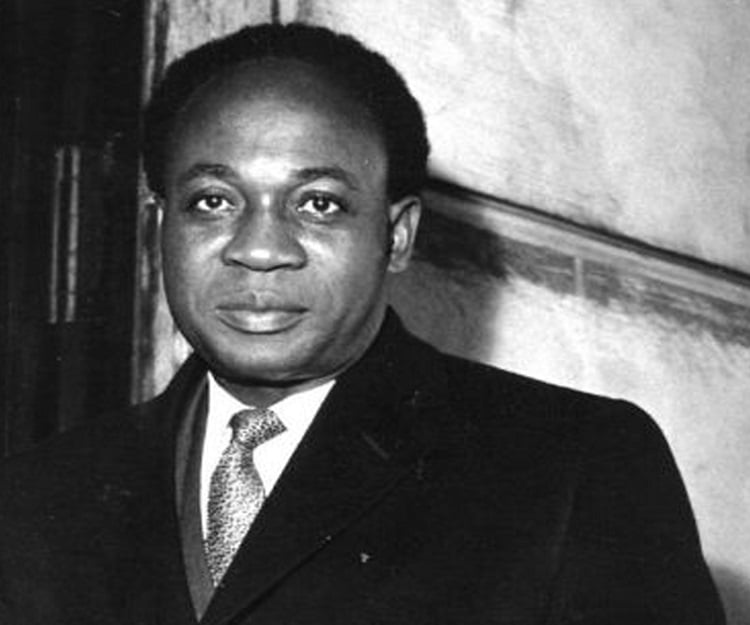
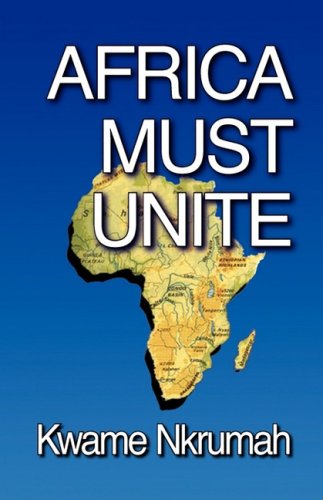
107th birthday of Kwame Nkrumah
(Born 21 September 1909, Nkroful, Ghana)
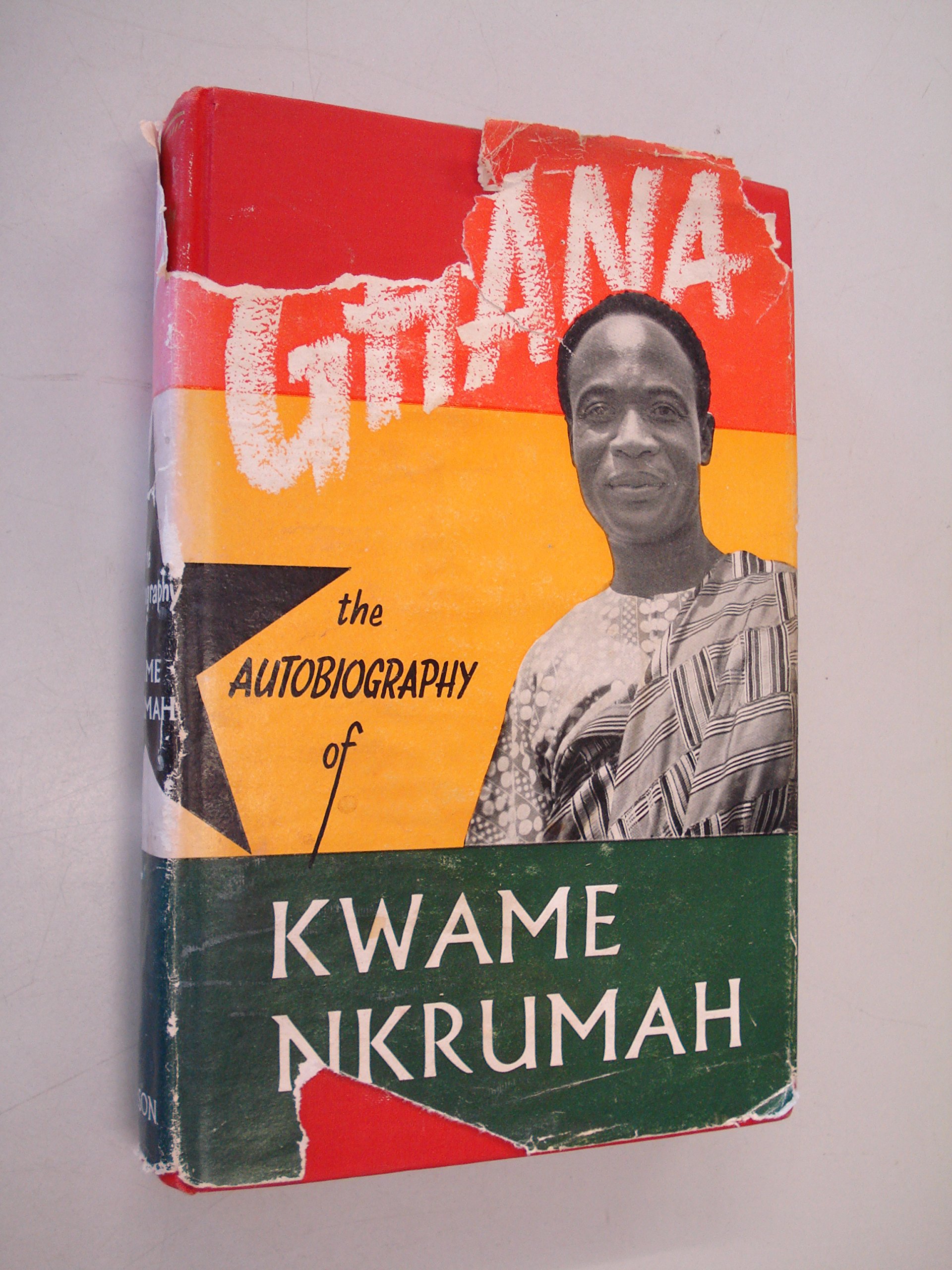
Influential philosopher and theorist of an encompassing African World*consciousness and first president of contemporary Ghana , July 1960, following the 6 March 1957 restoration-of-independence after a century of the British conquest, occupation and immiseration
*Africans in Africa continent, Europe, the Americas, the MiddleEast, Asia, Australasia, wherever else on earth
(Jackie McLean Sextet, “Appointment in Ghana” [personnel: McLean, alto saxophone; Blue Mitchell, trumpet; Tina Brooks, tenor saxophone; Kenny Drew, piano; Paul Chambers, bass; Art Taylor, drums; recorded: Van Gelder Studio, Englewood Cliffs, NJ, US, 1 September 1960])
Twitter@HerbertEkweEkwe
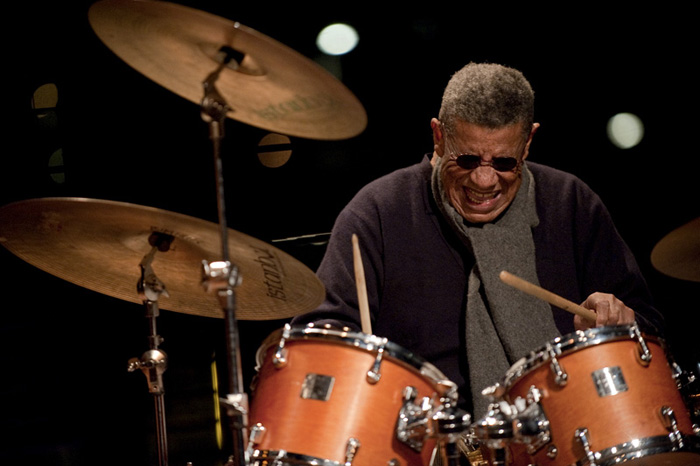
80th birthday of Sunny Murray
One of leading innovative jazz drummers in the 1950s/1960s who frees the drums from the “traditional” time-keeping role in the music ensemble, with the drums now engaging more proactively and continuously in multiple-centred dialogues with other instruments whose soloists resultantly feel less inhibited by time in their own creative enterprise(Born 21 September 1936, Idabel, Oklahoma, US)
(Albert Ayler Trio, “Ghosts – first variation” [personnel: Ayler, tenor saxophone; Gary Peacock, bass; Sunny Murray, drums; recorded: ESP-Disk, New York, 10 July 1965])
Twitter@HerbertEkweEkwe
Tuesday, 20 September 2016
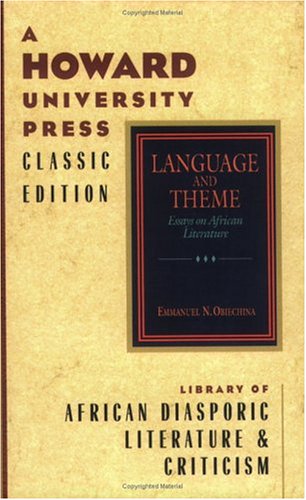
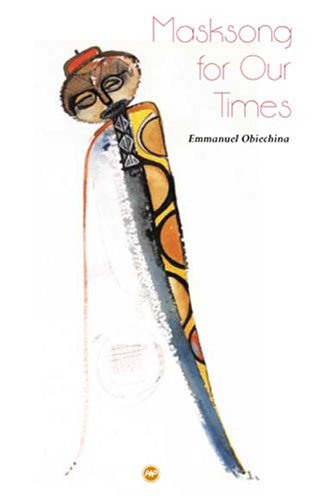
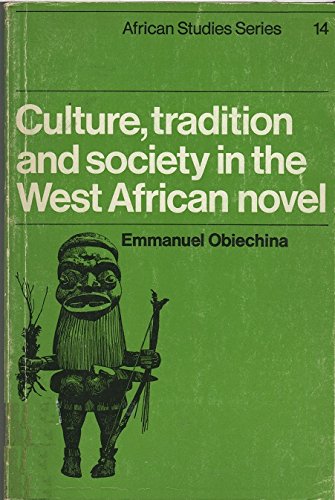
83rd birthday of Emmanuel Obiechina
(Born 20 September 1933, Nkpo, Biafra)
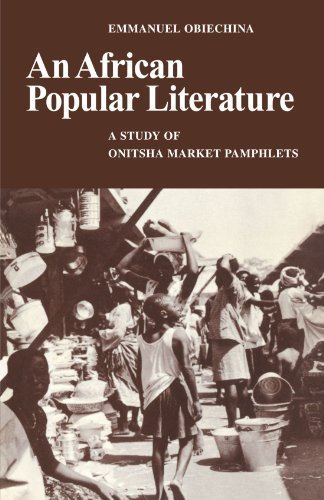
Pioneering and distinguished scholar of the historic Onicha (Biafra’s Oshimiri Delta) market literature genre and versatile literary critic
(McCoy Tyner Quartet, “Contemplation” [personnel: Tyner, piano; Joe Henderson, tenor saxophone; Ron Carter, bass; Elvin Jones, drums; recorded: Van Gelder Studio, Englewood Cliffs, NJ, US, 21 April 1967])
Twitter @HerbertEkweEkwe
60th birthday of Steve Coleman
(Born 20 September 1956, Chicago, US)
Intensely creative alto saxophonist and composer who categorises his music (as well as that of Duke Ellington, Charlie Parker, John Coltrane and other masters) as “spontaneous composition”
(Dave Holland Quintet, “Homecoming” – featuring Steve Coleman [personnel: Holland, bass; Kenny Wheeler, fluegelhorn; Robin Eubanks, trombone; Coleman, alto saxophone; Marvin “Smithy” Smith, drums; recorded: live, Zelt-Musik Festival, Freiburg, Germany 31 March 1986])Twitter@HerbertEkweEkwe
Monday, 19 September 2016
FWD: Chike Ofili on Biafra, history, geography
Writing on his Facebook wall on Sunday 18 September 2016, Chike
Ofili notes [reposted as in the original]:
DELTA STATE IS HISTORICALLY
BIAFRA; as it is Geographically and Ethnically so, too
A most stupid thing [by Delta SSG to deny that Delta is part of Biafra] at a time when an Anioma Igbo is the
Governor of Delta state, Dr. Ifeanyi Okowa just as an Ikwerre Igbo is also the
Governor of Rivers state, Barrister Wysome Wike giving us SEVEN IGBO GOVERNORS.
But a historically illiterate government plagued by a peculiar
group identity crisis, will always vomit rubbish. No wonder Delta is the most
ravished and troubled by armed Fulani herdsmen. Including killing the King of
one its oldest kingdoms, the late Obi of Ubulu Uku without any effective check
from the Delta state government that ever goes beyond the governor sounding
tough in his responsive anger.
The decision whether Dellta state is part of Biafra that it was
historically a part of, is no solely theirs. The decision rests squarely with
the people. Even Ojukwu as the former Governor of the entire old Eastern region
that now makes up South East and South south, knew that the decision was beyond
him. He had to seek the peoples’ permission before he went ahead to fight for
the classical Biafra.
Biafra may be geographically South East and South South, Biafra
is essentially Igbo. And the Igbo cut across the two regions and onto Edo state
and the Middle Belt.
So SS to the Governor, take your SS, sickle cell anemia
utterance to where it rightly belongs, A SICK BAY.
(Ornette Coleman Quartet, “C & D”
{or Civilization and its Discontents – Sigmund Freud}[personnel: Coleman, alto saxophone; Don Cherry, pocket trumpet; Scott LaFaro, bass; Ed Blackwell, drums; recorded: Atlantic Studios, New York, US, 31 January 1961])
Twitter@HerbertEkweEkwe
Subscribe to:
Posts (Atom)