Rethinking Africa is a forward looking blog dedicated to the exchange of innovative thinking on issues affecting the advancement of African peoples wherever they are. We provide rigorous and insightful analyses on the issues affecting Africans and their vision of the world.
Herbert Ekwe-Ekwe ONE of the preeminent luminaries of French letters, prolific across genres – novels, drama, travel books, history, journalism – with classics which include The Three Musketeers, The Count of Monte Cristo, Twenty Years Later, The Last Cavalier, Georges
(Miles Davis Quintet, Ascenseur pour l’echafaud {Lift to the scaffold} [personnel: Davis, trumpet; Barney Wilen, tenor saxophone; René
Utreger, piano; Pierre Michelot, bass; Kenny Clarke, drums; recorded: Le Poste Parisien Studio, Paris, France, 4 and 5 December 1957])
******Herbert Ekwe-Ekwe is the author of African Literature in Defence of History: An essay on Chinua Achebe(2001) and Readings from Reading: Essays on African History, Genocide, Literature (2011)
Herbert Ekwe-Ekwe ONE of the preeminent luminaries of French letters, prolific across genres – novels, drama, travel books, history, journalism – with classics which include The Three Musketeers, The Count of Monte Cristo, Twenty Years Later, The Last Cavalier, Georges
(Miles Davis Quintet featuring Sonny Stitt, “Autumn leaves” [personnel: Davis, trumpet; Stitt, tenor saxophone; Wynton Kelly, piano; Paul Chambers, bass; Jimmy Cobb, drums; recorded: live, L’Olympia, Paris, France, 11 October 1960])
Herbert Ekwe-Ekwe OXFAM, the British-based “charity organisation”, responds to the 12 January 2010 Haiti earthquake with its own earthquake unleashed most expansively in Haiti (see largely unprintable press reports on the subject that make for depressing reading, carried extensively by multimedia services)...
(Jackie McLean Quintet, “Hipnosis” [personnel: McLean, alto saxophone; Grachan Moncur III, trombone; LaMont Johnson, piano; Scott Holt, bass; Billy Higgins, drums; recorded: Van Gelder Studio, Englewood Cliffs, NJ, US, 3 February 1967])
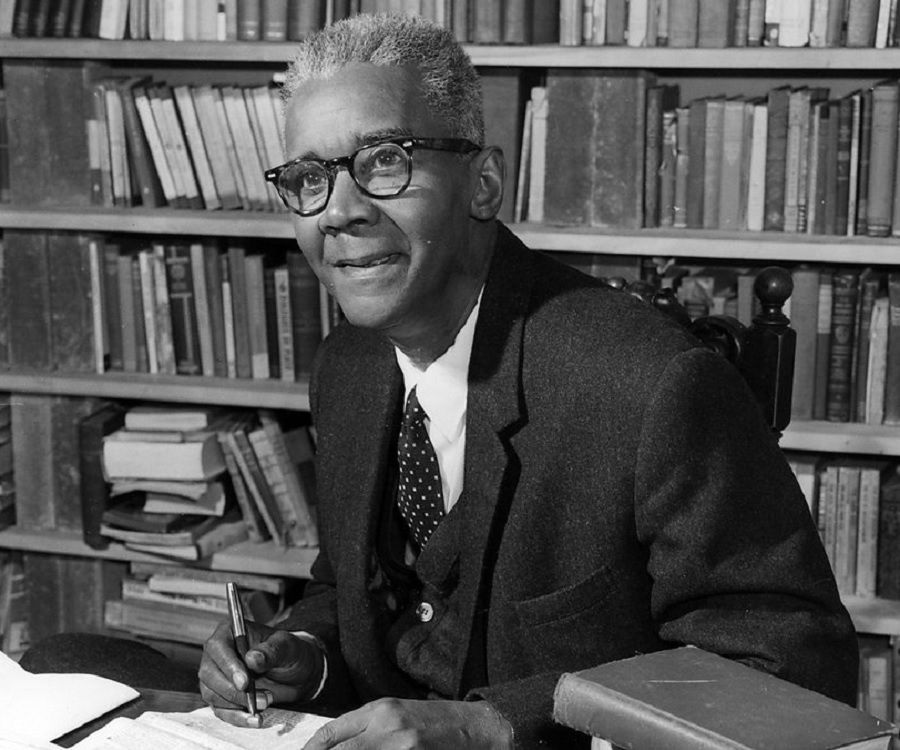
(Born 4 January 1901, Port of Spain, Trinidad and Tobago)
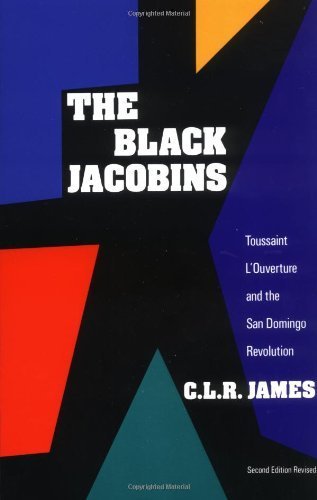
REVOLUTIONARY marxist theorist and philosopher, author of the classic, The Black Jacobins (1938) on the historic enslaved African uprising in France’s conquered and occupied Saint Domingue, the Caribbean, in the 1790s, in which theAfricans defeat the French and its pan-European naval and land forces’ allies (including, especially, British and Spanish) and proclaim the Republic of Haiti, 1804, a victory whose profound consequences are etched indelibly in the psyche of the French Establishment as it relates to African peoples and the African World subsequently
(Sonny Rollins Quartet, “St Thomas” [personnel: Rollins, tenor saxophone; Tommy Flanagan, piano; Doug Watkins, bass; Max Roach, drums; recorded: Van Gelder Studio, Hackensack, NJ, US, 22 June 1956])
(Born 4 January 1901, Port of Spain, Trinidad and Tobago)
Revolutionary marxist theorist and philosopher, author of the classic, The Black Jacobins (1938) on the historic enslaved African uprising in France’s conquered and occupied Saint Domingue, the Caribbean, in the 1790s, in which theAfricans defeat the French and its pan-European naval and land forces’ allies (including, especially, British and Spanish) and proclaim the Republic of Haiti, 1804, a victory whose profound consequences are etched indelibly in the psyche of the French Establishment as it relates to African peoples and the African World subsequently
(Sonny Rollins Quartet, “St Thomas” [personnel: Rollins, tenor saxophone; Tommy Flanagan, piano; Doug Watkins, bass; Max Roach, drums; recorded: Van Gelder Studio, Hackensack, NJ, US, 22 June 1956])
THERE ARE are 120
million African Brazilians or 57 per cent of Brazil’s current total population
of 210 million. As a result, there are more Africans who live in Brazil than
any other (continental) African “country”, including
Nigeria, despite the latter’s “187 million”-population claim which most
people know is bogus.
Shenanigans
SINCE the early 1950s
when the British occupation regime in Nigeria concocted that historic untruth
that the north Nigeria region was “50 per cent of [Nigeria’s] population without any census” (added emphasis), to
quote the startling acknowledgement of the infamous deed 50 years later by
Harold Smith, a British conquest administrator who was then deployed in capital
Lagos where he worked on the programme (see Harold Smith, “How the British undermined democracy in Africa”, Herbert Ekwe-Ekwe, Biafra Revisited, 2006: 41), all subsequent countrywide organised
censuses and outcomes in Nigeria have been grossly fraudulent.
Equally, according
to Smith, the British rigged the all-important 1959
pre-restoration-of-independence Nigeria election in favour of the north region.
This was to ensure that this obsequiously pro-British Hausa-Fulani islamist
leadership of the “country”, opposed to the restoration of African freedom, was
placed as overseers by the seemingly departing British occupation to safeguard
Britain’s assumed strategic and economic interests in Nigeria in perpetuity –
regardless of the quest of unfettered African independence which the Igbo constituent
nation in the east had pursued with rigour since the 1930s. Even the north
region’s essentially continue-British occupation-party,
the so-called Northern People’s Congress, was conceptualised and inaugurated by
the British themselves, as Harold Smith duly recalls. In effect, this north Nigeria region has the unenviable accolade across
the entire Southern World (Africa, Asia, the Caribbean/Central America, South
America) of being home to one of the few peoples who wanted the occupation of
their lands indefinitely by Britain, a premier pan-European power of global
conquest since the 15th century CE.
Genocide
YET these shenanigans
of cooked census figures and rigged election returns were not considered by the
British to be conclusively an ironclad guarantee to continue its hegemonic
control of Nigeria ad infinitum. They
thought, additionally, that they had to guarantee this control through some “blood
covenant” enacted with their north Nigeria region islamist clients (now in
supreme leadership position in Nigeria, thanks to the British diktat!) in which
the Igbo or the “talented people”, as Jeremy Paxmandescribes them in his Empire: What Ruling the World did to the British
(London: Viking, 2011: 272), who led the 30-year-old campaign to terminate the
British conquest, to the mutual discomfiture of Britain and north Nigeria, were
subjected to a gruesome genocide. The Anglo-Nigeria dual perpetrators of the
genocide murdered 3.1 million Igbo between 29 May 1966 and 12 January 1970
(phases I-III).
This is the
foundational genocide of post-(European)conquest Africa and its horrendous slaughtering
score represents 25 per cent of the Igbo population at the time. This genocide,
phase-IV, continues presently. Earlier on in 1945 and 1953, under the very nose
of the British occupation, the north Nigeria region carried out premeditated pogroms
against Igbo people domiciled in the north cities of Jos and Kano (respectively),
murdering hundreds of the immigrants and looting/destroying hundreds of
thousands of pounds worth of their homes and other property. No perpetrator of
these pogroms were ever prosecuted by the British. In retrospect, leading scholars
of the Igbo genocide now designate the Jos and Kano pogroms as effectively “dress
rehearsals” for the genocide itself.
DNA, raison d’être,
interpellation
TRUE to its haunting
DNA signature, genocidist Nigeria emerges from these decades of the Igbo
killing fields as arguably the most notorious Africa-emplaced anti-African peoples state in
contemporary history. Two seemingly empirically contrasting foreign policy
outreaches by this state are highly illustrative of the ways and means the
driving kernel that constitutes its raison
d’être are interpellated in the architectural ground zero of the Igbo
pogroms-genocide, 1945-2016. First, in 1986, despite the numerical minority of muslims in Nigeria compared to its overwhelmingly majority populations of christians,
indigenous African religions and others, not to mention that the state
proclaims itself “secular” in its
constitution, the islamist head of regime got the “country” admitted, secretly,
into the Organisation of Islamic Cooperation. There were no public discussions
or debates in Nigeria whatsoever on this application. The OIC 57-state
membership stretches across four continents including Africa, Asia, Europe and
South America.
Second, in May 2016,
Nigeria plays a central role in the working sessions of the African Union to block
the application of Haiti to become a full member of the African Union on the
grounds that, quoting an article in its constitution, membership to the
organisation is only open to “African [continental] states”. Quite extraordinarily,
or so it appears, the same Nigeria
which smuggled itself into the transnational and transcontinental OIC 30 years
ago, actively intervenes to deny Haiti AU membership because the latter is
located in the Caribbean even though 95 per cent of its 10 million population
are African. Not surprisingly, the north region islamist Nigeria leadership
clearly prioritises and privileges its islamic antecedents and affinities over
any African sensibilities or indeed correspondences. But even more profoundly challenging
for this retrograde leadership, Haiti, which has retained the premier flagship
of the African World resistance to 500 years of the pan-European tyranny of
enslavement, conquest, occupation and immiseration, and quest for freedom, is precisely what islamist
north Nigeria region is not and does not wish to be nor ever countenance as we
have shown here. Most urgently, Haiti reminds Nigeria of Igbo people, Biafra,
which it and suzerain state Britain have sought to destroy during the course of
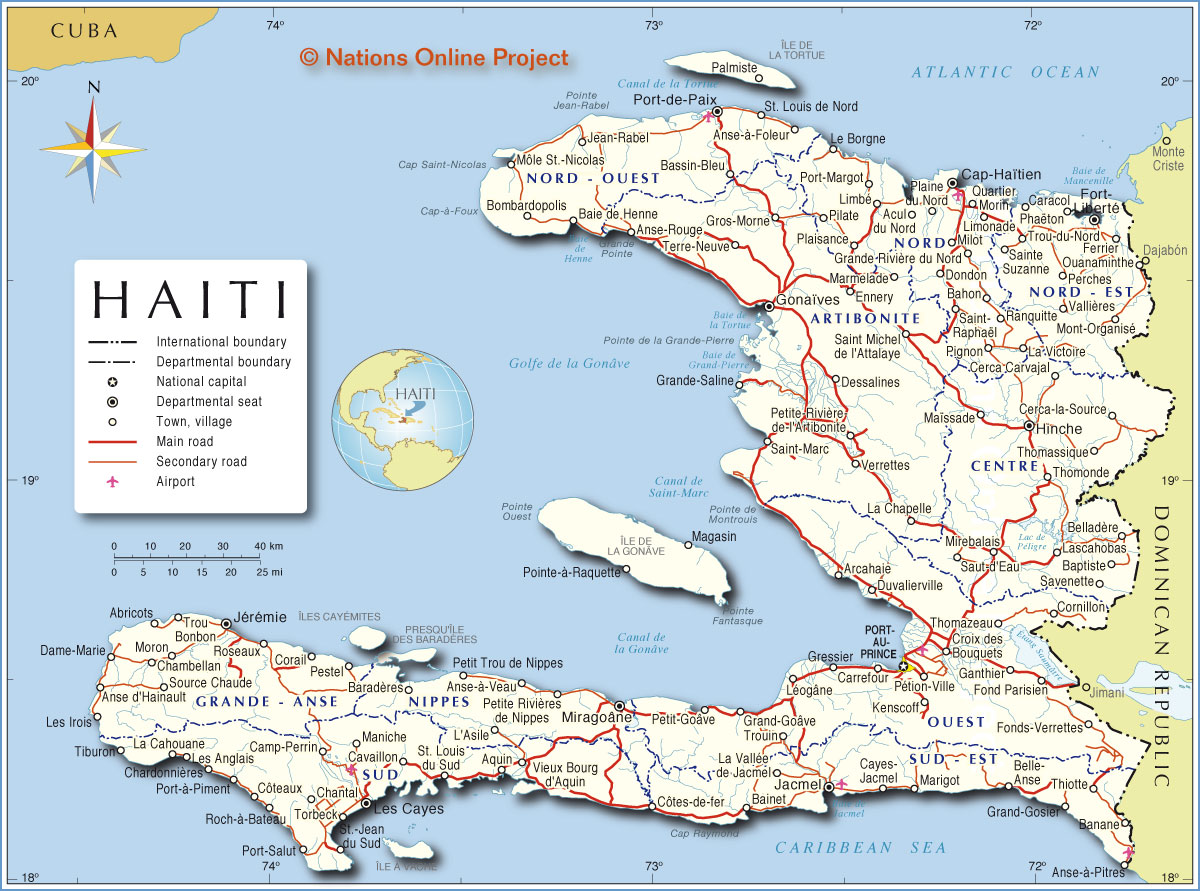
one-half century. Haiti is therefore more of an African state than a Nigeria and the following sketch underscores
the saliency of this Haitian heritage.
Freedom Saint Domingue!
FRENCH-occupied Haiti, or Saint Domingue, was
the wealthiest African-enslaved
territory of the Americas – the “greatest individual market” at the
apogee of the quadcontinental outlay (Africa, Europe, North America, South
America) and the Caribbean 18th century pan-European enslavement of the African
humanity. Haiti accounted for two-thirds of French foreign trade at the time.
In 1791, the enslaved Africans of Saint Domingue, “The Black Jacobins”, as CLR
James, the celebrated African Caribbean scholar would describe them in such
searing irony and sardonicism in his 1938-published classic of the same title
on the subject, embarked on an historic uprising to free themselves. They were
led by Toussaint L’Ouverture, himself enslaved, who had begun the armed
mobilisation oftens of thousands of Africans in 1789. After 13
years of campaign which included a range of epic battles, the Africans “defeated
in turn the local whites and the soldiers of the French monarchy, a Spanish
invasion, a British expedition of some 60,000 men, and a French expedition of
similar size under [Napoleon] Bonaparte’s brother-in-law [General Charles
Leclerc]”, CLR James, Black Jacobins, 1980: ix.
The transformation of enslaved Africans, as
James notes perceptively in his study, “trembling in hundreds before a single
white man … into a people able to organise themselves and defeat the most
powerful European nations of their day … is one of the great epics of revolutionary
struggle and achievement” (James, 1980: ix). Following the African victory in 1803,
they proclaimed and established their republic of Haiti on 1 January 1804.
France, in turn, 213 years later, has yet to recover from the catastrophic
damage to its psyche elicited by its defeat in Saint Domingue. As a result,
in its relationship with Africans, wherever this occurs in the world, France
feels that it is still fighting Toussaint L’Ouverture and his formidable forces
all over again and again… Furthermore, Saint Domingue is gravely etched
indelibly in French consciousness as the precursor to the catalogue of crushing
French military defeats in the subsequent 150 years of its history.
Reconfiguring the African World Haiti, with its illustrious history, will
surely be playing a more prominent role in a future African World assemblage of
peoples and states – not the currently constricted and contrived AU. It is indeed an inexcusable tragedy and an indictment of contemporary Africa that a Nigeria (strategically allied to extracontinental power Britain) that has spent the past 50 years trying to destroy Igbo people, an African people, is a member of an organisation that goes by the name African Union. Nigeria should have been expelled, boycotted, ostracised from the councils of African public relations, including the OAU/preceding body, since after its Sunday 29 May 1966 launch date of the Igbo genocide... Surely, the AU is not fit for purpose.
CONSEQUENTLY, the envisaged vastly peoples’-focused African World organisation will learn the lessons of this sordid history and will therefore energetically admit African peoples (and states) wherever they are emplaced in the world particularly those millions across the Americas. It will be instrumental in launching and implementing transformative societal
wellbeing initiatives that will be of immense benefits to peoples across this crucial
geography created by a cataclysmic history of centuries of conquest. Alas, a free Biafra, freed from genocidist
Nigeria and suzerain Britain, is well placed to contribute its own richly
resourced quota in the construction of this enterprising African World.
(John Coltrane Quintet, “Brasilia” [personnel: Coltrane, tenor saxophone, Eric Dolphy, alto saxophone; McCoy Tyner, piano; Reggie Workman, bass; Elvin Jones, drums; recorded: live, The Village Vanguard, New York, US, 1 November 1961])
(Born 4 January 1901, Port of Spain, Trinidad and Tobago)
Revolutionary marxist theorist and philosopher, author of the classic, The Black Jacobins (1938), on the enslaved African historic uprising in France’s conquered and occupied San Domingo, the Caribbean, in the 1790s, in which the Africans defeat the French and its pan-European naval and land forces’ allies and proclaim the Republic of Haiti, 1804, a victory whose profound consequences are etched indelibly in the psyche of the French Establishment as it relates to Africans and the African World
(Born 4 January 1901, Port of Spain, Trinidad and Tobago)
Revolutionary marxist theorist and philosopher, author of the classic, The Black Jacobins (1938), on the enslaved African historic uprising in France’s conquered and occupied San Domingo, the Caribbean, in the 1790s, in which the Africans defeat the French and its pan-European naval and land forces’ allies and proclaim the Republic of Haiti, 1804, a victory whose profound consequences are etched indelibly in the psyche of the French Establishment as it relates to Africans and the African World
(Born 4
January 1901, Port of Spain, Trinidad and Tobago)
Revolutionary
marxist theorist and philosopher, author of the classic, The Black Jacobins
(1938), on the enslaved African historic uprising in France’s conquered and occupied San Domingo, the Caribbean,
in the 1790s, in which the Africans defeat the French and its pan-European
naval and land forces’ allies and proclaim the Republic of Haiti, 1804, a
victory whose profound consequences are etched indelibly in the psyche of the
French Establishment as it relates to Africans and the African World Twitter @HerbertEkweEkwe
“Without Africa, France will have no history in the 21st century”
- French President François Mitterand, March 1998
“A little country, with a small amount of strength, we can move a planet because [of our] … relations with 15 or 20 African countries”
- Jacques Godfrain, former head, French foreign ministry, March 1998
For whoever wished to know, it was evident, right from the outset, that the French mission in Côte d’Ivoire since November 2010 had little to do with the locally disputed presidential elections. If France’s ambitions were to help resolve a fractious presidential poll, it indeed was confronted with a pressing opportunity during the period within its own European homeland – in Belarus, just a thousand miles away. Perhaps, for a “nobler” transcontinental effect, if it felt so compelled, it could have sought to resolve that mother of all presidential disputes that has dragged on for 21 years in Myanmar between Aung San Suu Kyi and the country’s aging military junta.
No, France had no and has no such lofty aspirations. In Côte d’Ivoire, to employ that late 20th century/early 21st century awful euphemism for the flagrant invasion and occupation of a country and the overthrow of its government by an aggressor state, the French objective here has been nothing but “regime change”. It achieved this so ferociously and viciously recently by unleashing a raging cascade of violence in Abidjan that was at once aimed at re-creating, on the African scene, the bestial kidnapping of Congo’s Patrice Lumumba in 1960 (centrally organised, we mustn’t fail to recall, by France’s Belgian francophonie cousin) and the 1973 attack and virtual destruction of Salvador Allende’s presidential palace in Santiago, Chile, by Pinochet’s putschist military. Hundreds of Ivoriens and others were murdered during this brigandage with one report placing the final casualty tally at 2300. On the morrow of its Abidjan rampage on 6 April 2011, the brute seized President Gbagbo, along with his wife and family and aides, dismissed him from office and turned him over to his very implacable electoral foes for incarceration or worse. Finally, the brute imposed Alassane Ouattara, its francophonie acolyte and barely competent ex-IMF official, on the peoples of Côte d’Ivoire as la président du république!
Origins
But why Côte d’Ivoire, a sovereign African country 3000 miles away from France? Why indeed Africa? France has long been wracked by chronic anxieties about its “status” and “prestige” in the world since its military was dealt a humiliating defeat during a 12-year old uprising by enslaved African military forces led by Toussaint L’Ouverture in French-occupied San Domingo (Haiti) – the “greatest individual market” of the 18th century European enslavement of the African humanity, which accounted for two-thirds of French foreign trade at the time. The Africans of San Domingo, “The Black Jacobins”, as CLR James, the illustrious African Caribbean scholar would describe them in such searing irony and sardonicism in his 1938-published classic of the same title on the subject, “defeated in turn the local whites and the soldiers of the French monarchy, a Spanish invasion, a British expedition of some 60,000 men, and a French expedition of similar size under [Napoleon] Bonaparte’s brother-in-law”. Following the latter’s victory in 1803, the Africans proclaimed and established their republic of Haiti on 1 January 1804.
France has yet to recover from the catastrophic damage to its psyche, elicited by its losses in San Domingo. The transformation of enslaved Africans, as James notes perceptively in his study, “trembling in hundreds before a single white man … into a people able to organise themselves and defeat the most powerful European nations of their day … is one of the great epics of revolutionary struggle and achievement”. Consequently, in its relationship with Africans, wherever this occurs on earth, France feels that it is still fighting Toussaint L’Ouverture and his formidable forces all over again and again… Furthermore, San Domingo is gravely etched indelibly in French consciousness as the precursor to the catalogue of crushing French military defeats in the subsequent 150 years of its history, aptly illustrated by the following: the 1871 Franco-Prussian War, the 1914-1918 World War I, the 1939-1945 World War II and the 1954 Battle of Dien Bien Phu resulting in the débâcle of its elite French Far East Expeditionary Corps’s occupation garrison in Vietnam, inflicted by the resolute Viet Minh commanded by General Giáp. It would require another commentary to sketch, more fully, how the French angst over San Domingo must be working through the mindset of the current occupant of the Élysée Palace whose regime thrives in its serial fantasy as the neo-Napoleonic imperium of these early decades of the 21st century.
Irony
Interestingly, to mention the Second World War French experience is to invoke a fascinating, albeit uncanny irony which French history shares currently with that of the peoples of Côte d’Ivoire in the wake of Paris’s unprovoked and unpardonable aggression. Despite the iron-fist texture of the German blitzkrieg that overran France in July 1940 resulting in French surrender and the establishment of the Vichy regime to oversee the Nazi occupation for four debilitating years, majority of French people had to work very had to believe, correctly, that the success of this invasion was essentially a Pyrrhic victory; eventual termination of the occupation and consequently the restoration of French sovereignty was therefore possible and had to be assiduously pursued with those French men and women who identified uncompromisingly with the free French.
Thankfully, the Ivoriens haven’t had long to wait to draw their own conclusions on the character and intent of the overwhelming brutish terror visited on them in April 2011 by the military from that same country that was so virulently subjected to a similar experience, almost 71 years to the day. Despite the savagery of its violence, despite its subterfuge, despite its obfuscations and despite its hackneyed rationalisations for these dreadful deeds, France must know that the African peoples of Côte d’Ivoire and Africans elsewhere in the world regard the presumed successes of its 6 April 2011 bombardment of Abidjan as, at best, a Pyrrhic victory. Just as France ultimately found out in its own experience in 1945, a free Côte d’Ivoire, free of France, will surely occur. Additionally, its reincarnated, entrenched overseer-Marshal Pétain, now dubbed with an altered second name that begins with “O”, pointedly the next alphabet up from “P”, will end up agonising how to precisely answer the overriding question of an enraged epoch: “Why have I allowed myself to be so fouled-up by the course of history where I exist and operate miserably, pathetically and disgustingly as the mere pawn of an active agency?”
Post-"Berlin-states" or Successor states
In the meantime, a group of Southern World countries headed by South Africa and including Botswana, Cape Verde, India, Jamaica and Bolivia should visit Côte d’Ivoire and support the process of organising a referendum to determine the competing sovereignties in the country, occasioned by the murderous collapse of the Ivorien state. Côte d’Ivoire, as so presently constituted, can no longer provide security to all its incorporated African nations or peoples. Instead, it murders them most horribly.
Tragically, Côte d’Ivoire has now joined that dreadful league of states of Africa inaugurated in May 1966 by Nigeria, the obligatory haematophagous monster in the region, whose raison d’être is to murder Africans most routinely and ritualistically. Enough! Every African life in Côte d’Ivoire is worth much more than the state of Côte d’Ivoire in addition to all of Africa’s states of death. The peoples, including the hundreds of thousands who have been displaced by the emergency to neighbouring countries in west Africa and elsewhere must determine freely and democratically which post-Côte d’Ivoire successor states they wish to belong.
Herbert Ekwe-Ekwe is specialist on the state and on genocide & wars in Africa in the post-1966 epoch – beginning with the Igbo genocide, 29 May 1966-present day, the foundational and most gruesome genocide of post-(European)conquest Africa. 3.1 million Igbo or 25 per cent of this nation’s population were murdered by Nigeria and its allies, principally Britain. Africa and the rest of the world largely stood by and watched as the perpetrators enacted this horror most ruthlessly. The world could have stopped this genocide; the world should have stopped this genocide. This genocide inaugurated Africa’s current age of pestilence. During the period, 12 million additional Africans have been murdered in further genocide in Rwanda (1994), Zaïre/DRCongo (variously, since the late 1990s) and Darfur – west of the Sudan – (since 2004) and in other wars in Africa. African peoples have, presently, no other choice but exit/dismantle the extant genocide-state (the bane of their existence & progress) & construct own nation-centred states that serve their interests. He is author of several books & papers on the subject and his new book is entitled The longest genocide – since 29 May 1966 (2019).