Showing posts with label Patrice Lumumba. Show all posts

Friday, 25 September 2015

Diamonds, queen and “poor” country


Dateline: Kinshasa, Democratic Republic of the Congo, 28 July 2010
There is an apparent controversy raging in Belgium and elsewhere in Europe over Belgian Queen Paola’s receipt of a gift of Congolese diamonds during a recently concluded visit to the Democratic Republic of Congo (DRC). Paola had accompanied her husband, King Albert II, to represent Belgium at the Kinshasa commemorative festivities to mark the 50th anniversary of the country’s so-called restoration of independence (30 June). The DRC’s head of regime Joseph Kabila gave Paola the priceless diamond set of necklace, bracelet and earrings, an impressively rich package indeed which led La Dernière Heure, the influential Belgian daily newspaper, to note, most pointedly: “a gift of choice and certainly with a high price”.
(rough diamonds  DRC)
Some commentators in Belgium, the Netherlands and France appear surprised, with a few even “shocked” to learn of the Belgian royal family’s “acceptance of such (sic) expensive presents” from a country a Reuters’s and Agence France-Presse’s dispatches on the gift describe, respectively, as “impoverished” and “one of the poorest in the world”.
(Queen Paola of the Belgians)
“Magnificent African cake”
Really!? It is inconceivable that either Paola or Albert would have thought or would think that the central African country they visited a month ago is anywhere “impoverished” nor is it “one of the poorest [countries] in the world”. The Democratic Republic of Congo is overwhelmingly richer than Belgium and no one is better placed than the Belgian royal family, itself, to confirm this fact of comparative international economics. The family cannot but be aware that King Leopold II, their 19th century/early 20th century “illustrious” ancestor (some would differ by using the adjective “notorious” or even “bloody” to describe Leopold instead) wrestled that Congo basin of central Africa from Africa for the Belgian royalty and state. This was after an indescribably brutal campaign, a genocide waged on the African population by Leopold’s private army and forces of the Belgian state during which 13 million Africans were murdered between 1878 and 1908. In effect, Leopold’s army ravaged the Congo in search of diamond, rubber, ivory and the like, accumulating gargantuan wealth for the king (by the time Leopold dies in 1909, he had reaped a personal fortune of US$1.1 billion dollars [in early 21st century adjusted value terms] from the Congo genocide, making him one of the richest monarchs of his age) and transforming the nascent Belgian state into a modern European state.

To his credit, Leopold II made no secrets at all of the instrumentalist impact that the riches of the Congo would have on his poor Belgium. He had insisted all along: “I d[idn’t] want to miss the chance of getting us a slice of this magnificent African cake”.
(King Leopold II of the Belgians)
Scrumptious as ever!
This African cake remains as scrumptious as ever for Belgium! Thirty-one years after Leopold’s death, Nazi Germany invaded Belgium, forcing the then Belgian royal family and government to flee to London on exile. Thanks to the inexhaustible wealth of the Congo bakery, the entire financing of the Belgian war effort including the expenses of the exiled royals and government, which totalled the grand sum of £40 million, was paid off comfortably. Thus, Belgium neither borrowed any money to pay for the war nor was its gold reserves used.

The historic effort made 15 years later by the irrepressible Patrice Lumumba, the young Congolese postal clerk and itinerant salesperson, to recover this bakery of his people for his people was violently suppressed by Belgian special forces and some of their foreign allies operating in concert with those Congolese hostile to the restoration of African independence. Lumumba was murdered and a Joseph Mobutu (or Mobutu Sese Seko) was ultimately installed instead to oversee the preservation of the bakery to its agelong exclusivist access, but with some modification in response to the exigencies of the epoch: Belgian royalty and government, the emerging “francophonie” constellation of states under French hegemony, Mobutu and his African cohorts. 
(Mobutu Sese Seko)
Yet the Congo, Africa, and the rest of the world will never forget Lumumba’s moving speech, addressed to his people and the Belgians, after being sworn in as prime minister on that 30th day of June 1960, part of which reads as follows:
… We are proud of this struggle, of tears, of fire, and of blood, to the depths of our being; for it was a noble and just struggle and indispensable to put an end to the humiliating slavery which was imposed upon us by force…
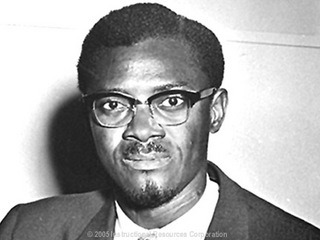
(Patrice Lumumba)
The “magnificent African cake”, so graphically expressed by Leopold II (he should know!), is indeed the metaphor at the crux of the Congo story, the Sudan story, the Nigeria story, the Burundi story, the-rest-of-the-Africa story...

Obfuscation
It should now be clear that there is no such thing as “poor Africa”. The latter is an inexcusable obfuscation of language – and reality. Besides, it is an unpardonable slur on the humanity of African bakers who year in, year out, bake the cake that they are shut out from eating. Just as the Congo, Africans have been shut into anti-African caricatures of the state where they live, principally, to create incredible levels of wealth – not for themselves and their children and grandchildren and theirs, but for the continuing expropriation by extracontinental interests and their local African allies.

There is no future of African progress in the existing “Berlin states” of Africa. The inexorable logic of these states’ existence is to alienate Africans from their being and wealth. Africans have no other choice but break out of these states and create new states of organic sensibility where they are certain to not only bake their own nation’s cake but participate fully in the meal as well.
(Art Blakey & the Jazz Messengers – featuring Wayne Shorter, “Chess players” [personnel: Blakey, drums; Lee Morgan, trumpet; Shorter, tenor saxophone; Bobby Timmons, piano; Jymie Merritt, bass; recorded: Van Gelder Studio, Englewood Cliffs, NJ, US, 6 March 1960])
Twitter@HerbertEkweEkwe


Thursday, 5 May 2011

France must now leave Côte d’Ivoire

“Without Africa, France will have no history in the 21st century”
- French President François Mitterand, March 1998

“A little country, with a small amount of strength, we can move a planet because [of our] … relations with 15 or 20 African countries”
- Jacques Godfrain, former head, French foreign ministry, March 1998

For whoever wished to know, it was evident, right from the outset, that the French mission in Côte d’Ivoire since November 2010 had little to do with the locally disputed presidential elections. If France’s ambitions were to help resolve a fractious presidential poll, it indeed was confronted with a pressing opportunity during the period within its own European homeland – in Belarus, just a thousand miles away. Perhaps, for a “nobler” transcontinental effect, if it felt so compelled, it could have sought to resolve that mother of all presidential disputes that has dragged on for 21 years in Myanmar between Aung San Suu Kyi and the country’s aging military junta.

No, France had no and has no such lofty aspirations. In Côte d’Ivoire, to employ that late 20th century/early 21st century awful euphemism for the flagrant invasion and occupation of a country and the overthrow of its government by an aggressor state, the French objective here has been nothing but “regime change”. It achieved this so ferociously and viciously recently by unleashing a raging cascade of violence in Abidjan that was at once aimed at re-creating, on the African scene, the bestial kidnapping of Congo’s Patrice Lumumba in 1960 (centrally organised, we mustn’t fail to recall, by France’s Belgian francophonie cousin) and the 1973 attack and virtual destruction of Salvador Allende’s presidential palace in Santiago, Chile, by Pinochet’s putschist military. Hundreds of Ivoriens and others were murdered during this brigandage with one report placing the final casualty tally at 2300. On the morrow of its Abidjan rampage on 6 April 2011, the brute seized President Gbagbo, along with his wife and family and aides, dismissed him from office and turned him over to his very implacable electoral foes for incarceration or worse. Finally, the brute imposed Alassane Ouattara, its francophonie acolyte and barely competent ex-IMF official, on the peoples of Côte d’Ivoire as la président du république!

Origins

But why Côte d’Ivoire, a sovereign African country 3000 miles away from France? Why indeed Africa? France has long been wracked by chronic anxieties about its “status” and “prestige” in the world since its military was dealt a humiliating defeat during a 12-year old uprising by enslaved African military forces led by Toussaint L’Ouverture in French-occupied San Domingo (Haiti) – the “greatest individual market” of the 18th century European enslavement of the African humanity, which accounted for two-thirds of French foreign trade at the time. The Africans of San Domingo, “The Black Jacobins”, as CLR James, the illustrious African Caribbean scholar would describe them in such searing irony and sardonicism in his 1938-published classic of the same title on the subject, “defeated in turn the local whites and the soldiers of the French monarchy, a Spanish invasion, a British expedition of some 60,000 men, and a French expedition of similar size under [Napoleon] Bonaparte’s brother-in-law”. Following the latter’s victory in 1803, the Africans proclaimed and established their republic of Haiti on 1 January 1804.

France has yet to recover from the catastrophic damage to its psyche, elicited by its losses in San Domingo. The transformation of enslaved Africans, as James notes perceptively in his study, “trembling in hundreds before a single white man … into a people able to organise themselves and defeat the most powerful European nations of their day … is one of the great epics of revolutionary struggle and achievement”. Consequently, in its relationship with Africans, wherever this occurs on earth, France feels that it is still fighting Toussaint L’Ouverture and his formidable forces all over again and again… Furthermore, San Domingo is gravely etched indelibly in French consciousness as the precursor to the catalogue of crushing French military defeats in the subsequent 150 years of its history, aptly illustrated by the following: the 1871 Franco-Prussian War, the 1914-1918 World War I, the 1939-1945 World War II and the 1954 Battle of Dien Bien Phu resulting in the débâcle of its elite French Far East Expeditionary Corps’s occupation garrison in Vietnam, inflicted by the resolute Viet Minh commanded by General Giáp. It would require another commentary to sketch, more fully, how the French angst over San Domingo must be working through the mindset of the current occupant of the Élysée Palace whose regime thrives in its serial fantasy as the neo-Napoleonic imperium of these early decades of the 21st century.

Irony

Interestingly, to mention the Second World War French experience is to invoke a fascinating, albeit uncanny irony which French history shares currently with that of the peoples of Côte d’Ivoire in the wake of Paris’s unprovoked and unpardonable aggression. Despite the iron-fist texture of the German blitzkrieg that overran France in July 1940 resulting in French surrender and the establishment of the Vichy regime to oversee the Nazi occupation for four debilitating years, majority of French people had to work very had to believe, correctly, that the success of this invasion was essentially a Pyrrhic victory; eventual termination of the occupation and consequently the restoration of French sovereignty was therefore possible and had to be assiduously pursued with those French men and women who identified uncompromisingly with the free French.

Thankfully, the Ivoriens haven’t had long to wait to draw their own conclusions on the character and intent of the overwhelming brutish terror visited on them in April 2011 by the military from that same country that was so virulently subjected to a similar experience, almost 71 years to the day. Despite the savagery of its violence, despite its subterfuge, despite its obfuscations and despite its hackneyed rationalisations for these dreadful deeds, France must know that the African peoples of Côte d’Ivoire and Africans elsewhere in the world regard the presumed successes of its 6 April 2011 bombardment of Abidjan as, at best, a Pyrrhic victory. Just as France ultimately found out in its own experience in 1945, a free Côte d’Ivoire, free of France, will surely occur. Additionally, its reincarnated, entrenched overseer-Marshal Pétain, now dubbed with an altered second name that begins with “O”, pointedly the next alphabet up from “P”, will end up agonising how to precisely answer the overriding question of an enraged epoch: “Why have I allowed myself to be so fouled-up by the course of history where I exist and operate miserably, pathetically and disgustingly as the mere pawn of an active agency?”

Post-"Berlin-states" or Successor states

In the meantime, a group of Southern World countries headed by South Africa and including Botswana, Cape Verde, India, Jamaica and Bolivia should visit Côte d’Ivoire and support the process of organising a referendum to determine the competing sovereignties in the country, occasioned by the murderous collapse of the Ivorien state. Côte d’Ivoire, as so presently constituted, can no longer provide security to all its incorporated African nations or peoples. Instead, it murders them most horribly.

Tragically, Côte d’Ivoire has now joined that dreadful league of states of Africa inaugurated in May 1966 by Nigeria, the obligatory haematophagous monster in the region, whose raison d’être is to murder Africans most routinely and ritualistically. Enough! Every African life in Côte d’Ivoire is worth much more than the state of Côte d’Ivoire in addition to all of Africa’s states of death. The peoples, including the hundreds of thousands who have been displaced by the emergency to neighbouring countries in west Africa and elsewhere must determine freely and democratically which post-Côte d’Ivoire successor states they wish to belong.

Wednesday, 28 July 2010

Congolese diamonds for Belgian Queen Paola – What’s really the fuss?

It isn’t quite clear what the seeming controversy is all about in Belgium and elsewhere in Europe over Queen Paola’s receipt of a gift of Congolese diamonds during a recently concluded visit to the Democratic Republic of Congo (DRC). Paola had accompanied her husband, King Albert II, to represent Belgium at the Kinshasa commemorative festivities to mark the 50th anniversary of the country’s so-called restoration of independence. The DRC’s head of regime Joseph Kabila gave Paola the priceless diamond set of necklace, bracelet and earrings, an impressively rich package indeed which led La Dernière Heure, the influential Belgian daily newspaper, to note, most pointedly: “a gift of choice and certainly with a high price”.

Some commentators in Belgium, the Netherlands and France are apparently surprised, with a few even “shocked” to learn of the Belgian royal family’s “acceptance of such (sic) expensive presents” from a country a Reuters’s and Agence France-Presse’s dispatches on the gift describe, respectively, as “impoverished” and “one of the poorest in the world”.

Really!? It is inconceivable that either Paola or Albert would have thought or would think that the central African country they visited a month ago is anywhere “impoverished” nor is it “one of the poorest [countries] in the world”. The Democratic Republic of Congo is overwhelmingly richer than Belgium and no one is better placed than the Belgian royal family, itself, to confirm this fact of comparative international economics. The family cannot but be aware that King Leopold II, their 19th century “illustrious” ancestor (some would differ by using the adjective “notorious” or even “bloody” to describe Leopold instead) wrestled that Congo basin of central Africa from Africa for the Belgian royalty and state. This was after an indescribably brutal campaign on the African population by Leopold’s private army and forces of the Belgian state during which 10-15 million Africans were murdered. In effect, Leopold’s army ravaged the Congo in search of diamond, rubber, ivory and the like, accumulating gargantuan wealth for the king (by the time Leopold dies in 1909, he had reaped a personal fortune of US$1.1 billion dollars [in early 21st century adjusted value terms] from the Congo genocide, making him one of the richest monarchs of his age) and transforming the nascent Belgian state into a modern European state.

To his credit, Leopold II made no secrets at all of the instrumentalist impact that the riches of the Congo would have on his poor Belgium. He had insisted all along: “I d[idn’t] want to miss the chance of getting us a slice of this magnificent African cake”.

This African cake remains as scrumptious as ever for Belgium! Thirty-one years after Leopold’s death, Nazi Germany invaded Belgium, forcing the then Belgian royal family and government to flee to London on exile. Thanks to the inexhaustible wealth of the Congo bakery, the entire financing of the Belgian war effort including the expenses of the exiled royals and government, which totalled the grand sum of £40 million, was paid off comfortably. Thus, Belgium neither borrowed any money to pay for the war nor was its gold reserves used.

The historic effort made 15 years later by the irrepressible Patrice Lumumba, the young Congolese postal clerk and itinerant salesperson, to recover this bakery of his people for his people was violently suppressed by Belgian special forces and some of their foreign allies operating in concert with those Congolese hostile to the restoration of African independence. Lumumba was murdered and a Joseph Mobutu (or Mobutu Sese Seko) was ultimately installed instead to oversee the preservation of the bakery to its agelong exclusivist access, but with some modification in response to the exigencies of the epoch: Belgian royalty and government, the emerging “francophonie” constellation of states under French hegemony, Mobutu and his African cohorts. Yet, the Congo, Africa and the rest of the world will never forget Lumumba’s moving speech, addressed to his people and the Belgians, after being sworn in as prime minister on that 30th day of June 1960, part of which reads as follows:
… We are proud of this struggle, of tears, of fire, and of blood, to the depths of our being; for it was a noble and just struggle and indispensable to put an end to the humiliating slavery which was imposed upon us by force…

The “magnificent African cake”, so graphically expressed by Leopold II (he should know!), is indeed the metaphor at the crux of the Congo story, the Sudan story, the Nigeria story, the Burundi story, the-rest-of-the-Africa story...

It should now be clear that there is no such thing as “poor Africa”. The latter is an inexcusable obfuscation of language – and reality. Besides, it is an unpardonable slur on the humanity of African bakers who year in, year out, bake the cake that they are shut out from eating. Just as the Congo, Africans have been shut into anti-African caricatures of the state where they live, principally, to create incredible levels of wealth – not for themselves and their children and grandchildren and theirs, but for the continuing expropriation by extracontinental interests and their local African allies.

There is no future of African progress in the existing “Berlin states” of Africa. The inexorable logic of these states’ existence is to alienate Africans from their being and wealth. Africans have no other choice but break out of these states and create new states of organic sensibility where they are certain to not only bake their own nation’s cake but participate fully in the meal as well.