Rethinking Africa is a forward looking blog dedicated to the exchange of innovative thinking on issues affecting the advancement of African peoples wherever they are. We provide rigorous and insightful analyses on the issues affecting Africans and their vision of the world.
Showing posts with label Father of African Literature. Show all posts
Showing posts with label Father of African Literature. Show all posts
Selected works: Things
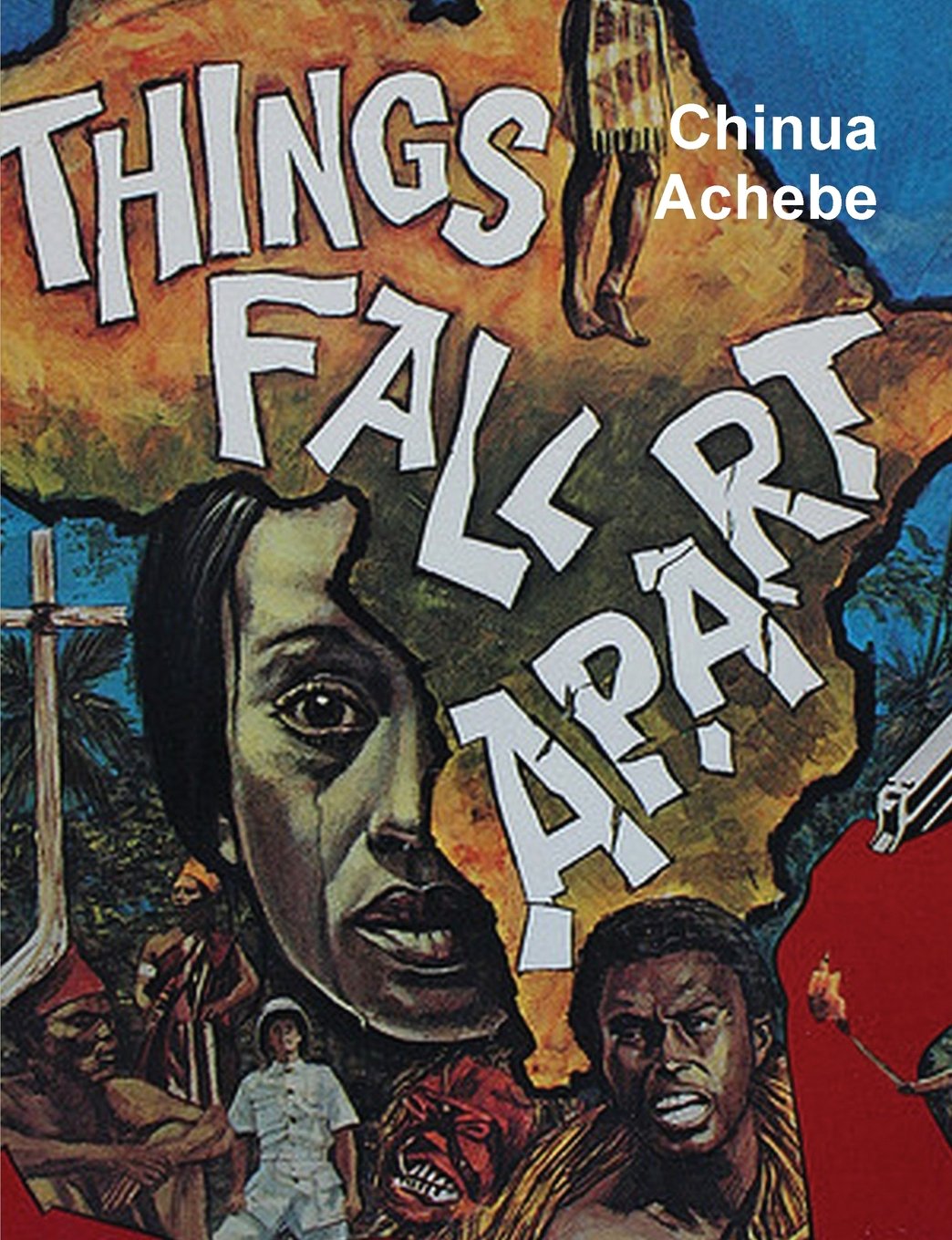
Fall Apart (1958) No Longer at Ease (1960), Arrow of God
(1964), A Man of the People (1966),
Beware Soul Brother (1971), Girls at War and other Stories (1973), Morning
Yet on Creation Day (1975), “An Image of Africa: Racism in Conrad’s Heart of
Darkness” (1975), Don’t let him die:
An anthology of memorial poems for Christopher Okigbo (ed., 1978), The Trouble with Nigeria (1984), Anthills of the
Savannah (1987), Hopes and Impediments (1988), “Our Mission”
(1989), “African Literature as Restoration of Celebration” (1990), Home and
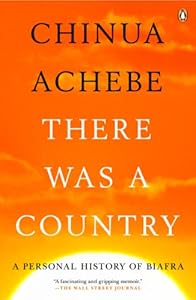
Exile (2000), Collected Poems (2004), There was a Country
(2012)
(George Russell Sextet, “Ezzthetics” [personnel: Russell, piano;Don Ellis, trumpet;Dave Baker, trombone;Eric Dolphy, alto saxophone;Steve Swallow, bass;Joe Hunt, drums; recorded: Riverside Records, New York, US, 8 May 1961])
*****Herbert Ekwe-Ekwe is the author of African Literature in Defence of History: An essay on Chinua Achebe (2001) and author, with Lakeson Okwuonicha, of Why Donald Trump is great for Africa (2018)
(Published 27 September 2012, Penguin, London, Britain)
Father of African Literature’s incomparable memoirs on the Igbo genocide, the foundational genocide of post-(European)conquest Africa, 29 May 1966-12 January 1970 (phases I-III), when Nigeria and its suzerain state Britain, under the primeministership of Harold Wilson, murdered 3.1 million Igbo people or 25 per cent of this nation’s population (Herbert Ekwe-Ekwe)
(John Coltrane Quartet, “Sun ship” [personnel: Coltrane, tenor saxophone, McCoy Tyner, piano; Jimmy Garrison, bass; Elvin Jones, drums; recorded: Impulse!, New York, US, 26 August 1965])
(JamesBaldwin and Chinua Achebe: … African Atlantic discourses, University of Florida, Gainesville, 9 April 1980…)
Herbert Ekwe-Ekwe
THURSDAY 2 August 2018 is the 94th
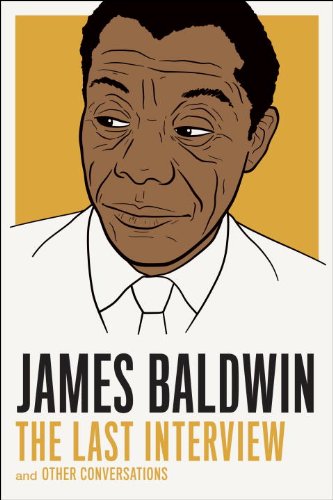
birthday of James Baldwin – novelist,
essayist, commentator, dramatist, arguably African America’s leading writer and
intellectual during its age of freedom affirmation, 1950s-1990s. As
part of this week’s commemoration of the birthday, re-thinkingafrica here
reissues that Baldwin’s historic conversation with Chinua Achebe, Father of African Literature (University of
Florida, Gainesville, 9 April 1980), originally published by brainpickings. ...Reflections on history, art, politics, brainpickings, 22 September 2014,
THE 12: Chinua Achebe, Things Fall Apart, Gabriel Garcia Márquez, One Hundred Years of Solitude, Toni Morrison, Beloved, Miguel de Cervantes Saavedra, Don Quixote, Charlotte Bronte, Jane Eyre, Virginia Woolf, Mrs Dalloway, Leo Tolstoy, Anna Karenina, F Scott Fitzgerald, The Great Gatsby, Harper Lee, To Kill a Mockingbird, Ralph Ellison, Invisible Man, Alice Walker, The Color Purple, EM Forster, A Passage to India
(Tina Brooks Sextet, “Back to the tracks” [personnel: Brooks, tenor saxophone; Blue Mitchell, trumpet; Jackie McLean, alto saxophone; Kenny Drew, piano; Paul Chambers, bass; Art Taylor, drums; recorded: Van Gelder Studio, Englewood Cliffs, US, 1 September 1960)
1.Thursday 16 November 2017: Chinua Achebe’s birthday –
commemorating the 87th birthday of one of Biafra’s preeminent intellectuals and
Father of African Literature
(Father of African Literature)
2.Saturday 18 November 2017: Ofe nsala day – the Biafra
freedom movement’s organised day of mass boycott of Hausa-Fulani/islamist-led genocidist
Nigeria’s occupation regime-“election” in Biafra’s Anambra southwest region.
It should be noted that this lead grouping of the occupation which is arranging
the Anambra election chimera has no tradition of democratic discourse or
engagement whatsoever in its
brutish history of terror, conquests, occupations, expropriations, decadence,
genocide… At the end of such an exercise in the past, it usually appoints the
individual/“party” that it reckons will enable it to police its occupation of
Biafra more ruthlessly.
(Nnamdi Kanu: ... leader of Indigenous People of Biafra and freedom broadcaster, Radio Biafra)
THIS IS precisely why the Biafra freedom movement insists on a
referendum, nothing else including the occupation’s bogus elections, to democratically secure the next crucial phase
of the restoration-of-independence process. It has therefore called
on the Anambra population to instead stay firmly home with loved ones
throughout this day and enjoy a delicious dinner and don’t partake in the
desperate occupation’s strategy to prolong its murderous stay***** which is now
clearly unsustainable.
(Wynton Kelly Quintet, “Wrinkles” [personnel: Kelly, piano; Lee Morgan, trumpet; Shorter, tenor saxophone; Paul Chambers, bass; Philly Joe Jones, drums; recorded: Fine Sound Studios, New York, US, 12 August 1959])
*****INDEED in these past two years of the Muhammadu
Buhari regime, beginning in November 2015, the Nigeria genocidist military and
its Fulani militia adjunct have murdered over 2000 Biafrans in scorched-earth
campaigns across the country – marking it one of the bloodiest stretches during
the course of phase IV (launched on 13 January 1970, following phases I-III, 29 May 1966-12 January 1970, when Nigeria and co-genocidist Britain murdered 3.1 million Biafrans or 25 per cent of the Igbo population) of the Igbo genocide in
which tens of thousands of Biafrans have been murdered. Since 14 September 2017,
the genocidists have murdered hundreds of Biafrans including the attack on the
family home of Nnamdi Kanu, the leader of the Indigenous People of Biafra, when
scores of Kanu’s relatives and friends were murdered. Scores
of others are still unaccounted for. The whereabouts of Kanu himself and
parents are still unknown since these bombardments. None of the regimes in the
administrative regions of Biafra, essentially quisling-of-the-occupation, has
condemned any of these spates of 24 months of slaughtering of their own people.
Herbert Ekwe-Ekwe “IT IS only the story ... that saves our progeny from blundering like blind beggars into the spikes of the cactus fence. The story is our escort; without it, we are blind. Does the blind man own his escort? No, neither do we the story; rather, it is the story that owns us” (Chinua Achebe, Anthills of the Savannah, New York: Anchor Books, 1997, p. 114.)
(Three masters at work: Duke Ellington Trio, “Fleurette Africaine” [personnel: Ellington, piano; Charles Mingus, bass; Max Roach, drums; recorded: Sound Makers Studios, New York, US, 17 September 1962])
(Published 27 September 2012, Penguin, London, Britain)
Father of African Literature’s incomparable memoirs on the Igbo genocide, the foundational genocide of post-(European)conquest Africa, 29 May 1966-12 January 1970 (phases I-III), when Nigeria and its suzerain state Britain, under the primeministership of Harold Wilson, murdered 3.1 million Igbo people or 25 per cent of this nation’s population Twitter@HerbertEkweEkwe
Novelist, essayist, commentator, dramatist, arguably African America’s leading writer and intellectual during its age of freedom affirmation, 1950s-1990s
(The iconoclastic Baldwin in conversation with the Father of African Literature: … African Atlantic discourses, Gainesville, Florida, US, 9 April 1980…)
...Reflections on history, art, politics, brainpickings, 22 September 2014,
“It is only the story ... that saves our progeny from blundering like blind beggars into the spikes of the cactus fence. The story is our escort; without it, we are blind. Does the blind man own his escort? No, neither do we the story; rather, it is the story that owns us” (Chinua Achebe, Anthills of the Savannah, New York: Anchor Books, 1997, p. 114.)
(John Coltrane Quartet, “My favorite things” [personnel: Coltrane, soprano saxophone; McCoy Tyner, piano; Jimmy Garrison, bass; Elvin Jones, drums; recorded: live, Comblain-la-Tour, Hamoir, Belgium, RTBF radio & television network, 1 August 1965])
(1 February 1974:operation performed, Nsukka University Teaching Hospital, Enuugwu, Biafra)
Herbert Ekwe-Ekwe FIRST OPEN heart-surgery in Biafra/southwestcentral Africawas performed at the Nsukka University Teaching Hospital, Enuugwu, Biafra, on 1 February 1974 – four years and just over a month to the day after the formal end of phase-III (beginning of phase-IV) of the 44-month long Igbo genocide, foundational genocide of post-(European)conquest Africa, perpetrated by Nigeria and its suzerain state Britain in which 3.1 million Igbo or 25 per cent of this nation’s population were murdered. The surgeons who worked on the surgery included CH Anyanwu, DC Nwafor, FA Udekwu and M Yacoub. In the subsequent 26 years, i.e., by 2000, a total of 102 (one hundred and two) open heart-surgeries were carried out at the Enuugwu centre.
Forty-three years since the first surgery, Africa and the rest of the world cannot wait for the triumph of the Biafra freedom movement to witness the expansion of the stretch of such creative and transformational energy by Biafrans –an African people building and reconstructing on their land and on their own terms; definitely not an engagement and process seen in Africa for ages... Here, it is indeed “Morning Yet On Creation Day” as the Father of African Literature reminds us.
(Thelonious Monk Quintet, “Brilliant corners” – personnel: Monk, piano; Ernie Henry, alto saxophone; Sonny Rollins, tenor saxophone; Oscar Pettiford, bass; Max Roach, drums; recorded: Riverside studio, New York, US, 15 October 1956)
“I am not a Biafran member ... I merely cashed in on the situation at hand to make money”, Lagos publisher A NEWSPAPER publisher in Lagos,
west genocidist Nigeria, who recently added Biafra Times to their publishing
firm’s titles, has been arrested by police, accused of “sedition”, and had
the entire business shut down (saharareporters,
Monday 30 January 2017).
Speaking shortly after the
arrest, the publisher insisted that they are “not a Biafran member ... I merely
cashed in on the situation at hand to make money”. The publisher is adamant:
“I am not aware that my
publication is seditious. I only saw it from a commercial point of view. I have
not registered the Biafra Times but my sports and politics papers are
registered. I started Biafra Times because we discovered that each time we ran
Biafra stories on the other papers, we usually had huge sales.
“So, we thought that having a
paper with Biafra in its title would attract more money for us. And it worked
because we usually print between 6,000 to seven 7,000 copies a week and we sell.
The paper is sold at N100 [“n” for naira, genocidist Nigeria currency] per copy
but we give vendors at N60.
“I was trying to recoup the money
I spent on setting up the printing press. I bought the four printing machines
at N2.1 million each.
“That was when I decided to focus
on Biafra Times. I am not a Biafran member, I merely cashed in on the situation
at hand to make money.”
+++++++++++++++++++++++++++++++++++
*****This Land of the Rising Sun,
280 miles east of the location of this publisher’s close encounter of the
theatrical kind! Africa and the rest of the world cannot wait to witness the
creative and transformational energy that will be unleashed in Biafra by an
African people, building, reconstructing on their land and on their own terms –
definitely not an engagement and process seen in Africa for ages... “Morning
Yet On Creation Day”, as the Father of African Literature reminds us. (HE-E)*****
(Published 27 September 2012, Penguin, London, Britain)
Father of African Literature’s incomparable memoirs on the Igbo genocide, the foundational genocide of post-(European)conquest Africa, 29 May 1966-12 January 1970, when Nigeria and its suzerain state Britain, under the primeministership of Harold Wilson, murdered 3.1 million Igbo people or 25 per cent of this nation’s population Twitter@HerbertEkweEkwe
(Father of African Literature:visiting Umeå, Sweden, in the autumn of 1988 [19 October 1988] to launch the Swedish translation of his Anthills of the Savannah, 1987)
Portal-I: Aftermath of pan-European conquest and occupation of the African World
[The European conquest of Africa] may indeed be a complex affair, but one thing is certain: You do not walk in, seize the land, the person, the history of another, and then sit back and compose hymns of praise in his honour. To do that would amount to calling yourself a bandit; and you won’t to do that. So what do you do? You construct very elaborate excuses for your action. You say, for instance, that the man in question is worthless and quite unfit to manage himself or his affairs. If there are valuable things like gold and diamonds which you are carting away from his territory, you proceed to prove that he doesn’t own them in the right sense of the word – that he and they had just happened to be lying around the same place when you arrived. Finally if the worse comes to the worse, you may even be prepared to question whether such as he can be, like you, fully human. From denying the presence of a man standing there before you, you end up questioning his very humanity …[I]n the [European conquest] situation presence was the critical question, the crucial word. Its denial was the keynote of [this conquest’s] ideology. (Chinua Achebe, “African Literature as Restoration of Celebration”, Kunapipi, 12, 2, 1990: 4; emphasis added)
Portal-II: Aftermath of Igbo genocide, the foundational genocide of post-(European)conquest Africa, 29 May 1966-12 January 1970
[Nigeria’s] wartime cabinet, it should also be remembered, was full of intellectuals like Obafemi Awolowo and Anthony Enaharo and super-permanent secretaries such as Allison Akene Ayida among others who came up with a boatload of infamous and regrettable policies. A statement credited to … Obafemi Awolowo and echoed by his cohorts is the most callous and unfortunate: ‘All is fair in war, and starvation is one of the weapons of war. I don’t see why we should feed our enemies fat in order for them to fight harder’. It is my impression that … Obafemi Awolowo was driven by an overriding ambition of power, for himself in particular and for the advancement of his Yoruba people in general. And let it be said that there is, on the surface, at least, nothing wrong with those aspirations. However, Awolowo saw the dominant Igbo … at the time as the obstacles to that goal, and when the opportunity arose – the Nigeria-Biafra War – his ambition drove him into a frenzy to go to any length to achieve his dreams. In the Biafran case it meant hatching up a diabolical policy to reduce the numbers of his enemies significantly through starvation – eliminating over two million people, mainly members of future generations. (Chinua Achebe, There was a Country: A Personal History of Biafra [New York: The Penguin, 2012], p. 233; emphasis added)
(John Coltrane Quartet, “Wise one” [personnel: Coltrane, tenor saxophone; McCoy Tyner, piano; Jimmy Garrison, bass; Elvin J ones, drums; recorded: Van Gelder Studio, Englewood, Cliff, NJ, US, 24 April 1964])
“It is only the story ... that saves our progeny from blundering like blind beggars into the spikes of the cactus fence. The story is our escort; without it, we are blind. Does the blind man own his escort? No, neither do we the story; rather, it is the story that owns us” (Chinua Achebe, Anthills of the Savannah, New York: Anchor Books, 1997, p. 114.)
[Chinua Achebe, “An Image of Africa: Racism in Conrad’s ‘Heart of Darkness’”, Massachusetts Review, 18, 1977, reprinted Robert Kimbrough, ed., Heart of Darkness, An Authoritative Text, Background and Sources Criticism, 1961, 3rd ed., London: W. W Norton, 1988, pp.251-261.]
In the fall of 1974 I was walking one day from the English Department at the University of Massachusetts to a parking lot. It was a fine autumn morning such as encouraged friendliness to passing strangers. Brisk youngsters were hurrying in all directions, many of them obviously freshmen in their first flush of enthusiasm. An older man going the same way as I turned and remarked to me how very young they came these days. I agreed. Then he asked me if I was a student too. I said no, I was a teacher. What did I teach? African literature. Now that was funny, he said, because he knew a fellow who taught the same thing, or perhaps it was African history, in a certain Community College not far from here. It always surprised him, he went on to say, because he never had thought of Africa as having that kind of stuff, you know. By this time I was walking much faster. “Oh well,” I heard him say finally, behind me: “I guess I have to take your course to find out.” A few weeks later I received two very touching letters from high school children in Yonkers, New York, who – bless their teacher – had just read Things Fall Apart. One of them was particularly happy to learn about the customs and superstitions of an African tribe.
I propose to draw from these rather trivial encounters rather heavy conclusions which at first sight might seem somewhat out of proportion to them. But only, I hope, at first sight. The young fellow from Yonkers, perhaps partly on account of his age but I believe also for much deeper and more serious reasons, is obviously unaware that the life of his own tribesmen in Yonkers, New York, is full of odd customs and superstitions and, like everybody else in his culture, imagines that he needs a trip to Africa to encounter those things.
The other person being fully my own age could not be excused on the grounds of his years. Ignorance might be a more likely reason; but here again I believe that something more willful than a mere lack of information was at work. For did not that erudite British historian and Regius Professor at Oxford, Hugh Trevor Roper, also pronounce that African history did not exist?
If there is something in these utterances more than youthful inexperience, more than a lack of factual knowledge, what is it? Quite simply it is the desire – one might indeed say the need – in Western psychology to set Africa up as a foil to Europe, as a place of negations at once remote and vaguely familiar, in comparison with which Europe’s own state of spiritual grace will be manifest.
This need is not new; which should relieve us all of considerable responsibility and perhaps make us even willing to look at this phenomenon dispassionately. I have neither the wish nor the competence to embark on the exercise with the tools of the social and biological sciences but more simply in the manner of a novelist responding to one famous book of European fiction: Joseph Conrad’s Heart of Darkness, which better than any other work that I know displays that Western desire and need which I have just referred to. Of course there are whole libraries of books devoted to the same purpose but most of them are so obvious and so crude that few people worry about them today. Conrad, on the other hand, is undoubtedly one of the great stylists of modern fiction and a good storyteller into the bargain. His contribution therefore falls automatically into a different class – permanent literature – read and taught and constantly evaluated by serious academics. Heart of Darkness is indeed so secure today that a leading Conrad scholar has numbered it “among the half-dozen greatest short novels in the English language.” I will return to this critical opinion in due course because it may seriously modify my earlier suppositions about who may or may not be guilty in some of the matters I will now raise.
Heart of Darkness projects the image of Africa as “the other world,” the antithesis of Europe and therefore of civilization, a place where man's vaunted intelligence and refinement are finally mocked by triumphant beastiality. The book opens on the River Thames, tranquil, resting, peacefully “at the decline of day after ages of good service done to the race that peopled its banks.” But the actual story will take place on the River Congo, the very antithesis of the Thames. The River Congo is quite decidedly not a River Emeritus. It has rendered no service and enjoys no old-age pension. We are told that “Going up that river was like traveling back to the earliest beginnings of the world.”
Is Conrad saying then that these two rivers are very different, one good, the other bad? Yes, but that is not the real point. It is not the differentness that worries Conrad but the lurking hint of kinship, of common ancestry. For the Thames too “has been one of the dark places of the earth.” It conquered its darkness, of course, and is now in daylight and at peace. But if it were to visit its primordial relative, the Congo, it would run the terrible risk of hearing grotesque echoes of its own forgotten darkness, and falling victim to an avenging recrudescence of the mindless frenzy of the first beginnings.
These suggestive echoes comprise Conrad's famed evocation of the African atmosphere in Heart of Darkness. In the final consideration his method amounts to no more than a steady, ponderous, fake-ritualistic repetition of two antithetical sentences, one about silence and the other about frenzy. We can inspect samples of this on pages 36 and 37 of the present edition: a) it was the stillness of an implacable force brooding over an inscrutable intention and b) The steamer toiled along slowly on the edge of a black and incomprehensible frenzy. Of course there is a judicious change of adjective from time to time, so that instead of inscrutable, for example, you might have unspeakable, even plain mysterious, etc., etc.
The eagle-eyed English critic F. R. Leavis drew attention long ago to Conrad’s “adjectival insistence upon inexpressible and incomprehensible mystery.” That insistence must not be dismissed lightly, as many Conrad critics have tended to do, as a mere stylistic flaw; for it raises serious questions of artistic good faith. When a writer while pretending to record scenes, incidents and their impact is in reality engaged in inducing hypnotic stupor in his readers through a bombardment of emotive words and other forms of trickery much more has to be at stake than stylistic felicity. Generally normal readers are well armed to detect and resist such under-hand activity. But Conrad chose his subject well – one which was guaranteed not to put him in conflict with the psychological predisposition of his readers or raise the need for him to contend with their resistance. He chose the role of purveyor of comforting myths.
The most interesting and revealing passages in Heart of Darkness are, however, about people. I must crave the indulgence of my reader to quote almost a whole page from about the middle of the stop/when representatives of Europe in a steamer going down the Congo encounter the denizens of Africa.
We were wanderers on a prehistoric earth, on an earth that wore the aspect of an unknown planet. We could have fancied ourselves the first of men taking possession of an accursed inheritance, to be subdued at the cost of profound anguish and of excessive toil. But suddenly as we struggled round a bend there would be a glimpse of rush walls, of peaked grass-roofs, a burst of yells, a whirl of black limbs, a mass of hands clapping, of feet stamping, of bodies swaying, of eyes rolling under the droop of heavy and motionless foliage. The steamer toiled along slowly on the edge of a black and incomprehensible frenzy. The prehistoric man was cursing us, praying to us, welcoming us – who could tell? We were cut off from the comprehension of our surroundings; we glided past like phantoms, wondering and secretly appalled, as sane men would be before an enthusiastic outbreak in a madhouse. We could not understand because we were too far and could not remember, because we were traveling in the night of first ages, of those ages that are gone, leaving hardly a sign – and no memories.
The earth seemed unearthly. We are accustomed to look upon the shackled form of a conquered monster, but there – there you could look at a thing monstrous and free. It was unearthly and the men were… No they were not inhuman. Well, you know that was the worst of it – this suspicion of their not being inhuman. It would come slowly to one. They howled and leaped and spun and made horrid faces, but what thrilled you, was just the thought of their humanity – like yours – the thought of your remote kinship with this wild and passionate uproar. Ugly. Yes, it was ugly enough, but if you were man enough you would admit to yourself that there was in you just the faintest trace of a response to the terrible frankness of that noise, a dim suspicion of there being a meaning in it which you – you so remote from the night of first ages – could comprehend.
Herein lies the meaning of Heart of Darkness and the fascination it holds over the Western mind: “What thrilled you was just the thought of their humanity – like yours… Ugly.” Having shown us Africa in the mass, Conrad then zeros in, half a page later, on a specific example, giving us one of his rare descriptions of an African who is not just limbs or rolling eyes:
And between whiles I had to look after the savage who was fireman. He was an improved specimen; he could fire up a vertical boiler. He was there below me and, upon my word, to look at him was as edifying as seeing a dog in a parody of breeches and a feather hat walking on his hind legs. A few months of training had done for that really fine chap. He squinted at the steam-gauge and at the water-gauge with an evident effort of intrepidity – and he had filed his teeth too, the poor devil, and the wool of his pate shaved into queer patterns, and three ornamental scars on each of his cheeks. He ought to have been clapping his hands and stamping his feet on the bank, instead of which he was hard at work, a thrall to strange witchcraft, full of improving knowledge.
As everybody knows, Conrad is a romantic on the side. He might not exactly admire savages clapping their hands and stamping their feet but they have at least the merit of being in their place, unlike this dog in a parody of breeches. For Conrad things being in their place is of the utmost importance.
“Fine fellows – cannibals – in their place,” he tells us pointedly. Tragedy begins when things leave their accustomed place, like Europe leaving its safe stronghold between the policeman and the baker to like a peep into the heart of darkness.
Before the story takes us into the Congo basin proper we are given this nice little vignette as an example of things in their place:
Now and then a boat from the shore gave one a momentary contact with reality. It was paddled by black fellows. You could see from afar the white of their eyeballs glistening. They shouted, sang; their bodies streamed with perspiration; they had faces like grotesque masks – these chaps; but they had bone, muscle, a wild vitality, an intense energy of movement that was as natural and hue as the surf along their coast. They wanted no excuse for being there. They were a great comfort to look at.
Towards the end of the story Conrad lavishes a whole page quite unexpectedly on an African woman who has obviously been some kind of mistress to Mr. Kurtz and now presides (if I may be permitted a little liberty) like a formidable mystery over the inexorable imminence of his departure:
She was savage and superb, wild-eyed and magnificent... She stood looking at us without a stir and like the wilderness itself, with an air of brooding over an inscrutable purpose.
This Amazon is drawn in considerable detail, albeit of a predictable nature, for two reasons. First, she is in her place and so can win Conrad’s special brand of approval and second, she fulfills a structural requirement of the story: a savage counterpart to the refined, European woman who will step forth to end the story:
She came forward all in black with a pale head, floating toward me in the dusk. She was in mourning… She took both my hands in hers and murmured, “I had heard you were coming.” ... She had a mature capacity for fidelity, for belief, for suffering.
The difference in the attitude of the novelist to these two women is conveyed in too many direct and subfile ways to need elaboration. But perhaps the most significant difference is the one implied in the author’s bestowal of human expression to the one and the withholding of it from the other. It is clearly not part of Conrad’s purpose to confer language on the “rudimentary souls” of Africa. In place of speech they made “a violent babble of uncouth sounds.” They “exchanged short grunting phrases” even among themselves. But most of the time they were too busy with their frenzy. There are two occasions in the book, however, when Conrad departs somewhat from his practice and confers speech, even English speech, on the savages. The first occurs when cannibalism gets the better of them: “Catch ‘im,” he snapped with a bloodshot widening of his eyes and a flash of sharp teeth – “catch ‘im. Give ‘im to us.” “To you, eh?” I asked; “what would you do with them?” “Eat ‘im!” he said curtly… The other occasion was the famous announcement: “Mistah Kurtz – he dead.”
At first sight these instances might be mistaken for unexpected acts of generosity from Conrad. In reality they constitute some of his best assaults. In the case of the cannibals the incomprehensible grunts that had thus far served them for speech suddenly proved inadequate for Conrad's purpose of letting the European glimpse the unspeakable craving in their hearts. Weighing the necessity for consistency in the portrayal of the dumb brutes against the sensational advantages of securing their conviction by clear, unambiguous evidence issuing out of their own mouth Conrad chose the latter. As for the announcement of Mr. Kurtz’s death by the “insolent black head in the doorway” what better or more appropriate finis could be written to the horror story of that wayward child of civilization who willfully had given his soul to the powers of darkness and “taken a high seat amongst the devils of the land” than the proclamation of his physical death by the forces he had joined?
It might be contended, of course, that the attitude to the African in Heart of Darkness is not Conrad's but that of his fictional narrator, Marlow, and that far from endorsing it Conrad might indeed be holding it up to irony and criticism. Certainly Conrad appears to go to considerable pains to set up layers of insulation between himself and the moral universe of his history. He has, for example, a narrator behind a narrator. The primary narrator is Marlow but his account is given to us through the filter of a second, shadowy person. But if Conrad’s intention is to draw a cordon sanitaire between himself and the moral and psychological malaise of his narrator his care seems to me totally wasted because he neglects to hint however subtly or tentatively at an alternative frame of reference by which we may judge the actions and opinions of his characters. It would not have been beyond Conrad’s power to make that provision if he had thought it necessary. Marlow seems to me to enjoy Conrad’s complete confidence – a feeling reinforced by the close similarities between their two careers.
Marlow comes through to us not only as a witness of truth, but one holding those advanced and humane views appropriate to the English liberal tradition which required all Englishmen of decency to be deeply shocked by atrocities in Bulgaria or the Congo of King Leopold of the Belgians or wherever.
Thus Marlow is able to toss out such bleeding-heart sentiments as these:
They were dying slowly – it was very clear. They were not enemies, they were not criminals, they were nothing earthly now, nothing but black shadows of disease and starvation lying confusedly in the greenish gloom. Brought from all the recesses of the coast in all the legality of time contracts, lost in uncongenial surroundings, fed on unfamiliar food, they sickened, became inefficient, and were then allowed to crawl away and rest.
The kind of liberalism espoused here by Marlow/Conrad touched all the best minds of the age in England, Europe and America. It took different forms in the minds of different people but almost always managed to sidestep the ultimate question of equality between white people and black people. That extraordinary missionary, Albert Schweitzer, who sacrificed brilliant careers in music and theology in Europe for a life of service to Africans in much the same area as Conrad writes about, epitomizes the ambivalence. In a comment which has often been quoted Schweitzer says: “The African is indeed my brother but my junior brother.” And so he proceeded to build a hospital appropriate to the needs of junior brothers with standards of hygiene reminiscent of medical practice in the days before the germ theory of disease came into being. Naturally he became a sensation in Europe and America. Pilgrims flocked, and I believe still flock even after he has passed on, to witness the prodigious miracle in Lamberene, on the edge of the primeval forest.
Conrad’s liberalism would not take him quite as far as Schweitzer’s, though. He would not use the word brother however qualified; the farthest he would go was kinship. When Marlow’s African helmsman falls down with a spear in his heart he gives his white master one final disquieting look:
And the intimate profundity of that look he gave me when he received his hurt remains to this day in my memory – like a claim of distant kinship affirmed in a supreme moment.
It is important to note that Conrad, careful as ever with his words, is concerned not so much about distant kinship as about someone laying a claim on it. The black man lays a claim on the white man which is well-nigh intolerable. It is the laying of this claim which frightens and at the same time fascinates Conrad: “... the thought of their humanity – like yours … Ugly.”
The point of my observations should be quite clear by now, namely that Joseph Conrad was a thoroughgoing racist. That this simple truth is glossed over in criticisms of his work is due to the fact that white racism against Africa is such a normal way of thinking that its manifestations go completely unremarked. Students of Heart of Darkness will often tell you that Conrad is concerned not so much with Africa as with the deterioration of one European mind caused by solitude and sickness. They will point out to you that Conrad is, if anything, less charitable to the Europeans in the story than he is to the natives, that the point of the story is to ridicule Europe’s civilizing mission in Africa. A Conrad student informed me in Scotland that Africa is merely a setting for the disintegration of the mind of Mr. Kurtz.
Which is partly the point. Africa as setting and backdrop which eliminates the African as human factor. Africa as a metaphysical battlefield devoid of all recognizable humanity, into which the wandering European enters at his peril. Can nobody see the preposterous and perverse arrogance in thus reducing Africa to the role of props for the break-up of one petty European mind? But that is not even the point. The real question is the dehumanization of Africa and Africans which this age-long attitude has fostered and continues to foster in the world. And the question is whether a novel which celebrates this dehumanization, which depersonalizes a portion of the human race, can be called a great work of art. My answer is: No, it cannot. I do not doubt Conrad’s great talents. Even Heart of Darkness has its memorably good passages and moments:
The reaches opened before us and closed behind, as if the forest had stepped leisurely across tile water to bar the way for our return.
Its exploration of the minds of the European characters is often penetrating and full of insight. But all that has been more than fully discussed in the last fifty years. His obvious racism has, however, not been addressed. And it is high time it was!
Conrad was born in 1857, the very year in which the first Anglican missionaries were arriving among my own people in Nigeria. It was certainly not his fault that he lived his life at a time when the reputation of the black man was at a particularly low level. But even after due allowances have been made for all the influences of contemporary prejudice on his sensibility there remains still in Conrad’s attitude a residue of antipathy to black people which his peculiar psychology alone can explain. His own account of his first encounter with a black man is very revealing:
A certain enormous buck nigger encountered in Haiti fixed my conception of blind, furious, unreasoning rage, as manifested in the human animal to the end of my days. Of the nigger I used to dream for years afterwards.
Certainly Conrad had a problem with niggers. His inordinate love of that word itself should be of interest to psychoanalysts. Sometimes his fixation on blackness is equally interesting as when he gives us this brief description:
A black figure stood up, strode on long black legs, waving long black arms…
as though we might expect a black figure striding along on black legs to wave white arms! But so unrelenting is Conrad’s obsession. As a matter of interest Conrad gives us in A Personal Record what amounts to a companion piece to the buck nigger of Haiti. At the age of sixteen Conrad encountered his first Englishman in Europe. He calls him “my unforgettable Englishman” and describes him in the following manner:
(his) calves exposed to the public gaze … dazzled the beholder by the splendor of their marble-like condition and their rich tone of young ivory … The light of a headlong, exalted satisfaction with the world of men … illumined his face … and triumphant eyes. In passing he cast a glance of kindly curiosity and a friendly gleam of big, sound, shiny teeth … his white calves twinkled sturdily.
Irrational love and irrational hate jostling together in the heart of that talented, tormented man. But whereas irrational love may at worst engender foolish acts of indiscretion, irrational hate can endanger the life of the community. Naturally Conrad is a dream for psychoanalytic critics. Perhaps the most detailed study of him in this direction is by Bernard C. Meyer, M.D. In his lengthy book Dr. Meyer follows every conceivable lead (and sometimes inconceivable ones) to explain Conrad. As an example he gives us long disquisitions on the significance of hair and hair-cutting in Conrad. And yet not even one word is spared for his attitude to black people. Not even the discussion of Conrad's antisemitism was enough to spark off in Dr. Meyer’s mind those other dark and explosive thoughts. Which only leads one to surmise that Western psychoanalysts must regard the kind of racism displayed by Conrad absolutely normal despite the profoundly important work done by Frantz Fanon in the psychiatric hospitals of French Algeria.
Whatever Conrad’s problems were, you might say he is now safely dead. Quite true. Unfortunately his heart of darkness plagues us still. Which is why an offensive and deplorable book can be described by a serious scholar as “among the half dozen greatest short novels in the English language.” And why it is today the most commonly prescribed novel in twentieth-century literature courses in English Departments of American universities.
There are two probable grounds on which what I have said so far may be contested. The first is that it is no concern of fiction to please people about whom it is written. I will go along with that. But I am not talking about pleasing people. I am talking about a book which parades in the most vulgar fashion prejudices and insults from which a section of mankind has suffered untold agonies and atrocities in the past and continues to do so in many ways and many places today. I am talking about a story in which the very humanity of black people is called in question.
Secondly, I may be challenged on the grounds of actuality. Conrad, after all, did sail down the Congo in 1890 when my own father was still a babe in arms. How could I stand up more than fifty years after his death and purport to contradict him? My answer is that as a sensible man I will not accept just any traveler’s tales solely on the grounds that I have not made the journey myself. I will not trust the evidence even off man’s very eyes when I suspect them to be as jaundiced as Conrad’s. And we also happen to know that Conrad was, in the words of his biographer, Bernard C. Meyer, “notoriously inaccurate in the rendering of his own history.”
But more important by far is the abundant testimony about Conrad’s savages which we could gather if we were so inclined from other sources and which might lead us to think that these people must have had other occupations besides merging into the evil forest or materializing out of it simply to plague Marlow and his dispirited band. For as it happened, soon after Conrad had written his book an event of far greater consequence was taking place in the art world of Europe. This is how Frank Willett, a British art historian, describes it:
Gaugin had gone to Tahiti, the most extravagant individual act of turning to a non-European culture in the decades immediately before and after 1900, when European artists were avid for new artistic experiences, but it was only about 1904-5 that African art began to make its distinctive impact. One piece is still identifiable; it is a mask that had been given to Maurice Vlaminck in 1905. He records that Derain was “speechless” and “stunned” when he saw it, bought it from Vlaminck and in turn showed it to Picasso and Matisse, who were also greatly affected by it. Ambroise Vollard then borrowed it and had it cast in bronze … The revolution of twentieth century art was under way!
The mask in question was made by other savages living just north of Conrad’s River Congo. They have a name too: the Fang people, and are without a doubt among the world’s greatest masters of the sculptured form. The event Frank Willett is referring to marks the beginning of cubism and the infusion of new life into European art, which had run completely out of strength.
The point of all this is to suggest that Conrad’s picture of the people of the Congo seems grossly inadequate even at the height of their subjection to the ravages of King Leopold’s lnternational Association for the Civilization of Central Africa.
Travelers with closed minds can tell us little except about themselves. But even those not blinkered, like Conrad with xenophobia, can be astonishing blind. Let me digress a little here. One of the greatest and most intrepid travelers of all time, Marco Polo, journeyed to the Far East from the Mediterranean in the thirteenth century and spent twenty years in the court of Kublai Khan in China. On his return to Venice he set down in his book entitled Description of the World his impressions of the peoples and places and customs he had seen. But there were at least two extraordinary omissions in his account. He said nothing about the art of printing, unknown as yet in Europe but in full flower in China. He either did not notice it at all or if he did, failed to see what use Europe could possibly have for it. Whatever the reason, Europe had to wait another hundred years for Gutenberg. But even more spectacular was Marco Polo's omission of any reference to the Great Wall of China nearly 4,000 miles long and already more than 1,000 years old at the time of his visit. Again, he may not have seen it; but the Great Wall of China is the only structure built by man which is visible from the moon! Indeed travelers can be blind.
As I said earlier Conrad did not originate the image of Africa which we find in his book. It was and is the dominant image of Africa in the Western imagination and Conrad merely brought the peculiar gifts of his own mind to bear on it. For reasons which can certainly use close psychological inquiry the West seems to suffer deep anxieties about the precariousness of its civilization and to have a need for constant reassurance by comparison with Africa. If Europe, advancing in civilization, could cast a backward glance periodically at Africa trapped in primordial barbarity it could say with faith and feeling: There go I but for the grace of God. Africa is to Europe as the picture is to Dorian Gray – a carrier onto whom the master unloads his physical and moral deformities so that he may go forward, erect and immaculate. Consequently Africa is something to be avoided just as the picture has to be hidden away to safeguard the man's jeopardous integrity. Keep away from Africa, or else! Mr. Kurtz of Heart of Darkness should have heeded that warning and the prowling horror in his heart would have kept its place, chained to its lair. But he foolishly exposed himself to the wild irresistible allure of the jungle and lo! the darkness found him out.
In my original conception of this essay I had thought to conclude it nicely on an appropriately positive note in which I would suggest from my privileged position in African and Western cultures some advantages the West might derive from Africa once it rid its mind of old prejudices and began to look at Africa not through a haze of distortions and cheap mystifications but quite simply as a continent of people – not angels, but not rudimentary souls either – just people, often highly gifted people and often strikingly successful in their enterprise with life and society. But as I thought more about the stereotype image, about its grip and pervasiveness, about the willful tenacity with which the West holds it to its heart; when I thought of the West's television and cinema and newspapers, about books read in its schools and out of school, of churches preaching to empty pews about the need to send help to the heathen in Africa, I realized that no easy optimism was possible. And there was, in any case, something totally wrong in offering bribes to the West in return for its good opinion of Africa. Ultimately the abandonment of unwholesome thoughts must be its own and only reward. Although I have used the word willful a few times here to characterize the West's view of Africa, it may well be that what is happening at this stage is more akin to reflex action than calculated malice. Which does not make the situation more but less hopeful.
The Christian Science Monitor, a paper more enlightened than most, once carried an interesting article written by its Education Editor on the serious psychological and learning problems faced by little children who speak one language at home and then go to school where something else is spoken. It was a wide-ranging article taking in Spanish-speaking children in America, the children of migrant Italian workers in Germany, the quadrilingual phenomenon in Malaysia, and so on. And all this while the article speaks unequivocally about language. But then out of the blue sky comes this:
In London there is an enormous immigration of children who speak Indian or Nigerian dialects, or some other native language.
I believe that the introduction of dialects which is technically erroneous in the context is almost a reflex action caused by an instinctive desire of the writer to downgrade the discussion to the level of Africa and India. And this is quite comparable to Conrad’s withholding of language from his rudimentary souls. Language is too grand for these chaps; let's give them dialects!
In all this business a lot of violence is inevitably done not only to the image of despised peoples but even to words, the very tools of possible redress. Look at the phrase native language in the Science Monitor excerpt. Surely the only native language possible in London is Cockney English. But our writer means something else – something appropriate to the sounds Indians and Africans make!
Although the work of redressing which needs to be done may appear too daunting, I believe it is not one day too soon to begin. Conrad saw and condemned the evil of imperial exploitation but was strangely unaware of the racism on which it sharpened its iron tooth. But the victims of racist slander who for centuries have had to live with the inhumanity it makes them heir to have always known better than any casual visitor even when he comes loaded with the gifts of a Conrad.
(Herbie Nichols Trio, “The prophetic”
{Vol I} [personnel: Nichols, piano;Al McKibbon, bass;Art Blakey, drums; recorded: Rudy Van Gelder Studio,Hackensack,NJ,US, 6 May 1955])
Herbert Ekwe-Ekwe is specialist on the state and on genocide & wars in Africa in the post-1966 epoch – beginning with the Igbo genocide, 29 May 1966-present day, the foundational and most gruesome genocide of post-(European)conquest Africa. 3.1 million Igbo or 25 per cent of this nation’s population were murdered by Nigeria and its allies, principally Britain. Africa and the rest of the world largely stood by and watched as the perpetrators enacted this horror most ruthlessly. The world could have stopped this genocide; the world should have stopped this genocide. This genocide inaugurated Africa’s current age of pestilence. During the period, 12 million additional Africans have been murdered in further genocide in Rwanda (1994), Zaïre/DRCongo (variously, since the late 1990s) and Darfur – west of the Sudan – (since 2004) and in other wars in Africa. African peoples have, presently, no other choice but exit/dismantle the extant genocide-state (the bane of their existence & progress) & construct own nation-centred states that serve their interests. He is author of several books & papers on the subject and his new book is entitled The longest genocide – since 29 May 1966 (2019).