Rethinking Africa is a forward looking blog dedicated to the exchange of innovative thinking on issues affecting the advancement of African peoples wherever they are. We provide rigorous and insightful analyses on the issues affecting Africans and their vision of the world.
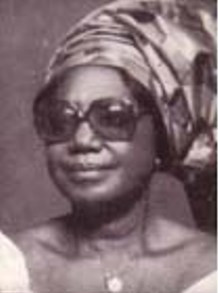
Herbert Ekwe-Ekwe OKEE NWANYI MMADU, first African (continental) woman published
novelist– Efuru, 1966, and, soon after,Idu, which she begins to work on at the onset of the Igbo genocide (mid-1966)
and later publishes in 1970. Nwapa’s landmark works as well as those of sociologist Kamene Okonjo’s project
the legacy of the historic complementarity of Igbo gender relations, not the
fractious/antagonistic/conflictive relations which define/defined the experiences
and inheritance in some other histories, some other geographies… Thus, Nwapa
and Okonjo’s foundational works open up the expanse
of possibilities in Igbo Women/African peoples-centred studies in which the
scholarship, artistry and writings of subsequent generations of intellectuals,
working worldwide, have flourished immensely.
(Jaki Byard Trio, “Trendsition zildjian”[personnel: Byard, piano; David Izenzon, bass; Elvin Jones, drums; recorded: Prestige, New York, US, 31 October 1967])
*****Herbert Ekwe-Ekwe is the author, with Lakeson Okwuonicha, of Why Donald Trump is great for Africa (2018)
Okee nwanyi mmadu, first African (continental) woman published novelist – Efuru, 1966, and, soon after,Idu, which she begins to work on at the onset of the Igbo genocide (mid-1966) and later publishes in 1970; her landmark works as well as those of sociologistKamene Okonjo’s open up the expanse of possibilities in Igbo Women/African World Studies within which the scholarship, artistry and writings of subsequent generations of intellectuals, working worldwide, have flourished immensely
(Jackie McLean Quintet, “Action” [personnel: McLean, alto saxophone; Charles Tolliver, trumpet; Bobby Hutcherson, vibraphone; Cecil McBee, bass; Billy Higgins, drums; recorded: Van Gelder Studio, Englewood Cliffs, NJ, US, 16 September 1964])
Okee nwanyi mmadu, first African (continental) woman published novelist – Efuru, 1966, and, soon after,Idu, which she begins to work on at the onset of the Igbo genocide (mid-1966) and later publishes in 1970; her landmark works as well as those of sociologistKamene Okonjo’s open up the expanse of possibilities in Igbo Women/African World Studies within which the scholarship, artistry and writings of subsequent generations of intellectuals, working worldwide, have flourished immensely
(Alice Coltrane Quintet, “Mantra” [personnel: Coltrane, piano; Pharoah Sanders, tenor saxophone (heard on the right channel and takes the second saxophone solo); Joe Henderson, tenor saxophone (takes the first saxophone solo and heard on the left channel); Ron Carter, bass; Ben Riley, drums; recorded: Coltrane home studio, Dix Hills, New York, US, 26 January 1970])
Herbert Ekwe-Ekwe THERE is presently a visionary and
purposeful spirit felt by the Igbo as well as across Igboland, Biafra. This development
is immensely uplifting. The Igbo appear poised to complete the march begun on 29
May 1966 – the reinforcement of their inalienable right to freedom, in the wake
of the outbreak of the genocide. Surely, the sun is on its ascent. These are
indeed extraordinary times the likes of which have not been seen since the 12
January 1970 end of phase-III of the genocide and the progression to phase-IV.
During the previous, phases I-III-harrowing 44 months (29 May 1966-12 January
1970), the Nigeria state and its allies murdered 3.1 million Igbo people, or
one-quarter of this nation’s population, in this foundational and most gruesome
genocide of post-(European)conquest Africa.
20 years before…
AS THIS march to the restoration of freedom dawns, the Igbo should, as a matter
of urgency, retrieve from the archives the plan for the reconstruction and
transformation of the then east Nigeria drawn up in the 1950s by Mbonu Ojike,
the cerebral Chicago University scholar and African peoples-centred economist, who was
the minister of the region’s economic development and planning. The Ojike Plan
had envisaged a 20-year timeframe, beginning in 1954, during which the east
would be transformed into an advanced multifaceted industrial and agricultural
economy.
The main thrust of this plan is still valid and should be reworked and adapted
to 21st century priorities and the advantage of new technologies. Such was the
impressive pace of this programme that, by 1964, ten years later, the overall
economic performance of the east had not only outstripped the rest of Nigeria
but was in fact Africa’s fastest growing economy. The east had the best schools
and the first independent university system in the country, the best humanpower
development in the country across a range of fields including, crucially,
engineering, medicine, the arts, and the middle-range technical cadre. THE REGION also had the most integrated infrastructural development in Nigeria and
its manufacturing, distributive and extractive enterprises centred in the
Enuugwu-Nkalagu-Emene conurbation to the north, Onicha (commercial capital and
home to the future Oshimili stock exchange and index) to the west and Igwe
Ocha/Port Harcourt-Aba-Calabar to the south were clearly the hubs of the making
of this African industrial revolution of recent history. But for the Igbo
genocide, the east was on course to construct the “Taiwan”
or the “China”
or the “South Korea”
or the “India”
inAfrica– 20 years before these
post-1939-1945 war much-vaunted “economic transformational miracles” of the era
emerged!
(Alice Coltrane Sextet, “Something about John Coltrane” [Coltrane, piano; Pharoah Sanders, soprano
saxophone, bells; Cecil McBee, bass; Tulsi, tambura; Rashied Ali, drums; Majid Shabazz, tambourine, bells; recorded: Impulse! Records, New
York, US, 8 November
1970])
Complementarity
The Igbo should now resume this
journey in earnest. Right from the outset, Igbo women, who, in the past (i.e.
prior to the British conquest and occupation), controlled and exercised
extensive rights and authority over their own affairs as well as those of the
rest of society, must be repositioned at the epicentre of the shared
dual-gender complementary spaces of responsibility, power and authority in this
historic transformation of Biafra (for authoritative insights into pre-conquest Igbo gender relations, see, especially, the studies and writings of sociologist Kamene Okonjo and novelist Flora Nwapa). THE Igbo have one ofAfrica’s
best-developed, multidisciplinary humanpower contingents to work this
transformation. Given their well-known hardworking ethic and entrepreneurial
drive, the Igbo should be able to achieve an annual 10 per cent growth rate in
their economy to effectuate this transformation without difficulty. They should
immediately set up a trust fund foundation to finance the enterprise in the
next decade. The foundation should have a core membership of distinguished Igbo
men and women of which the Igbo have unlimited number. An appeal should be sent
out at once, calling on every adult Igbo woman and man at home and in the
diaspora in Nigeria and elsewhere in the world to make an annualvoluntarycontribution of US$100 dollars to the
fund with allowances made of course for those who wish to contribute more than
this stipulated figure or indeed less. The foundation should set up actualising
working/implementation committees made up of experts in their fields to focus
on various sectors of the Biafran economy: power generation, town-city/urban
revival/development, industrial manufacturing, agriculture, information
technology, communication/infrastructure, healthcare, education,
culture/history/heritage, recreation/leisure, rural embodiment,
environment/regeneration – particularly focusing on the heightened erosion and
landslide occurrence in the northwest region.
Hubs of industrial and agricultural activities are already in place in their
designated sites of operation in Igboland and these would form the foci of this
transformation: the Onicha-Nnewi-Oka-Ihiala industrial conurbation for machine
tools and heavy industry; the Enuugwu-Emene-Nsukka information technology
valley; the Aba-Umuahia-Abiriba-Igwe Ocha precision equipment/light industry;
the Uburu-Okposi-Egbema sodium carbonate deposits/other minerals for potential
pharmaceutical and food-processing manufacturing; reactivation of Enuugwu-Udi
coal fields for unlimited power generation to work this manufacturing
enterprise and provide affordable lighting and other energy requirements for
domestic and industrial requirements in addition to exports to countries across
west Africa and elsewhere; work on renewable energy resources such as solar,
wind, refuse – it is indeed incumbent on Biafran engineers to exponentially
increase the country’s access to these renewables in this first vital phase of
redevelopment; enhanced agricultural activities in the central and east
Asu/Ebonyi valleys/Abakaleke corridor and the Onicha/upper Anambra farming
belt...
(Andrew
Hill Trio, “Tripping” or “Naked spirit” [Hill, piano;Rufus
Reid, bass;Ben Riley, drums;
recorded: Barrigozi Studio, Milan, Italy, 3/4 July 1986])
Skills & talents
The involvement of Igbo expertise, especially that
currently based abroad in the Americas, Europe, Asia, Australasia, and
elsewhere in the world is of utmost importance in this transformation project.
The utilisation of this asset will understandably be managed with obvious
flexibility in the drive and implementation of the enterprise. This will
involve opportunities for visiting/adjunct professorships with appropriate
colleges/schools/hospitals/laboratories/industrial facilities in Igboland to
work in, summertime slots, and sabbatical emplacements.
RESTRUCTURING the communication/infrastructure base ofBiafrawould appear to be the
trigger to impact tremendously on other sectors of the economy. Igbo road,
rail, waterway and air networks should now be rehabilitated and expanded
radically. The entire length and breadth of Igboland from Igwe Nga/Opobo,
Azumini, Umuebelengwu, Umu Ubani/Bonny, Ahoada, Igwe Ocha, Asaba, Onicha, Aboh,
Ogwashi-Ukwu in the Oshimili Delta to Enuugwu, Nsukka, Eha-Amuufu and Abakeleke
in the central, north and northeast should be comprehensively networked by these
services. There should, for instance, be daily express rail services linking
Igwe Nga, Azumini and Igwe Ocha in the south to Nsukka and Eha Amuufu in the
north, viaAba and Enuugwu,
and from Umu Ubani and Ahoada in the south to Olu, Okigwe, Ugwuta, Onicha,
Asaba and Agbo in the west/northwest. Other trains should be crisscrossing on
the east-west routes originating from Abakaleke, Aruchukwu, Ohafia, Umuahia,
Abriba and Ehuugbo to Enuugwu, Oka, Onicha, Asaba, Ogwashi-Ukwu and Agbo and
vice versa. This transformation should envisage dredging the Oshimili south of
Onicha to the Atlantic coast and the construction of additional international
ocean-bound port facility at Azumini and Onicha and a dry dock atAba.
Another road and rail bridge should link the historic twin cities of Asaba and
Onicha and a tunnel service under the Oshimili to carry these dual modes of
transport should also be constructed. Both bridge and tunnel should be
appropriately namedChukwuemeka
Odumegwu Ojukwu. Asaba and Onicha should also have a modern hovercraft
service in operation. Commuter bus, coach, tram and rail services in Igbo
cities and towns should quickly replace the ill-suited and unsafe “okada” or
motorcycle provisions of the present. The Igbo, a much travelled people
worldwide, must now establish direct flight access entry to Igboland from the
outside world that is not dependent onNigeria viaLagos,Abuja andKano or any of its
other “entry points”. The Enuugwu and Owere airports should be transformed
immediately to the full,operational
statusof international
airports to ensure the uninterrupted movement of people, goods and services
overseas flying directly intoBiafra and vice versa. Direct
flight routes from Igboland to Equatorial Guinea, Gabon, São Tomé and Principe,
Ghana, Côte d’Ivoire, Sénégal, South
Africa, United States, Canada, Britain, France, Spain, Germany, Austria,
Sweden, Finland, Denmark, Norway, China, Brazil, Jamaica, Barbados and
Australia should be in operation here as of utmost priority in this first phase
of the implementation, given the high number of Igbo people who live and work
in the cited countries. Igbo émigrés in these countries should negotiate with
their hosts for the latter to establish or augment existing consular/diplomatic
presence in Igboland to ease travel plans and processing, especially for those
starting their journeys from Igboland: Asaba, Onicha, Enuugwu, Oka, Owere,
Umuahia, Igwe Nga,Aba,
Abakaleke, Ugwuta and Igwe Ocha should enjoy these upgraded facilities.
International airports should also be built at Onicha and Ugwuta to cater for
the movement of people, goods and services in the west, and at Nsukka and
Abakaleke to respond to demands in the north and east of the country
respectively.
Culture
The restructuring of city and local governments inBiafrais vital in this
transformation project. Igbo cities and towns should enjoy extensive autonomous
status in order to transform themselves into advanced modern spaces for living,
working, recreating, and the growth and development of culture. Each Biafran city
and town should have a municipal authority to raise its own taxes, power its
own development including the establishment of educational institutions at all
levels, transport systems, including buses, trams and rail services
(underground and overground) and city airport facility, cultural institutions
(including homes for orchestras and bands of varying musical genres and
traditions) and recreational facilities such as parks, theatres, museums,
galleries, concert halls, stadiums and the like.
EVERY Igbo child must have access to a computer and every school in Igboland
linked to the internet. Equally crucial, technical colleges should be set up in
Igbo cities and towns to develop and expand on that sphere of humanpower
resource upon which the advancement of society is largely predicated – growth
of plumbers, electricians, draughtspeople, carpenters, builders, etc., etc.
Cities and towns including Aba, Nnewi, Agbo, Nsukka, Eha Amuufu, Abakaleke,
Ohafia, Mbano, Item, Umuahia, Onicha-Ugbo, Owere, Ogwashi-Ukwu, Aboh, Ozubulu,
Agbaani, Akaeze, Abaa, Okigwe, Enuugwu, Asaba, Ogidi, Igwe Ocha, Olu, Isele-Ukwu,
Igwe Nga, Onicha, Mbaise, Okpana, Oshiri, Ahoada, Ogwu, Ehuugbo, Ehuugbo Road,
Uburu, Aguleri, Nnobi, Umu Ubani, Ahiara, Abiriba, should be sites for these
colleges. These urban centres could also have their own city universities to
cope with the continuously high demands from Igbo youths and others who have,
since 1970, consistently maintained top position for the highest number of
students seeking university places inNigeria,despitethe occupation. The existing
universities in Igboland need to expand even further to respond to these needs.
The trust fund will no doubt be looking into ways to increase funding to these
institutions after 45 years of programmed neglect and degradation, which have,
all along, been critical features of the overarching strategy of phase-IV of
the genocide by the occupation regime. THE 50 MILLION Igbo should now set to
work as determindly as ever. The prospects are incredibly exciting. This
resultant transformation of Biafra within a generation will at once be a time-honoured memorial to the 3.1 million and the additional tens of thousands murdered since (phase-IV) and the triumph of the nonnegotiable right to freedom by the survivors and their children and grandchildren and theirs...
*****Herbert Ekwe-Ekwe is the author of, among others, Biafra Revisited (2006) and Readings from Reading: Essays on African History, Genocide, Literature (2011) Twitter@HerbertEkweEkwe
Herbert Ekwe-Ekwe is specialist on the state and on genocide & wars in Africa in the post-1966 epoch – beginning with the Igbo genocide, 29 May 1966-present day, the foundational and most gruesome genocide of post-(European)conquest Africa. 3.1 million Igbo or 25 per cent of this nation’s population were murdered by Nigeria and its allies, principally Britain. Africa and the rest of the world largely stood by and watched as the perpetrators enacted this horror most ruthlessly. The world could have stopped this genocide; the world should have stopped this genocide. This genocide inaugurated Africa’s current age of pestilence. During the period, 12 million additional Africans have been murdered in further genocide in Rwanda (1994), Zaïre/DRCongo (variously, since the late 1990s) and Darfur – west of the Sudan – (since 2004) and in other wars in Africa. African peoples have, presently, no other choice but exit/dismantle the extant genocide-state (the bane of their existence & progress) & construct own nation-centred states that serve their interests. He is author of several books & papers on the subject and his new book is entitled The longest genocide – since 29 May 1966 (2019).