Showing posts with label RollinsQ. Show all posts

Monday, 1 July 2019

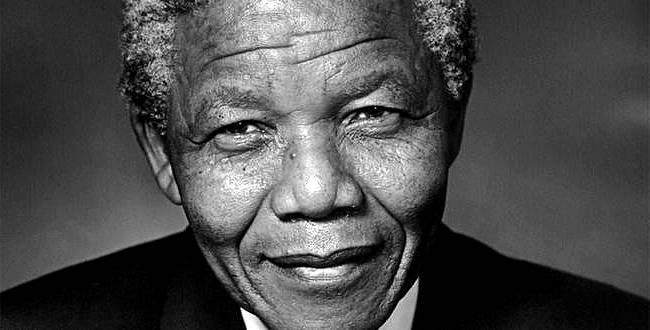
Nelson Mandela, catastrophic murders of Igbo people in South Africa, restoration-of-independence of Biafra

(Born 18 July 1918, Mvezo, South Africa)
Herbert Ekwe-Ekwe

ON THURSDAY 18 July 2019, South Africa, the African World and the rest of the globe will celebrate the 101st birthday of Nelson Mandela – lawyer, leader of the African restoration-of-independence movement that freed South Africa after 342 years of the pan-European conquest, occupation, and subjugation.

The commemoration of Mandela’s 101st birthday ironically occurs at a very depressing epoch for African peoples-centred students and scholars studying and researching South Africa. The latter have, in recent years, usually incredulously as one can imagine, given the inestimable support and goodwill rendered to the South African freedom movement from practically every region of the African World including Igbo people from Biafra, as hundreds of African émigrés in South Africa from Biafra, Mozambique, Tanzania, Zimbabwe and elsewhere from Africa are murdered in premeditated campaigns clearly organised by groupings in the country with tacit and at times active support from personages within the South Africa state ... Additionally, in this campaign, African émigrés’ residents and businesses have been destroyed and thousands of survivors sent into horrid South Africa refugee camps or forced to return to their various countries. 

ALL along, as this murder campaign rages, the South Africa state categorises this crime so quaintly and outrageously with the essentially sanitising euphemism, “xenophobic attacks”  an outrage of a designation readily picked up, re-packaged, and re-broadcast uncritically with relish across the world by the usual expressly anti-African lives’ broadcasters and commentators and other news organsations. This planned murdering campaign against African émigrés in South Africa, executed by organised South African death-squads, must be called by its name: murder; there must be no obfuscation in presenting this crime for what it is.

Catastrophe

Since February 2016, over 120 Igbo immigrants in South Africa, who had themselves fled the ongoing Igbo genocide in occupied Biafra by Fulani-led islamist/jihadist genocidist Nigeria, have been viciously murdered as part of this savage campaign against African émigrés across the country. Biafra will never forget this unleashed catastrophe on its people. On the contrary, the consequences of this trail of executions of Biafrans in South Africa will dictate the character of the future relationship between the restored-independent Biafra and South Africa. Surely, no one murders Igbo people and gets away with the crime.

ONCE AGAIN, assailed in a country whose state is often primed to make outlandish sanctimonious declarations on foreign policy, especially on the Middle East, but demonstrates such gross irresponsibility to protect the lives of African peoples from elsewhere domiciled within its borders, the Igbo, in South Africa, must now think seriously of relocating to other countries for their safety and well-being.
(Sonny Rollins Quartet, “Dance of the reed pipes” [personnel: Rollins, tenor saxophone; Don Cherry, pocket trumpet; Bob Cranshaw, bass; Billy Higgins, drums; recorded: live, Village Gate, New York, US, 27-30 July 1962])

Herbert Ekwe-Ekwe is the author of The longest genocide – since 29 May 1966 (2019) and co-author, with Lakeson Okwuonicha, of Why #DonaldTrump is #great for #Africa (2018) 
Twitter @HerbertEkweEkwe


Saturday, 21 July 2018

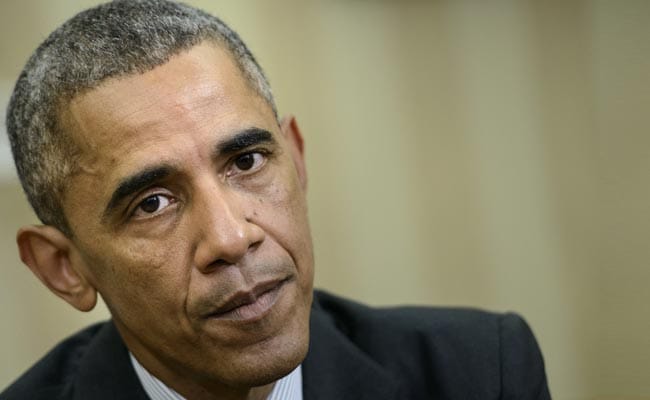
Barack Obama, the “strongman”, history and these times

(Barack Obama: ... legacy of support for ...)
Herbert Ekwe-Ekwe

THE MAIN thrust of ex-US President Barack  Hussein Obama’s 16th Nelson Mandela Annual Lecture in Johannesburg, South Africa, earlier on in the week is its focus on “democracy” in the world and ways and means to sustain it. Three excerpts from the lecture are illustrative (Barack Obama, “The Nelson Mandela Lecture”, The New Yorker, New York, 18 July 2018):

1.And, yes, democracy can be messy, and it can be slow, and it can be frustrating … For all its imperfections, real democracy best upholds the idea that government exists to serve the individual, and not the other way around. And it is the only form of government that has the possibility of making that idea real.”

2. “So, for those of us who are interested in strengthening democracy, it’s time for us to stop paying all of our attention to the world’s capitals and the centers of power, and to start focussing more on the grassroots, because that’s where democratic legitimacy comes from. Not from the top down, not from abstract theories, not just from experts, but from the bottom up. Knowing the lives of those who are struggling.”

3. “We have to stop pretending that countries that just hold an election where sometimes the winner somehow magically gets ninety per cent of the vote, because all the opposition is locked up or can’t get on TV, is a democracy. Democracy depends on strong institutions, and it’s about minority rights and checks and balances,and freedom of speech and freedom of expression and a free press, and the right to protest and petition the government, and an independent judiciary, and everybody having to follow the law.”

OBAMA alerts his audience on those individuals and social forces which he feels pose or constitute sources of obstacles to the growth or strengthening of “democracy” across the world. These include (a) the “autocrat”, (b) “strongman politics”, (c) “right-wing billionaires” and (d) “populist movements”.

AS I read this speech, that profound rumination on history a decade ago by Aimé Césaire (poet and philosopher) weighed heavily on my thoughts. Césaire had told interviewer Annick Thebia Melson in 2008 that “[h]istory is always dangerous, the world of history is a risky world; but it is up to us at any given moment to establish and readjust the hierarchy of dangers” (“The liberating power of words: An interview with Poet Aimé Césaire”, The Journal of Pan-African Studies, Vol. 2, No 4, June 2008, p. 7). It is indeed in the very course to construct and “readjust” this “hierarchy of dangers” by focussing solely on Africa here that I will respond to Obama’s lecture. 
(Aimé Césaire: [h]istory is always dangerous...)
ARGUABLY the most expressively covered and discussed news item in the United States presently is on special counsel Robert Mueller and team’s work investigating alleged Russian interference in the 2016 US elections. An investigation of this calibre is deemed vital by the Americans because any such purported interference in this election, particularly from a foreign power, would undoubtedly have had negative impact and consequences on the course of democracy in the United States, very much in the overarching context sketched above by Obama.

Yet no such investigations are underway to probe those hardly disguised meddling-in-elections/“elections”/referendum by none other than the ex-President Barack Obama US government itself in the following seven countries between 2009 and 2016: HondurasMacedoniaBritainEgyptKenyaIsraelNigeria.

Abhorrent legacy of support for Igbo genocide and imposition and invasions of states in Africa or quintessential disarticulation of grounds for democracy

APART from Nigeria where Obama, first African-descent elected president after 233 years of the founding of the US republic, imposed Muhammadu Buhari, an islamist/jihadist and one of the vilest Nigerian genocidist operatives during these 52 years of the ongoing Igbo genocide, as head of Nigeria regime in March 2015 (this imposition was carried out with then British prime minister David Cameron whose country is a co-genocidist state in this crime), his administration’s robust interferences in elections in the other six states in the group, including the June 2016 British referendum on Brexit, were spectacularly a failure.

BESIDES the Buhari-imposition catastrophe during which the Buhari-led Nigeria military and its Boko Haram and Fulani militia adjunct forces have murdered 3000 Igbo people in Biafra, Barack Obama intervened elsewhere in African politics:

1. supported the 2010 French military invasion of Côte d’Ivoire , ordered by President Nicolas Sarkozy (one of the most openly racist French political leaders in the contemporary era who made his views on Africans explicit, on record, in his notorious “The tragedy of Africa is that the African has not fully entered into history-speech at Dakar’s Cheikh Anta Diop University in July 2007 [see “The unofficial English translation of Sarkozy’s speech”, africaResource, 13 October 2007]), in which 2300 Africans were ruthlessly murdered and the Laurent Gbagbo regime in Abidjan overthrown and replaced by a personage more acceptable to French strategic and economic interests in the country

2. was part of the 2011 US-Britain-France (Obama & Cameron & Sarkozy) tripartite military invasion of Libya during which head of regime Muammar Gaddafi was murdered as well as some members of his family in addition to some influential officials of his regime, hundreds of other Libyans also murdered during the operations, and several Libyan cities and infrastructure destroyed

3. supported French military invasion of Central African Republic, ordered by President François Hollande (2013)

4. supported French military invasion of Mali, ordered by François Hollande (2013)

QUESTION: Which of the four sources of obstacles to “democracy” raised in Obama’s Johannesburg lecture and quoted above (a, b, c, d) explains or identifies Barack Hussein Obama’s own vast range of operation in disrupting the cause and course of democracy in Africa whilst in office as the 44th president of the United States? Just one? A couple? More than a couple? None?
(Sonny Rollins Quartet, “Dance of the reed pipes” [personnel: Rollins, tenor saxophone; Don Cherry, pocket trumpet; Bob Cranshaw, bass; Billy Higgins, drums; recorded: live, Village Gate, New York, US, 27-30 July 1962])
Twitter @HerbertEkweEkwe


Sunday, 15 July 2018

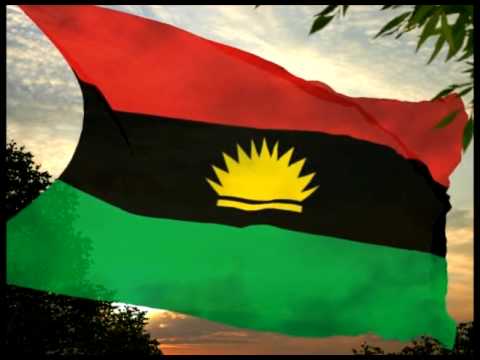
Nelson Mandela, catastrophic murders of Igbo people in South Africa, Biafra

(Born 18 July 1918, Mvezo, South Africa)
Herbert Ekwe-Ekwe

On Wednesday 18 July 2018, South Africa, the African World and the rest of the globe celebrate the 100th birthday of Nelson Mandela – lawyer, leader of the African restoration-of-independence movement that freed South Africa after 342 years of the European World conquest, occupation, and subjugation.

THE commemoration of Mandela’s birth centenary ironically occurs at a very depressing epoch for African peoples-centred students and scholars studying and researching South Africa. The latter have, in recent years, usually incredulously as one can imagine, given the inestimable support and goodwill rendered to the South African freedom movement from practically every region of the African World including Igbo people from Biafra, as hundreds of African émigrés in South Africa from Tanzania, Zimbabwe, Mozambique and elsewhere from Africa are murdered in premeditated campaigns clearly organised by groupings in the country with tacit and at times active support from personages within the South Africa state ... Additionally, in this campaign, African émigrés’ residents and businesses have been destroyed and thousands of survivors sent into horrid South Africa refugee camps or forced to return to their various countries.

Catastrophe

Since February 2016, over 100 Igbo immigrants in South Africa, who had themselves fled the ongoing Igbo genocide in occupied Biafra by Fulani-led islamist/jihadist genocidist Nigeria, have been so viciously murdered as part of this savage campaign against African émigrés across the country. Biafra will never forget this raging catastrophe.

ONCE AGAIN, assailed in a country whose state is often primed to make outlandish sanctimonious declarations on foreign policy but demonstrates such gross irresponsibility to protect the lives of African peoples from elsewhere domiciled within its borders, the Igbo in South Africa must now think seriously of relocating to other countries for their safety and well-being.
(Sonny Rollins Quartet, “Dance of the reed pipes” [personnel: Rollins, tenor saxophone; Don Cherry, pocket trumpet; Bob Cranshaw, bass; Billy Higgins, drums; recorded: live, Village Gate, New York, US, 27-30 July 1962])
Twitter @HerbertEkweEkwe