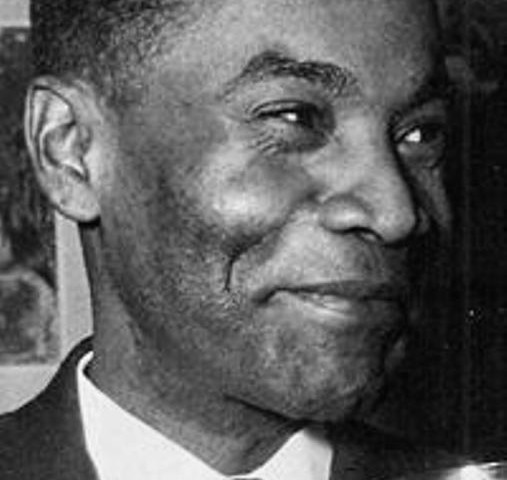
(Born 26 June 1913, Basse-Pointe, Martinique)
Herbert Ekwe-Ekwe
POET, playwright, essayist, cofounder, with Léopold Sédar Senghor and Léon-Gontram Damas, of the “negritude” movement in Paris in the 1930s-1940s; of Igbo descent,***** one of the preeminent intellectuals of African World affirmation in the wake of 500 years of pan-European enslavement of African peoples, conquest and occupation of Africa; author of classics Cahier d’un retour au pays natal, 1939 (English: Notebook of a Return to the Native Land, 1956),
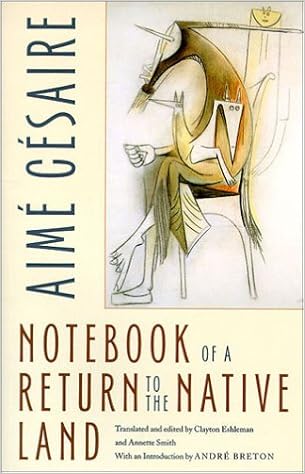 Discours sur le colonialisme, 1950 (English: Discourse on Colonialism, 1953), Toussaint Louverture: La Révolution française et le problème colonial, 1960 (study on Toussaint L’Ouverture, the Haitian restoration-of-independence revolutionary), Une Saison au Congo, 1966 (English: A Season in the Congo, 1968 – play on life and times of Patrice Lumumba, 1950s/early 1960s’ leader of the restoration-of-independence movement in the Congo, then occupied by Belgium where the king, Leopold II, and the Belgian state, had committed an expansive genocide against constituent African peoples therein between 1878 and 1908 murdering 13 million Africans) and Une Tempête, 1969 (English: A Tempest, 1986 – a play, African peoples-centred rereading of Shakespeare’s The Tempest); The Tragedy of King Christoph (2015) – a play on Henri Christoph, general in Toussaint’s Haitian restoration-of-independence army who later declares himself king in north Haiti and exercises an oppressive rule on the people; teacher of and major influence on Frantz Fanon, fellow Martinican and celebrated freedom scholar and author of The Wretched of the Earth.
(*****Chukwuma Azuonye, “Igbo Names in the Nominal Roll of Amelié, An Early 19th Century Slave Ship from Martinique: Reconstructions, Interpretations and Inferences”, Africana Studies Faculty Publication Series, Paper 8, 1990, p. 1. {Thanks to Chidi Osuagwu for kindly citing this reference in his communication with me, Wednesday 26 June 2019 [HE-E].})
POET, playwright, essayist, cofounder, with Léopold Sédar Senghor and Léon-Gontram Damas, of the “negritude” movement in Paris in the 1930s-1940s; of Igbo descent,***** one of the preeminent intellectuals of African World affirmation in the wake of 500 years of pan-European enslavement of African peoples, conquest and occupation of Africa; author of classics Cahier d’un retour au pays natal, 1939 (English: Notebook of a Return to the Native Land, 1956),
(*****Chukwuma Azuonye, “Igbo Names in the Nominal Roll of Amelié, An Early 19th Century Slave Ship from Martinique: Reconstructions, Interpretations and Inferences”, Africana Studies Faculty Publication Series, Paper 8, 1990, p. 1. {Thanks to Chidi Osuagwu for kindly citing this reference in his communication with me, Wednesday 26 June 2019 [HE-E].})
(John Coltrane Septet, “Dahomey dance” [personnel: Coltrane, tenor saxophone, Freddie Hubbard, trumpet; Eric Dolphy, alto saxophone; McCoy Tyner, piano; Reggie Workman, bass; Art Davis, bass; Elvin Jones, drums; recorded: A&R Studios, New York, US, 25 May 1961])
Herbert Ekwe-Ekwe is the author of The longest genocide – since 29 May 1966 (2019) and co-author, with Lakeson Okwuonicha, of Why #DonaldTrump is #great for #Africa (2018)
Twitter @HerbertEkweEkwe