Showing posts with label 29May1966. Show all posts

Friday, 8 June 2018

Mmuo Biafra a biakwa! Genocidist Nigeria abandons its desperate, contemptible drive since 1999 to erase 29 May 1966, day of its launch of the Igbo genocide, from history


Herbert Ekwe-Ekwe

AS I show in the essay in the following link (http://re-thinkingafrica.blogspot.com/2015/05/blog-post_7.html), 
genocidist Nigeria, in 1999, declared 29 May of the year its “democracy day” as an additional tool in its murderous arsenal to deny and erase 29 May 1966, day it and co-genocidist state Britain launched the Igbo genocide, from history and public consciousness. Twenty-nine years earlier, 1970, soon after its end of phases I-III of the genocide (12 January 1970), murdering 3.1 million Igbo people, the genocidists had abolished the teaching of history in its schools as the key feature of this denialist project.

Failed mission

Two reasons account for the génocidaires’ abandonment of their 29 May so-called democracy day on 6 June 2018: 

1. The indefatigably resilient tenor of the politics of the Biafra freedom movement with its heightened, pinpointed focus on the dates of 29 May and 30 May (Heroes Day) on the Biafra calendar, particularly in these last three years of the jihadist Muhammadu Buhari-led regime, has so saturated the news cycle every month of May since that it makes nonsense of the denialist theatrics of Nigeria’s 29 May “democracy day”.

2. The génocidaires high command is currently ravaged by a grave crisis not seen in at least 30 years, exacerbated, pointedly, by the devastatingly parallel murder campaigns by the jihadist terrorists Fulani militia and Boko Haram (2 of the 5 deadliest terrorist organisations in the world) in Nigeria’s northcentral, northeast and the eastcentral Benue valley regions. These terrorists are allied more ideologically to the Fulani wing of the genocidist amalgam led by Buhari. Olusegun Obasanjo, a Yoruba, but a very influential member of the high command who crucially supported ex-US President Obama and ex-British Prime Minister Camerons imposition of Buhari as head of regime in March 2015, has informed Buhari that he won’t now endorse a “continuation” of the latter’s regime beyond March 2019. It was Obasanjo, as head of regime, who had decreed 29 May as “democracy day” back in 1999. Buhari’s abrogation of 19 years of regime status placed on this date is therefore an embittered response to Obasanjo’s decision not to back his post-2019 leadership ambitions.

IN yet another act in these génocidaires’ bizarre enchantment to the theatre of “democracy day”-declarations, Buhari, just as Obasanjo, has himself decreed 12 June as the latest Nigeria’s “democracy day” – a desperate, cruedly opportunistic  attempt by Buhari to appeal to the wider Yoruba population for support for 2019 as 12 June itself is a day of remembrance in Yoruba history.

(Jaki Byard Trio, “Trendsition zildjian” [personnel: Byard, piano; David Izenzon, bass; Elvin Jones, drums; recorded: Prestige, New York, US, 31 October 1967])

Twitter@HerbertEkweEkwe


Friday, 18 December 2015

What Igbo did for Nigeria prior to the Igbo genocide – 1934-29 May 1966


The world turns and the world changes,
But one thing does not change.
In all my years, one thing does not change,
However you disguise it, this thing does not change:
The perpetual struggle between Good and Evil.
(TS Eliot, “Choruses from the Rock”, 1934)

FOR IGBO, prior to 29 May 1966, three important holidays were high up on their annual calendar: the Igbo National Day, the iri ji, or the New Yam Festival, and 1 October. The latter was the day of celebration for the restoration of independence for peoples in Nigeria after 60 years of the British conquest and occupation. Or, so were the thoughts predicated on this date’s designation...

Beacons

Igbo were one of the very few constituent nations in what was Nigeria, again prior to 29 May 1966, who understood, fully, the immense liberatory possibilities ushered in by 1 October and the interlocking challenges of the vast reconstructionary work required for state and societal transformation in the aftermath of foreign occupation. Igbo had the most robust economy in the country in their east region homeland, supplied the country with its leading writers, artists and scholars, supplied the country’s top universities with vice-chancellors (or presidents) and leading professors and scientists, supplied the country with its first indigenous university (the prestigious university at Nsukka), supplied the country with its leading and most spirited pan-Africanists, supplied the country with its top diplomats, supplied the country’s leading high schools with head teachers and administrators, supplied the country with its top bureaucrats, supplied the country with its leading businesspeople, supplied the country with an educated, top-rated professional officers-corps for its military and police forces, supplied the country with its leading sportspersons, essentially and effectively worked the country’s rail, postal, telegraphic, power, shipping and aviation services to quality standards not seen since in Nigeria…

AND THEY WERE surely aware of the vicissitudes engendered by this historic age precisely because the Igbo nation played the vanguard role in the freeing of Nigeria from Britain, beginning from the mid-1930s. The commentator, Sabella Ogbobode Abidde, couldn’t have been more emphatic in summarising the thrust of the Igbo mission during the period:
The Igbo nation ha[s] attributes most other Nigerian nationalities can only dream of and are what most other nations [are] not. The Igbo made Nigeria better. Any wonder then that the Igbo can do without Nigeria; but Nigeria and her myriad nationalities cannot do without the Igbo? Take the Igbo out of the Nigeria equation … and Nigeria will be gasping for air (nigeriavillagesquare.com, 28 July 2004).
The Igbo’s break with Nigeria occurred catastrophically on 29 May 1966. On this day, leaders of the Fulani north region (feudal overlords, muslim clergy, military, police, businesspeople, academics, civic servants, other public officials and patrons, alimajiri), who were long opposed to the liberation of Nigeria (there were no comparable clusters of political, cultural, ideational, religious, national or racial groupings anywhere else in the South World, during the era, which had a similar, unenviable disposition of hostility to emancipation from the European occupation of their lands as the Hausa-Fulani leadership), launched waves of premeditated genocidal attacks on Igbo migrant populations resident in the north. These attacks were later expanded to Biafra during the third phase which began on 6 July 1967, boosted particularly by the robust participation in the slaughter by the Yoruba, Urhobo, and Edo constituent pan-African nations of west Nigeria as well as others elsewhere in the country, especially Hausa, Tiv, Nupe, Kanuri, Jukun, Bachama, Jarawa. 3.1 million Igbo or one-quarter of this nation’s population were murdered during those 44 dreadful months.

Opportunism

THE YORUBA SUPPORT FOR THE GENOCIDE, as from 6 July 1967, for instance, bears all the hallmark of a squelching cadence of opportunism. Influential Yoruba personages (especially Obasanjo, Adekunle, Gbadamosi-King, Akinrinade, Rotimi, Are, Taiwo) under the operational gaze of chief genocidist “theorist” Obafemi Awolowo, plunged headlong, carrying out their own role in this gruesome foundational genocide of post-(European)conquest Africa most fiendishly, particularly across their chosen south Igboland killing fields. The Yoruba appeared to have lost, quite spectacularly, the 1930s-1960s Igbo-Yoruba competitive “preparatory drive” to develop the high-level humanpower and ancillary resources required to run the prospective post-conquest state after the British departure. They therefore viewed the outbreak of the mid-1966 Igbo mass killings in the north region and elsewhere as welcome season to “avenge” their “loss” during the great sociocultural rivalry of those previous three decades, clutching onto any bomb or missile available, from July 1967, on their onward death-march east to lob, remorselessly, into besieged Biafra, into a Biafran home, Biafran school, Biafran shrine, Biafran church, Biafran hospital, Biafran office, Biafran market, Biafran farmland, Biafran factory/industrial enterprise, Biafran children’s playground, Biafran town hall, Biafran refugee centre…

Civilisation

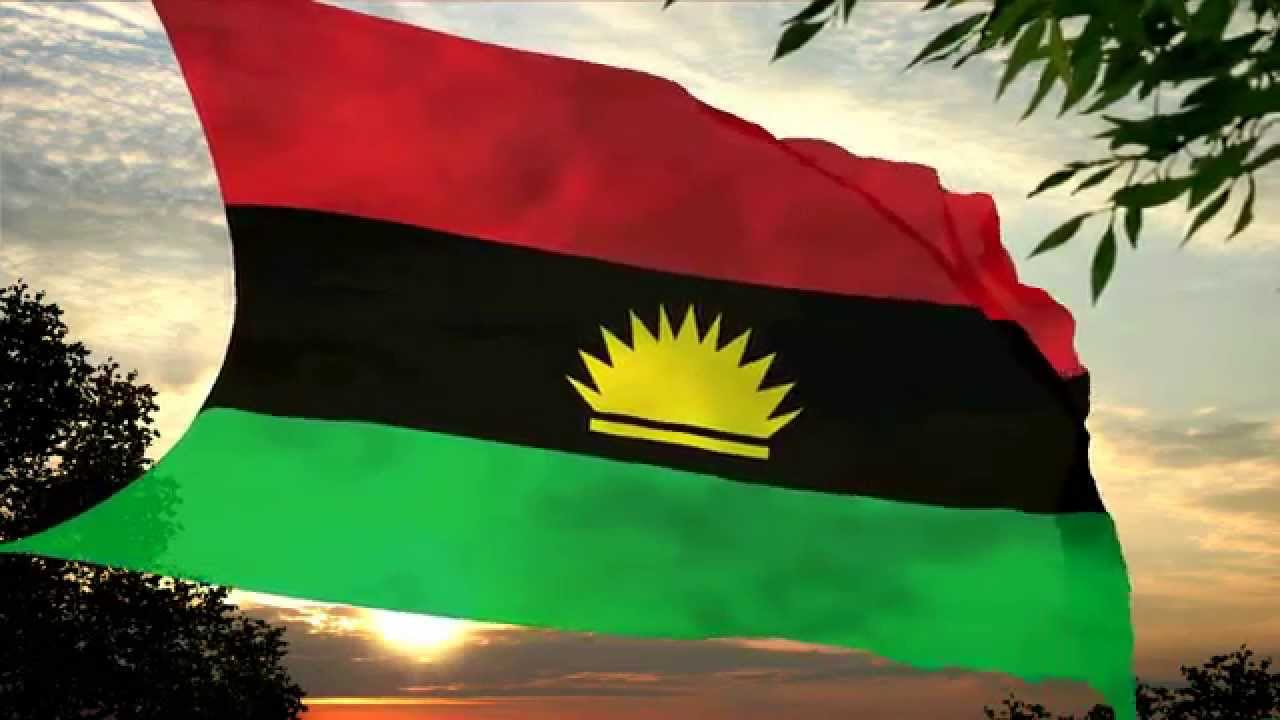
FIFTY years on, Biafrans have written an extraordinary essay on human survival and fortitude, a beacon of the tenacity of the spirit of human overcoming of the most desperate, unimaginable brutish forces. On this eve of the 50th anniversary of the launch of the genocide, Biafrans are putting final touches to the restoration of the sovereignty of their beloved Biafra, this Land of the Rising Sun. The construction of this advanced civilisation in southwestcentral Africa has already begun.
(Ornette Coleman Quartet, “Turnaround” [personnel: Coleman, alto saxophone; Don Cherry, pocket trumpet; Red Mitchell, bass; Shelly Manne, drums; recorded: Contemporary’s Studio, Los Angeles, US, 23 February 1959])

*****Herbert Ekwe-Ekwe’s books on the Igbo genocide and Biafra include Readings from Reading: Essays on African Politics, Genocide, Literature (2011), Biafra Revisited (2006) and African Literature in Defence of History: An essay on Chinua Achebe (2001)


Twitter @HerbertEkweEkwe