Showing posts with label TS Eliot. Show all posts

Saturday, 7 May 2016

This 7/24 free-fire zone

Herbert Ekwe-Ekwe

Every people should be originators of their own destiny
(Martin Delany, 19th century African American freedom nationalist and writer)

Where is the life we have lost in living?
Where is the wisdom we have lost in knowledge?
Where is the knowledge we have lost in information?
(TS Eliot, “Choruses from the Rock”, 1934)

The Muhammadu Buhari islamist regime in Nigeria has effectively turned Biafra into a free-fire zone where its genocidist occupying troops can pick and choose where and when to murder the next Igbo child, woman or man. Since October 2015, particularly, genocidist commanders have roamed brazenly, ceaselessly and sadistically across Biafra with troopers pinpointing population layouts for the next targeted firing range: Onicha … Igwe Ocha … Asaba … Oka … Enuugwu … Aba … Igwe Ocha … Asaba … Enuugwu … Igwe Ocha … Onicha …

To ensure that all conceivable spheres of this savage ritual are exhausted, the genocidists have also employed their Boko Haram and Fulani militants’ adjunct terrorists in this slaughtering spree. Buhari authorised the Boko Haram massacre of Uzo-Uwani, north Biafra, on Monday 25 April 2016 in which 200 Biafrans asleep in their beds were murdered (http://re-thinkingafrica.blogspot.co.uk/2016/04/uzo-uwani-herbertekwe-ekwe-in.html). Earlier on in January (5th,  2016), Fulani militants abducted and murdered Akaeze Ofulue III, the obi or king of Ubulu-Ukwu, southwest Biafra, west of the Oshimili River.

On Friday 5 May 2016, the troopers wrestled the relay baton of death from their Boko Haram surrogate in Uzo-Uwani and returned to Aba, 100 miles to the south, for yet another free firing stop-over at the commercial city, murdering 3-8 Biafrans this time… The last time they free-fired Aba was 9 February 2016. On that occasion, a genocidist brigade murdered 22 Biafrans.

Silence
Both the British and US governments which imposed Buhari in power in March 2015 have remained deafeningly silent over this slaughtering in Biafra (http://re-thinkingafrica.blogspot.co.uk/2016/03/herbert-ekwe-ekwe-this-piece-is.html), a policy dictated principally to shield themselves from obvious censure from both domestic and international opinion for their appalling complicity. The British state broadcaster, the BBC, which broadcasts to southwestcentral Africa intensely, and has supported the Igbo genocide campaign throughout the past 50 years (http://re-thinkingafrica.blogspot.co.uk/2015/12/bbc-nationalists-or-secessionists.html), is also studiously quiet over the catastrophe. Nowhere else on earth, in 2016, are any peoples murdered so monstrously with scant responses of revulsion from the rest of the world especially from the chanceries of those chiefly responsible for propping up this most ruthless genocidist regime in Africa.

Acknowledgement
As they keep mute on this raging savagery, it appears that both Cameron and Obama administrations and the BBC are reconciled to the awareness that the Biafrans do not consider themselves some doomed sitting ducks awaiting their dreadful enemies to ultimately decide their fate. After all, self-defence, as most people know, is at once a natural right and a right guaranteed in the universal declaration of human rights to which Britain, the US, and indeed genocidist Nigeria are all signatories.
(John Coltrane Sextet, “The Father and the Son and the Holy Ghost”, part-I of the five-part suite Meditations [personnel: Coltrane, tenor saxophone, percussion, Pharoah Sanders, tenor saxophone, tambourine, bells; McCoy Tyner, piano; Jimmy Garrison, bass; Elvin Jones, drums; Rashied Ali, drums; recorded: Van Gelder Studio, Englewood Cliffs, NJ, US, 23 November 1965])
Twitter @HerbertEkweEkwe


Friday, 29 April 2016

Uzo-Uwani


Herbert Ekwe-Ekwe

The world turns and the world changes,
But one thing does not change.
In all my years, one thing does not change,
However you disguise it, this thing does not change:
The perpetual struggle between Good and Evil.
(TS Eliot, “Choruses from the Rock”, 1934)

In November 2014, I wrote a speculative commentary entitled “Thinking the unthinkable? Can Boko Haram attack Igboland?” in which I wondered about the possibilities of a direct attack on Biafra by this north Nigeria-based terrorist amalgam (http://re-thinkingafrica.blogspot.co.uk/2014/11/thinking-of-unthinkable-can-boko-haram.html). I concluded the piece by noting that while Boko Haram possessed the capability to carry out such an attack (especially considering the expansive links the organisation has with the Nigeria genocidist military and police) the reason why such an invasion had not yet occurred was “undoubtedly strategic rather than just tactical” (emphasis in the original). Boko Haram has since emerged as the world’s deadliest terrorist organisation (see Institute for Economics & Peace, “Global Terror Index 2015”, http://economicsandpeace.org/wp-content/uploads/2015/11/Global-Terrorism-Index-2015.pdf, accessed 17 November 2015).

It appears the Muhammadu Buhari islamist regime in Abuja may have reassessed the strategic considerations raised in that commentary and authorised a Boko Haram strike in Biafra to go ahead regardless of the consequences. The Nigerian terrorist attack on the Biafran province of Uzo-Uwani last Monday, 25 April 2016, was carried out by Boko Haram, not Fulani “herdspeople” or, more appropriately, Fulani militants, surely the Haram’s cousins, who are one of the globe’s five most deadly terrorist groups (see IEP’s study already cited). On the contrary, the Fulani “herdspeople” and their cows in Uzo-Uwani had been withdrawn the previous day (Sunday the 24th) and headed back north to their homeland to pave the way for the Boko Haram invasion.

Two hundred (200) Biafran children, women and men asleep were murdered by the terrorists in this premeditated military-style assault, begun shortly after 4am, fully armed with AK47 rifles, grenades, generously stacked ammunition and explosives – attacking homes, churches, schools, shops, markets…

The islamist terrorists attacked Uzo-Uwani with the same motivation, precision and virulence that an ISIS (less deadly record than Boko Haram [again, see IEP’s study]) terrorist unit would effect whilst attacking the Charlie Hebdo editorial board meeting in Paris, France, or attacking a Jewish supermarket in Paris or a rock concert in Paris or attacking an airport terminal in Brussels, Belgium, or attacking a metro train in Brussels or attacking a Tunis (Tunisia) hotel full of mostly British tourists… These latter attacks solicited appropriated responses (particularly invoking natural law, right of self-defence) from the targeted publics and the blood-soaked regime in Abuja can be in no doubt that the Igbo are fully conversant with their rights and responsibilities. Ironically, the two key foreign states that imposed islamist Muhammadu Buhari as Nigeria’s head of regime in March 2015, Britain and the United States, have the scourge of islamist terrorism as the current principal threat to their respective national security as the islamist genocidist regime in Abuja constitutes an existential threat to Igbo people. Just as Britain and the United States vow to defeat islamist terrorism, Biafra will defeat islamist genocidist jihadism.  

Savagery
I have not been able to publish here any of the raft of still pictures/videos of the Uzo-Uwani massacre that have been posted on the internet because of the sheer horror of the carnage. It is indeed indescribable savagery … revoltingly unspeakable sadistic savagery … The islamist terrorists were transported to Uzo-Uwani in buses from their bases in the Benue valley in eastcentral Nigeria, 100-150 miles away north of Biafra, and had crossed the innumerable military/police checkpoints that envelope all land route approaches to occupied-Biafra from Nigeria (http://re-thinkingafrica.blogspot.co.uk/2015/08/in-wake-of-murder-of-three-possibly.html). In other words, checkpoints’ genocidist troopers flagged through the terrorists to their gruesome southbound-mission to Uzo-Uwani at dawn on Monday and later flagged the murderers through northbound back to their Benue bases soon after mission-accomplishment, four hours later… In the final scene of this carefully choreographed clockwork orgy of bloodbath, overseeing/coordinating genocidist troopers positioned in the region then moved into Uzo-Uwani soon after Boko Haram’s withdrawal at mid-morning from its murder scene, and began to “patrol” the district.

Eve
On the eve of the 50th anniversary of the launch of phase-I of the Igbo genocide (29 May 2016) by Nigeria and Britain, the islamist regime in Nigeria has now added “Fulani-‘herdspeople’-and-their cows” as a crucial component to its death strategy in its campaign to annihilate Igbo people. A cardinal feature of the strategy is to swap or switch around murderers from the Boko Haram and Fulani militant adjunct forces at its disposal under the overarching command of “regular” genocidist military and police who, in addition, remain free to murder Biafran freedom movement demonstrators as has been the case since November 2015 (http://re-thinkingafrica.blogspot.co.uk/2016/03/onitsha-nigeria-4-th-march2016.html).

Uzo-Uwani duly inaugurated this new strategy compendium. With the Boko Haram bestialising murder of 200 Igbo ensconced in their beds and the vandalising destruction of the people’s property and spiritual and sociocultural institutions, all within a timeframe of just four hours, the islamist regime must feel highly elated at this initial grisly outcome. But the attack and outcome are intrinsically cowardly and scream of desperation. Muhammadu Buhari and all those in this strategy of death must now know that they cannot destroy Igbo resistance to this longest genocide in recent human history: 3.1 million and more and more over the past 50 years, Igbo have survived and will build an advanced state in this southwestcentral Africa that will reinforce the crucible of the enormous human capacity to triumph against evil.

Immediate
As the Igbo formulate appropriate programmes to ensure self-defence for the people, especially for those who live in the border regions, there are other urgent steps that they must embark upon, right away, in response to this “Fulani-‘herdspeople’-and-their-cows” strategy:

1. All Fulani “herdspeople and cows” must now leave all Biafra territory, east and west of the Oshimili River.

2. Igbo must henceforth boycott all beef and beef products emanating from the Fulani including, especially, those marketed throughout Biafra. Repeat: Don’t buy Fulani beef for either home consumption for self or family or for commercial purposes e.g. in cafés, hotels or restaurants. In the wake of Uzo-Uwani, islamist Fulani beef is toxic, not fit for purpose. The red-line has been crossed. For every one pound weight of islamist Fulani beef/beef product purchased by a Biafran, the latter adds approximately one British-pound sterling equivalent to the islamist Fulani genocidist treasury that enables the jihadist to purchase the next AK47, the next clutch of grenades, the next suicide belt, the next cache of explosives, and plan the next Uzo-Uwani style attack on Biafra. One must never be a party to their own annihilation. The knock-on effect of this immediate boycott is that the Fulani “herdspeople” will have no other realistic choice but withdraw their “cows” from Biafra when no longer able to be “sold” for beef/beef products, at once blowing the cover of the genocidists advance territorial occupying-positioning for the envisaged jihadist take-over.

3. All Igbo in the diaspora in Nigeria especially those living in Lagos/west Nigeria and in the Abuja region must join in this “Don’t buy Fulani beef for either home consumption for self or family or for commercial purposes e.g. in cafés, hotels or restaurants” immediately. No Igbo person is exempt from participating in this historic response.

4. It is now a challenge to Biafran livestock/animal husbandry farmers and experts to expand the growth and management of efi-Igbo to offset any loss in beef availability from this boycott. Given the expected specialist skill availability, Biafra can establish beef self-sufficiency within five years and embark on exporting the product to other parts of Africa and the world. In the meantime, people can turn to sheep, goat, chicken and fish for their protein requirement.

5. All adult Biafrans in the liberal-democratic spaces of abode in the Americas, Europe, Australia, New Zealand, Japan and elsewhere should, as a matter of urgency, compile a dossier of the Uzo-Uwani savagery and the other murders of Biafrans by the islamist genocidist military since November 2015 (http://re-thinkingafrica.blogspot.co.uk/2016/03/onitsha-nigeria-4-th-march2016.html)and brief their members of parliament/congresspeople/senators/deputies/prime ministers/presidents… Similarly, these adult Biafrans should present such dossier to their parish priest/pastor and district/provincial/regional bishop and archbishop… 

6. In the wake of Uzo-Uwani, each and every Biafran has a personal, individual role to act. The least is: inform someone, inform everyone. Muhammadu Buhari and his ilk cannot escape the tribunal to account for the Igbo genocide, this most gruesome genocide in Africa and one of the worst ever recorded across the world. There is no statute of limitations in international law in the pursuit, arrest, trial, sentencing and punishment of anyone involved in the perpetuation of the crime of genocide. Reinhold Hanning, 94, is currently on trial in a German court at Detmold for his role as a guard in an Auschwitz death during the Jewish genocide between January 1942 and June 1944 (The Telegraph, London, Friday 29 April 2016). Both Nigeria and joint-ally Britain are signatories to the relevant UN convention on genocide.

7. All adult Biafran woman and man, wherever they live on the planet, should contribute towards the arduous task to reconstructing Uzo-Uwani. This task begins today. People should contact community and church leaders on the ground in Uzo-Uwani and discuss how and where they can support this enormous rebuilding. No offer for Uzo-Uwani must be made via the quisling region regime in Enuugwu which failed monstrously to stand firmly by the people during last Monday’s islamists’ slaughtering of innocents.
(John Coltrane Sextet, “Consequences”, part-IV of the five-part suite Meditations [personnel: Coltrane, tenor saxophone, percussion, Pharoah Sanders, tenor saxophone, tambourine, bells; McCoy Tyner, piano; Jimmy Garrison, bass; Elvin Jones, drums; Rashied Ali, drums; recorded: Van Gelder Studio, Englewood Cliffs, NJ, US, 23 November 1965])
Twitter @HerbertEkweEkwe


Thursday, 4 February 2016

Weapons of genocide – British arms to Nigeria to wage genocide against Igbo people: An overview


Herbert Ekwe-Ekwe

The world turns and the world changes,
But one thing does not change.
In all my years, one thing does not change,
However you disguise it, this thing does not change:
The perpetual struggle between Good and Evil.
(TS Eliot, “Choruses from the Rock”, 1934)

Instrument

Britain, under the primeministership of Harold Wilson, plays an instrumental role in the perpetration of the Igbo genocide – politically, diplomatically and militarily.

Without this entrenched British role, there probably would not have been the Igbo genocide… In this foundational genocide of post-(European)conquest Africa, Nigeria and its British principal ally murder 3.1 million Igbo or one-quarter of this nation’s population during the course of 44 months…
(Harold Wilson... : “would accept a half million dead Biafrans if that was what it took” Nigeria to destroy the Igbo resistance to the genocide)
1. Early December 1967: Britain supplies  six Saladin armoured personnel carriers (APCs)30 Saracen APCs along with 2,000 machine guns for them, anti-tank guns and 9 million rounds of ammunition to Nigeria genocidist military…*****

2. By the end of December 1967:  Britain approves export of 1,050 bayonets, 700 grenades, 1,950 rifles with grenade launchers, 15,000 lbs of explosives and two helicopters to Nigeria genocidist military…

3. In the first half of 1968: Britain approves export of 15 million rounds of ammunition, 21,000 mortar bombs, 42,500 Howitzer rounds, 12 Oerlikon guns, 3 Bofors guns, 500 submachine guns, 12 Saladins with guns and spare parts, 30 Saracens and spare parts, 800 bayonets, 4,000 rifles and two other helicopters to Nigeria genocidist military…

4. November 1968: Britain agrees that 5 million more rounds of ammunition, 40,000 more mortar bombs and 2,000 rifles, six Saladins and 20,000 rounds of ammunition for them, and stepped up monthly supplies of ammunition, amounting to a total of 15 million rounds additional to those already agreed, should be sent to Nigeria genocidist military…

5. 1968: The recent deal meant that Britain had supplied 36 million rounds of ammunition in the last few months alone

6. By the end of 1968:  Britain had sold £9 million worth of arms, £6 million of which was spent on small arms, to genocidist Nigeria military …

7. March 1969: Britain approves export of 19 million rounds of ammunition, 10,000 grenades and 39,000 mortar bombs to Nigeria genocidist military…

8. August 1969: Britain dispatches two senior RAF officers to Nigeria to advise the genocidists on their air terror campaign…

9. December 1969: Even as the Nigeria genocidist military is about to overrun the Igbo resistance, Michael Stewart, British foreign secretary, is calling for more British military supplies to the campaign, especially armoured cars…

Annhilative register

As the slaughter of the Igbo intensifies, particularly in the catastrophic months of 1968-1969, Harold Wilson is totally unfazed as he informs Clyde Ferguson, the United States state department special coordinator for relief to Biafra, that he, Harold Wilson, “would accept a half million dead Biafrans if that was what it took” Nigeria to destroy the Igbo resistance to the genocide (Roger MorrisUncertain Greatness: Henry Kissinger and American Foreign Policy, 1977: 122).

As the final tally of the murder of the Igbo demonstrates, Harold Wilson probably has the perverted satisfaction of having his “boys”, the Nigerian subalterns, perform far in excess of their “massa’s grim target, a subject coldly stated in Wilson’s own memoirs where he notes that the Nigerian military, equipped zealously by Britain as highlighted above, expends more small arms ammunition in its campaign to achieve its annhilative mission in Biafra than the amount used by the British armed forces  “during the whole” of  the Second World War (Harold Wilson, Labour Government, 1964-1970: A Personal Record, 1971: 630, added emphasis).

And on this very annhilative feature, Colonel Robert Scott, military advisor in the British diplomatic mission in Nigeria, during the period, acknowledges, equally gravely, that as Nigerian genocidist military forces unleash their attacks on Biafran cities, towns and villages, they are the “best defoliant agent known” (Daily Telegraph, London, 11 January 1970). Chillingly dreadful but not surprising.

History: asymmetrical alliance?

In an age so obsessed with crass revisionism such is the dread by quite a few states across the world to face up to the treasure trove of incalculable atrocities they committed in history, including more recent history, that they have dabbled in constructing brazenly false, farcical or sanitised narratives to suit the exigencies of contemporary times especially on their records on human rights and crossnational relations. In the example of Britain and the genocidist state that is Nigeria, which has been the focus of this essay, it should be recalled that 50 years before the current global focus on islamist terrorism, Britain had formed a strategic alliance with the islamist Hausa-Fulani north Nigeria religiopolitical leadership, a vociferously anti-African but obsequiously Arabist national grouping opposed to the restoration of African independence (in Nigeria) from the British conquest and occupation which the Igbo had led for 30 years, beginning in the 1930s. As a result, Britain planned to hand over power to the islamists as condition for “termination” of its Nigeria occupation in return for the latter to preserve its vast economic assets and interests in Nigeria in perpetuity. 

Earlier on, the Hausa-Fulani islamists had carried out two premeditated pogroms against Igbo immigrant populations in Jos (northcentral Nigeria) and Kano (north Nigeria) in 1945 and 1953 respectively, both occurring during the epoch of formal British occupation. No perpetrators of these crimes were ever prosecuted by the British. These pogroms ultimately became the  dress rehearsals  for the Anglo-Nigerian perpetration of the Igbo genocide, beginning on 29 May 1966, in which 3.1 million Igbo were murdered. In 2009, these same islamists would inaugurate the Boko Haram terrorist organisation, a west Africa region affiliate of the Islamic state caliphate and the world’s most ruthless terrorists (http://re-thinkingafrica.blogspot.co.uk/2015/11/institute-for-economics-peace-global.html). 

Alas, in what would probably appear to some as an asymmetrical alliance in the pressing international politics of  today, Britain is allied to a US-led military coalition fighting against the Islamic state (IS), the parent, overarching Sunni islamist-centred caliphate headquartered in the Middle East, whilst simultaneously allied strategically to the north Nigeria Sunni islamist leadership from where Boko Haram, IS’s west Africa key ally, is drawn. 

Despite Boko Haram’s rampaging murder of thousands of Africans in north/northcentral Nigeria and elsewhere, embarked upon after its 2009 inception, it is instructive to note that it wasn’t until November 2012, three years later, soon after the organisation murdered two Europeans near Sokoto (northwest Nigeria), that Britain designated it a “terrorist group”.

*****Reference to compendium (1-9) of British arms dispatch to genocidist Nigeria: Mark Curtis, “Nigeria’s war over Biafra, 1967-70”, markcurtis.wordpress.com

Herbert Ekwe-Ekwe is the author of Longest genocide – since 29 May 1966 (forthcoming, May 2016)
(Wayne Shorter Septet, “The all seeing eye” [personnel: Shorter, tenor saxophone; Freddie Hubbard, trumpet; Grachan Moncur III, trombone, James Spaulding, alto saxophone; Herbie Hancock, piano; Ron Carter, bass; Joe Chambers, drums; recorded: Van Gelder Studio, Englewood CliffNJ,US, 15 October 1965)
Twitter@HerbertEkweEkwe

Friday, 18 December 2015

What Igbo did for Nigeria prior to the Igbo genocide – 1934-29 May 1966


The world turns and the world changes,
But one thing does not change.
In all my years, one thing does not change,
However you disguise it, this thing does not change:
The perpetual struggle between Good and Evil.
(TS Eliot, “Choruses from the Rock”, 1934)

FOR IGBO, prior to 29 May 1966, three important holidays were high up on their annual calendar: the Igbo National Day, the iri ji, or the New Yam Festival, and 1 October. The latter was the day of celebration for the restoration of independence for peoples in Nigeria after 60 years of the British conquest and occupation. Or, so were the thoughts predicated on this date’s designation...

Beacons

Igbo were one of the very few constituent nations in what was Nigeria, again prior to 29 May 1966, who understood, fully, the immense liberatory possibilities ushered in by 1 October and the interlocking challenges of the vast reconstructionary work required for state and societal transformation in the aftermath of foreign occupation. Igbo had the most robust economy in the country in their east region homeland, supplied the country with its leading writers, artists and scholars, supplied the country’s top universities with vice-chancellors (or presidents) and leading professors and scientists, supplied the country with its first indigenous university (the prestigious university at Nsukka), supplied the country with its leading and most spirited pan-Africanists, supplied the country with its top diplomats, supplied the country’s leading high schools with head teachers and administrators, supplied the country with its top bureaucrats, supplied the country with its leading businesspeople, supplied the country with an educated, top-rated professional officers-corps for its military and police forces, supplied the country with its leading sportspersons, essentially and effectively worked the country’s rail, postal, telegraphic, power, shipping and aviation services to quality standards not seen since in Nigeria…

AND THEY WERE surely aware of the vicissitudes engendered by this historic age precisely because the Igbo nation played the vanguard role in the freeing of Nigeria from Britain, beginning from the mid-1930s. The commentator, Sabella Ogbobode Abidde, couldn’t have been more emphatic in summarising the thrust of the Igbo mission during the period:
The Igbo nation ha[s] attributes most other Nigerian nationalities can only dream of and are what most other nations [are] not. The Igbo made Nigeria better. Any wonder then that the Igbo can do without Nigeria; but Nigeria and her myriad nationalities cannot do without the Igbo? Take the Igbo out of the Nigeria equation … and Nigeria will be gasping for air (nigeriavillagesquare.com, 28 July 2004).
The Igbo’s break with Nigeria occurred catastrophically on 29 May 1966. On this day, leaders of the Fulani north region (feudal overlords, muslim clergy, military, police, businesspeople, academics, civic servants, other public officials and patrons, alimajiri), who were long opposed to the liberation of Nigeria (there were no comparable clusters of political, cultural, ideational, religious, national or racial groupings anywhere else in the South World, during the era, which had a similar, unenviable disposition of hostility to emancipation from the European occupation of their lands as the Hausa-Fulani leadership), launched waves of premeditated genocidal attacks on Igbo migrant populations resident in the north. These attacks were later expanded to Biafra during the third phase which began on 6 July 1967, boosted particularly by the robust participation in the slaughter by the Yoruba, Urhobo, and Edo constituent pan-African nations of west Nigeria as well as others elsewhere in the country, especially Hausa, Tiv, Nupe, Kanuri, Jukun, Bachama, Jarawa. 3.1 million Igbo or one-quarter of this nation’s population were murdered during those 44 dreadful months.

Opportunism

THE YORUBA SUPPORT FOR THE GENOCIDE, as from 6 July 1967, for instance, bears all the hallmark of a squelching cadence of opportunism. Influential Yoruba personages (especially Obasanjo, Adekunle, Gbadamosi-King, Akinrinade, Rotimi, Are, Taiwo) under the operational gaze of chief genocidist “theorist” Obafemi Awolowo, plunged headlong, carrying out their own role in this gruesome foundational genocide of post-(European)conquest Africa most fiendishly, particularly across their chosen south Igboland killing fields. The Yoruba appeared to have lost, quite spectacularly, the 1930s-1960s Igbo-Yoruba competitive “preparatory drive” to develop the high-level humanpower and ancillary resources required to run the prospective post-conquest state after the British departure. They therefore viewed the outbreak of the mid-1966 Igbo mass killings in the north region and elsewhere as welcome season to “avenge” their “loss” during the great sociocultural rivalry of those previous three decades, clutching onto any bomb or missile available, from July 1967, on their onward death-march east to lob, remorselessly, into besieged Biafra, into a Biafran home, Biafran school, Biafran shrine, Biafran church, Biafran hospital, Biafran office, Biafran market, Biafran farmland, Biafran factory/industrial enterprise, Biafran children’s playground, Biafran town hall, Biafran refugee centre…

Civilisation

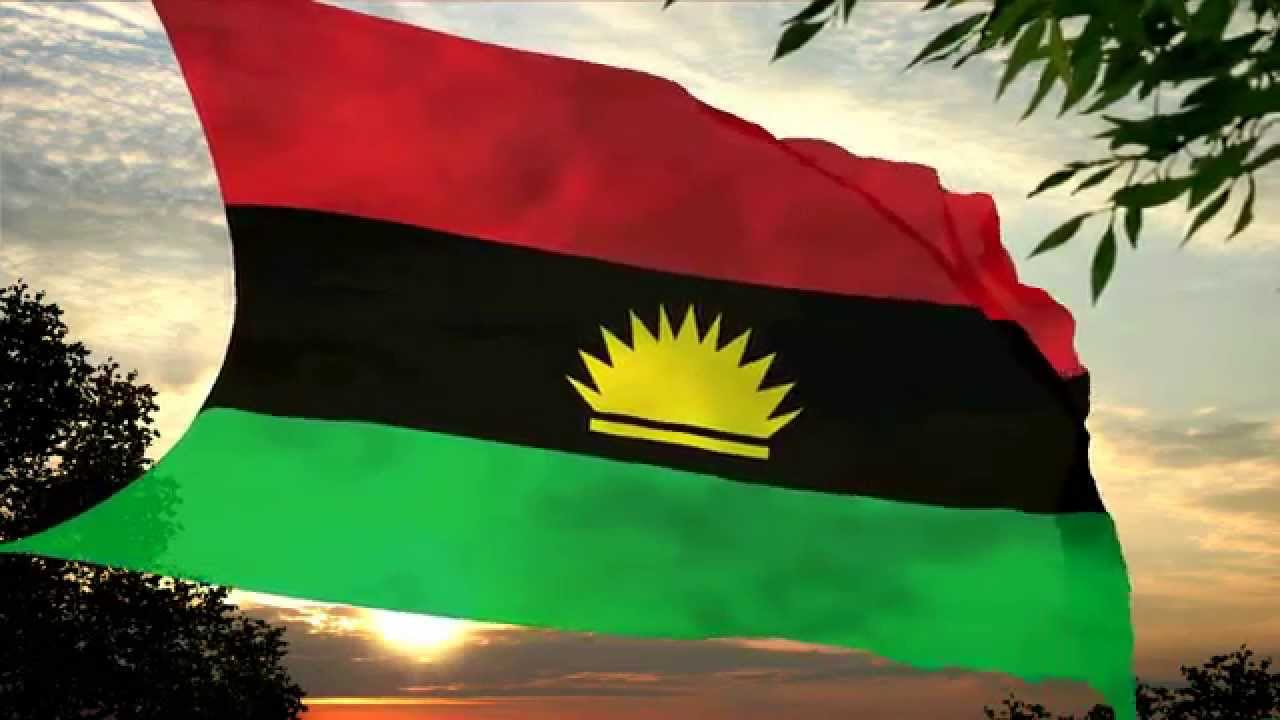
FIFTY years on, Biafrans have written an extraordinary essay on human survival and fortitude, a beacon of the tenacity of the spirit of human overcoming of the most desperate, unimaginable brutish forces. On this eve of the 50th anniversary of the launch of the genocide, Biafrans are putting final touches to the restoration of the sovereignty of their beloved Biafra, this Land of the Rising Sun. The construction of this advanced civilisation in southwestcentral Africa has already begun.
(Ornette Coleman Quartet, “Turnaround” [personnel: Coleman, alto saxophone; Don Cherry, pocket trumpet; Red Mitchell, bass; Shelly Manne, drums; recorded: Contemporary’s Studio, Los Angeles, US, 23 February 1959])

*****Herbert Ekwe-Ekwe’s books on the Igbo genocide and Biafra include Readings from Reading: Essays on African Politics, Genocide, Literature (2011), Biafra Revisited (2006) and African Literature in Defence of History: An essay on Chinua Achebe (2001)


Twitter @HerbertEkweEkwe

Thursday, 20 August 2015

Weapons of genocide – British arms to Nigeria to wage genocide against Igbo people: An overview

The world turns and the world changes,
But one thing does not change.
In all my years, one thing does not change,
However you disguise it, this thing does not change:
The perpetual struggle between Good and Evil.
(TS Eliot, “Choruses from the Rock”, 1934)

Instrument

Britain, under the primeministership of Harold Wilson, plays an instrumental role in the perpetration of the Igbo genocide – politically, diplomatically and militarily. Without this entrenched British role, there probably would not have been the Igbo genocide… In this foundational genocide of post-(European)conquest Africa, Nigeria and its British principal ally murder 3.1 million Igbo or one-quarter of this nation’s population during the course of 44 months…
(Harold Wilson: central role)
1.*****  Early December 1967: Britain supplies  six Saladin armoured personnel carriers (APCs), 30 Saracen APCs along with 2,000 machine guns for them, anti-tank guns and 9 million rounds of ammunition to Nigeria genocidist military…

2. By the end of December 1967:  Britain approves export of 1,050 bayonets, 700 grenades, 1,950 rifles with grenade launchers, 15,000 lbs of explosives and two helicopters to Nigeria genocidist military…

3. In the first half of 1968: Britain approves export of 15 million rounds of ammunition, 21,000 mortar bombs, 42,500 Howitzer rounds, 12 Oerlikon guns, 3 Bofors guns, 500 submachine guns, 12 Saladins with guns and spare parts, 30 Saracens and spare parts, 800 bayonets, 4,000 rifles and two other helicopters to Nigeria genocidist military…

4. November 1968: Britain agrees that 5 million more rounds of ammunition, 40,000 more mortar bombs and 2,000 rifles, six Saladins and 20,000 rounds of ammunition for them, and stepped up monthly supplies of ammunition, amounting to a total of 15 million rounds additional to those already agreed, should be sent to Nigeria genocidist military…

5. 1968: The recent deal meant that Britain had supplied 36 million rounds of ammunition in the last few months alone

6. By the end of 1968:  Britain had sold £9 million worth of arms, £6 million of which was spent on small arms, to genocidist Nigeria military …

7. March 1969: Britain approves export of 19 million rounds of ammunition, 10,000 grenades and 39,000 mortar bombs to Nigeria genocidist military…

8. August 1969: Britain dispatches two senior RAF officers to Nigeria to advise the genocidists on their air terror campaign…

9. December 1969: Even as the Nigeria genocidist military is about to overrun the Igbo resistance, Michael Stewart, British foreign secretary, is calling for more British military supplies to the campaign, especially armoured cars…

(*****Reference to compendium [1-9] of British arms dispatch to genocidist Nigeria: Mark Curtis, “Nigeria’s war over Biafra, 1967-70”, markcurtis.wordpress.com)

Annhilative score

As the slaughter of the Igbo intensifies, particularly in the catastrophic months of 1968-1969, Harold Wilson is totally unfazed as he informs Clyde Ferguson, the United States state department special coordinator for relief to Biafra, that he, Harold Wilson, “would accept a half million dead Biafrans if that was what it took” Nigeria to destroy the Igbo resistance to the genocide (Roger Morris, Uncertain Greatness: Henry Kissinger and American Foreign Policy, 1977: 122).

As the final tally of the murder of the Igbo demonstrates, Harold Wilson probably has the perverted satisfaction of having his Nigerian subalterns perform far in excess of the prime minister’s grim target, a subject coldly stated in Wilson’s own memoirs where he notes that the Nigerian military, equipped zealously by Britain as highlighted above, expends more small arms ammunition in its campaign to achieve its annhilative mission in Igboland than the amount used by the British armed forces  “during the whole” of  the Second World War (Harold Wilson, Labour Government, 1964-1970: A Personal Record, 1971: 630, added emphasis).

And on this very annhilative feature, Colonel Robert Scott, military advisor in the British diplomatic mission in Nigeria, during the period, acknowledges, equally gravely, that as Nigerian genocidist military forces unleash their attacks on Igbo cities, towns and villages, they are the “best defoliant agent known” (Daily Telegraph, London, 11 January 1970).
(Wayne Shorter Septet, “The all seeing eye” [personnel: Shorter, tenor saxophone; Freddie Hubbard, trumpet; Grachan Moncur III, trombone, James Spaulding, alto saxophone; Herbie Hancock, piano; Ron Carter, bass; Joe Chambers, drums; recorded: Van Gelder Studio, Englewood CliffNJ,US, 15 October 1965)
Twitter@HerbertEkweEkwe

Wednesday, 19 August 2015

What Igbo did for Nigeria

Where is the life we have lost in living?
Where is the wisdom we have lost in knowledge?
Where is the knowledge we have lost in information?
(TS Eliot, “Choruses from the Rock”, 1934)

FOR THE Igbo, prior to 29 May 1966, three important holidays were high up on their annual calendar: the Igbo National Day, the iri ji, or the New Yam Festival, and 1 October. The latter was the day of celebration for the restoration of independence for peoples in Nigeria after 60 years of the British conquest and occupation. Or, so were the thoughts predicated on this date’s designation...

Beacons

The Igbo were one of the very few constituent nations in what was Nigeria, again prior to 29 May 1966, who understood, fully, the immense liberatory possibilities ushered in by 1 October and the interlocking challenges of the vast reconstructionary work required for state and societal transformation in the aftermath of foreign occupation. The Igbo had the most robust economy in the country in their east region homeland, supplied the country with its leading writers, artists and scholars, supplied the country’s top universities with vice-chancellors (or presidents) and leading professors and scientists, supplied the country with its first indigenous university (the prestigious university at Nsukka), supplied the country with its leading and most spirited pan-Africanists, supplied the country with its top diplomats, supplied the country’s leading high schools with head teachers and administrators, supplied the country with its top bureaucrats, supplied the country with its leading businesspeople, supplied the country with an educated, top-rated professional officers-corps for its military and police forces, supplied the country with its leading sportspersons, essentially and effectively worked the country’s rail, postal, telegraphic, power, shipping and aviation services to quality standards not seen since in Nigeria…

And they were surely aware of the vicissitudes engendered by this historic age precisely because the Igbo nation played the vanguard role in the freeing of Nigeria from Britain, beginning from the mid-1930s. The commentator, Sabella Ogbobode Abidde, couldn’t have been more emphatic in summarising the thrust of the Igbo mission during the period:
The Igbo nation ha[s] attributes most other Nigerian nationalities can only dream of and are what most other nations [are] not. The Igbo made Nigeria better. Any wonder then that the Igbo can do without Nigeria; but Nigeria and her myriad nationalities cannot do without the Igbo? Take the Igbo out of the Nigeria equation … and Nigeria will be gasping for air (nigeriavillagesquare.com, 28 July 2004).
THE IGBO’s break with Nigeria occurred catastrophically on Sunday 29 May 1966. On this day, leaders of the Fulani islamist/jihadist north region (feudal overlords, muslim clergy, military, police, businesspeople, academics, civic servants, other public officials and patrons, alimajiri), who were long opposed to the liberation of Nigeria (there were no comparable clusters of political, cultural, ideational, religious, national or racial groupings anywhere else in the Southern World, during the era, which had a similar, unenviable disposition of hostility to emancipation from the European occupation of their lands as the Fulani leadership), launched waves of premeditated genocidal attacks on Igbo migrant populations resident in the north. These attacks were later expanded to Igboland itself, Biafra, during the third phase which began on 6 July 1967, boosted particularly by the robust participation in the slaughter by the Yoruba, Urhobo, and Edo nations of west Nigeria as well as others elsewhere in the country. 3.1 million Igbo or one-quarter of this nation’s population were murdered during those 44 dreadful months.

Opportunism

THE Yoruba support for the genocide, as from 6 July 1967, for instance, bears all the hallmark of a squelching cadence of opportunism. Influential Yoruba personages (especially Obasanjo, Adekunle, Gbadamosi King, Akinrinade, Rotimi, Are, Taiwo) under the operational gaze of chief genocidist “theorist” Obafemi Awolowo, plunged headlong, carrying out their own role in this gruesome foundational genocide of post-(European)conquest Africa most fiendishly, particularly across their chosen south Igboland killing fields. The Yoruba appeared to have lost, quite spectacularly, the 1930s-1960s Igbo-Yoruba competitive “preparatory drive” to develop the high-level humanpower and ancillary resources required to run the prospective post-conquest state after the British departure. They therefore viewed the outbreak of the mid-1966 Igbo mass killings in the north region and elsewhere as welcome season to “avenge” their “loss” during the great sociocultural rivalry of those previous three decades, clutching onto any bomb or missile available, from July 1967, on their onward death-march east to lob, remorselessly, into besieged Biafra, into an Igbo home, Igbo school, Igbo shrine, Igbo church, Igbo hospital, Igbo office, Igbo market, Igbo farmland, Igbo factory/industrial enterprise, Igbo children’s playground, Igbo town hall, Igbo refugee centre…

(Ornette Coleman Quartet, “C&D” {or Civilisation and its Discontents – Freud} [personnel: Coleman, alto saxophone; Don Cherry, pocket trumpet; Scott LaFaro, bass; Ed Blackwell, drums; recorded: Atlantic Studios, New York, US, 31 January 1961])
Twitter@HerbertEkweEkwe