Showing posts with label UK. Show all posts

Thursday, 25 April 2019

The archives project! Igbo people of Biafra: “The stink of genocide is everywhere...”


Herbert Ekwe-Ekwe

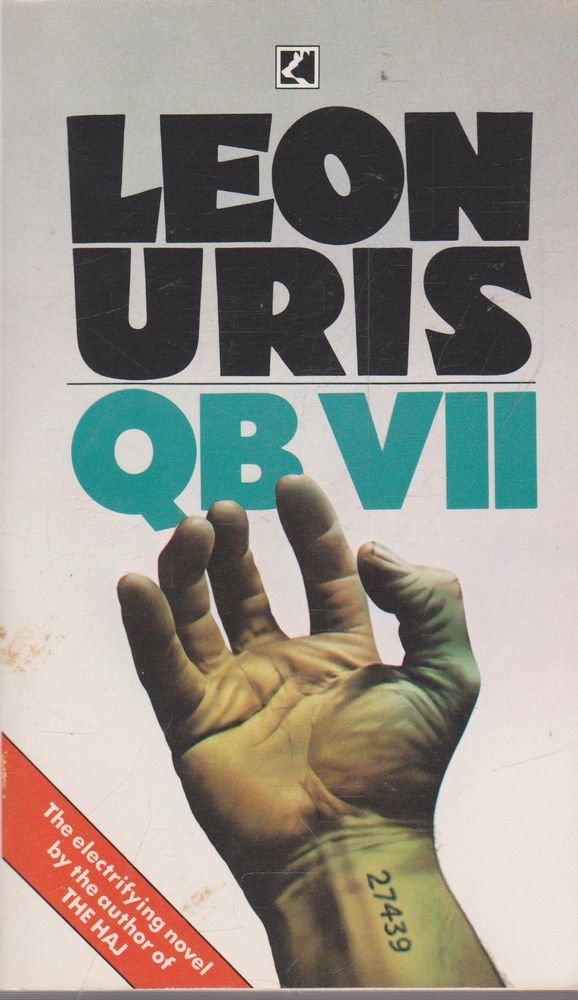
EXCERPTS ... from the gripping and indelible lines on the Igbo genocide (phases I-III, 29 May 1966-12 January 1970), the foundational genocide of post-(European)conquest Africa, during which Britain and client-state Nigeria led by Fulani islamist/jihadists and the coterie of pan-African constituent nations including, especially, Yoruba, Edo, Hausa, Urhobo, Jawara, Gwari, Nupe, Bachama, Tiv, Jukun, Kanuri, all in this southwestcentral region of Africa, murder 3.1 million Igbo people of Biafra, beginning 21 years after end of the Jewish genocide, in Leon Uri’s classic, QB VII (London: Bantam Books, 1970), pp. 392-393:
ABE studied them all, his worn-out little band of idealists. 
“Ladies and gentlemen of the jury,” Abe said in a voice that literally moaned with sorrow, “I would like to make a statement by quoting in effect the words of Thomas Bannister, Q.C., when he said that no one in their wildest imaginations would have believed Hitler’s Germany before it actually happened. And he said, if the civilized world knew what Hitler intended to do then they would have stopped him. Well, here we are in 1967, and the Arabs vow daily to finish Hitler’s work. Certainly the world will not stand for another chapter of this holocaust. There is a right and a wrong. It is right for a people to want to survive. It is wrong to want to destroy them. But alas, the kingdom of heaven is concerned with righteousness alone. The kingdoms of the earth run on oil. 
“WELL now, certainly the world should be appalled by what is happening in Biafra. The stink of genocide is everywhere. Certainly, after Hitler’s Germany, the world should step in and stop genocide in Biafra. However, that becomes impractical when one considers England’s investments in Nigeria conflict with France’s interests in Biafra. After all, members of the jury, it is only [African] people[s] killing other [African] people.  
“We should like to think,” Abe said, “that Thomas Bannister was right, when he said more people, including the German people, should have risked punishment and death by refusing orders. We should like to believe there would have been a protest and ask why didn’t the Germans protest? Well today, young people march in the streets to protest Biafra and Vietnam and the principle of murdering their fellow man through the medium of war. And we say to them … why are you protesting so much? Why don’t you go there and kill like your father killed?…” (added emphasis)
(Eric Dolphy Duo, “Alone together” [personnel: Dolphy, bass clarinet; Richard Davis, double bass; recorded: Fuel Records, New York, US, {May?June?July?} 1963]) 

******Herbert Ekwe-Ekwe is the author of The longest genocide – since 29 May 1966 (2019) and co-author, with Lakeson Okwuonicha, of Why #DonaldTrump is #great for #Africa (2018)
Twitter @HerbertEkweEkwe

Monday, 22 April 2019

April is genocide awareness and prevention month: Snapshot of the Anglo-Fulani alliance that prosecutes the Igbo genocide


Herbert Ekwe-Ekwe

BRITAIN and FULANI alliance, this genocidist transcontinental dual-headed power configuration that has executed the Igbo genocide with such abiding ruthlessness and monstrosity these past 53 years, has ensured that Igbo people’s history of the past century challenges, quite dramatically, a range of key assumptions in “post-colonial” discourses that centres on race, history and geography.

In 1945, about 50 years after the beginning of the British conquest and occupation of Igboland, Biafra, the Fulani islamist jihadists in occupied north Nigeria, whose home is the Futa Djallon highlands of northwest Africa, 1500 miles away, embarked on the invasion of Igbo territorial spaces emplaced in the overarching architecture of the British occupation (in Jos, northcentral Nigeria) with the latter’s tactical if not strategic connivance. In effect, this attack, in which the Fulani unleashed a pogrom on the Igbo as the mode of invasion, formally inaugurated the dual-headed genocidist cabal that would oversee the perpetration of yet another season of pogrom on the Igbo in 1953 (Kano, north Nigeria), and then launched the horrendously full-blown, extended and expansive Igbo genocide, beginning on 29 May 1966. During phases I-III of the genocide in the 44 subsequent months, the duo genocidists murdered 3.1 million Igbo or 25 per cent of the Igbo population. Tens of thousands of additional Igbo have been murdered in phase IV of the genocide, 13 January 1970-present day. The latter tally includes the 3000 Igbo murdered since November 2015 by the Muhammadu Buhari regime, installed in power in March 2015 by ex-US President Barack Hussein Obama, the first African-descent president of the United States in 233 years of the founding of this republic, and ex-British Prime Minister David Cameron.

What disparity?

IT IS precisely because of the very genocidist terror that undergirds the Anglo-Fulani alliance, in the wake of the 1945 Fulani invasion of Igbo homes and other interests in Jos, that the Igbo resistance to this catastrophe does not categorise any of these two invaders as either “primary” or “secondary” despite the sequence of the timeframe of the invasions, despite the nature of the contributing resources that each of the co-operative executioners of this crime against humanity deploys, and despite the predictable array of data readily deployed to project the presumed disparity of the comparative “statuses” of the two complementary genocidist states in world affairs.

For the Igbo, the grave existential challenges from both the British and Fulani, in these past 74 years, have occurred almost invariably in more fluid or composite frames...
(John Coltrane Quintet, “Stardust [personnel: Coltrane, tenor saxophone; Wilbur Harden, fluegelhorn; Red Garland, piano; Paul Chambers, bass; Jimmy Cobbsdrums;  recorded: Van Gelder Studio, Hackensack, NJ, US, 11 July 1958])

*****Herbert Ekwe-Ekwe is the author of The longest genocide – since 29 May 1966 (2019) and co-author, with Lakeson Okwuonicha, of Why #DonaldTrump is #great for #Africa (2018)
Twitter @HerbertEkweEkwe
Tuesday, 9 April 2019

Compelling lessons for African peoples in this April month of genocide awareness and prevention ... The European World conquest of Africa is at once a genocide campaign and brigandage – Belgium, Germany and Britain’s relay-genocides-race of first half of 20th century Africa: Herero, Nama, Derg Damara, Igbo


Herbert Ekwe-Ekwe

THE state in Africa, as presently constituted, can only lead Africans to perdition. 

The European World “abandoned” toxic waste that goes by the name “state” in Africa and Africans, themselves, must get rid of it to survive. African peoples, just as others across the world, are in the position to construct organic state forms that are responsive to their worldviews and progress. 

The state is a transient relationship that exists at the behest of the goodwill and aspirations of its constituent people or peoples. If the logic of its existence is to murder and pulverise, it is impossible to see any prospect for its future. Does a Nigeria, for instance, realistically see any future of meaningful development in the wake of the Igbo genocide, in these past 53 years? After murdering 3.1 million Igbo people and tens of thousands additional Igbo since 29 May 1966? Definitely, definitively, no.

It is therefore a dreadful proposition to conceptualise any progress of human or other lives in a genocide state – the likes of Nigeriathe Sudanthe Congo … or whatever their ghastly signatures denote. These are contraptions of murder and murdering; nothing else, as the salient features of this history demonstrate:

EuroConqueror genocidist state

IN OCTOBER 1904, Lother von Trotha (pictured above), the general officer commanding the genocidist German military forces engaged in the genocide of the HereroNama and Derg Damara peoples of southwest Africa (contemporary Namibia) issued the following proclamation which he unambiguously captioned an “Extermination Order”: “The Herero people will have to leave the country. Otherwise I shall force them to do so by means of guns … [E]very Herero, whether found armed or unarmed, with or without cattle, will be shot. I shall not accept any more women and children. I shall drive them back to their people – otherwise I shall order shots to be fired at them. These are my orders to the Herero people” (Horst Drechsler“Let Us Die Fighting”: The Struggle of the Herero and Nama against German Imperialism, 1884-1915, London: Zed, 1980: 156-157).

A. Consequences: Haunting milestones

(1)  1904-1907: In this German state-organised genocide of Herero people, supervised by Lother von Trotha, the Germans murdered 65,000 out of 80,000 Herero during the period – i.e., 80 per cent of the total Herero population was wiped out

(2)  1904-1907: In this German state-organised genocide of Nama people, supervised by Lother von Trotha, the Germans murdered 10,000 Nama during the period  – i.e., 50 per cent of the total Nama population was wiped out

(3)  1904-1907: In this German state-organised genocide of Berg Damara people, supervised by Lother von Trotha, the Germans do not have the original population figure for the Berg Damara at the onset of the genocide, but, according to their own estimates, the genocidists may have wiped out 30 per cent of the total Berg Damara population by 1907
LEST WE FORGET, Germany had duly received the lead European-World powers’ instituted relay-genocides-in-Africa race baton from none other than Leopold II (pictured above), first cousin of Queen Victoria of England, grandson of  King Louis Philippe of France, and second king of the Belgians. It was now evident, if ever there were any doubts, that the European World-conqueror/conquest state in Africa, the “Berlin-state”right from the outset, in the wake of the infamous November 1884-February 1885 Berlin conference, was at once an occupying and genocide state. During the course of 30 years, 1878-1908, genocidist Leopold II-led Belgian monarchy/state carried out the genocide of a host of constituent peoples in the Congo River basin of central Africa (2,442,240 sq km landmass, 80 times the size of Belgium). Leopold II and the Belgian state murdered 13 million African constituent peoples (Isidore Ndaywel  è Nziem, Histoire générale du Congo: De l'héritage ancien à la République Démocratique, Paris: Duculot, 1998: 344). The génocidaire Belgian king was adamant why he supervised this long-stretched genocide, equally obsessed, as his other European league of conquerors,  with Belgium’s own share of the conquest and occupation of Africa: “I do not want to risk … losing a fine chance to secure for ourselves a slice of this magnificent African cake” (Adam HochschildKing Leopold’s Ghost, Boston: Houghton Mifflin Harcourt, 1999: 58).

B. Consequences: Haunting milestones
JUST OVER 60 YEARS to the day after German genocidist general von Throta’s “Extermination Order” to destroy the Herero, Nama and Berg Damara peoples of southwest Africa, Britain, occupying the prized lands of southwestcentral Africa 2200 miles away in the wake of the Berlin conference, took over the baton of the European World relay-genocides-race in Africa from Germany. In May 1966, Britain, under the prime ministership of Harold Wilson (pictured above), embarked on the genocide of Igbo people. Beginning in the mid-1930s, the Igbo had spearheaded the restoration-of-independence movement for the constituent peoples in British-occupied Nigeria – an agglomeration of states that are a hefty slice indeed of the scrumptious African cake à la Leopold II. Harold Wilson sought to “punish” the Igbo for their historic role. 

Instructively, unlike the Belgians and Germans earlier, the British were able to construct a panoply of pan-African nations from north Nigeria (especially Fulani, Kanuri, Nupe, Hausa, Jukun, Bachama, Jawara) and west Nigeria (particularly Yoruba, Urhobo, Edo) to directly execute this genocide against an African people on the ground, on its behalf. But the actual operationalising mission itself could easily have been taken directly from von Throta’s “Extermination Order”. 

FOR Britain, its eminent position in Africa (and the rest of the world) during this epoch could not be overstated. Having remained the lead beneficiary of 400 years of the pan-European World enslavement of African peoples since the latter part of the 17th century (Herbert Ekwe-EkweReadings from Reading: Essays on African Politics, Genocide, Literature, Reading and Dakar: African Renaissance, 2011: 1-6), it had now become the European World premier power in Africa after being part of the victorious US-led alliance that defeated its German global-domination rivals twice in the essentially intra-European wars of 1914-1918 (so-called World War I) and 1939-1945 (so-called World War II).

Such was the sheer impudence of Harold Wilson as he oversaw the slaughter of the Igbo from his 10 Downing Street London official residence,  particularly in the catastrophic months of 1968-1969, that he went on record to inform Clyde Ferguson, the United States state department special coordinator for relief to Biafra, that he, Harold Wilson, “would accept a half million dead Biafrans if that was what it took” Nigeria to destroy the Igbo resistance to the genocide (Roger MorrisUncertain Greatness: Henry Kissinger and American Foreign Policy, London & New York: Quartet Books, 1977: 122). Few would fail to note the  grotesquely expressed diminution of African life made by a supposedly leading politician of the world of the 1960s – barely 20 years after the deplorable perpetration of the Jewish genocide in Europe. Besides, Britain was a key participant in the drafting of the crucial 1948 UN convention on the crime of genocide, 18 years before it launched the Igbo genocide, and one of its early signatories. Britain and its pan-African allies eventually murdered 3.1 million Igbo, 25 per cent of this nation’s population, during phases I-III of the genocide, 29 May-12 January 1970, and an additional count of tens of thousands of Igbo murdered in phase-IV of the genocide, 13 January 1970-present day. 

AS THE final tally of the murder of the Igbo people demonstrates, Harold Wilson probably had the perverted satisfaction of having his Nigerian co-genocidists perform far in excess of the prime minister’s grim target, a subject coldly stated in Wilson’s own memoirs where he notes that the Nigerian military, equipped zealously by Britain, expended more small arms ammunition in its campaign to achieve its annhilative mission in the Igbo genocide than the amount used by the British armed forces  “during the whole” of  the 1939-1945 war or “World War II” (Harold WilsonLabour Government, 1964-1970: A Personal Record, London: Wiedenfeld & Nicolson, 1971: 630, added emphasis). On this feature, Robert Scott, military advisor in the British diplomatic mission in Nigeria during the Igbo genocide acknowledges, equally gravely, that as genocidist Nigeria military forces unleashed their attacks on Igbo cities, towns and villages, they were the “best defoliant agent known” (Daily Telegraph, London, 11 January 1970).

Survivors’ commitment

SOMEONE or a people who survives genocide is simultaneously survivor and victor, hence that stunning incantation of the triumph of life itself on the morrow of overcoming the slaughter, the dehumanisation, the immiseration: “Happy Survival”!

The Derg DamaraHereroIgbo and Nama are great survivors and victors  and precisely because of these outcomes, these peoples will play a critical role in charting the very nature of the future relationship of Africa and Belgium, Africa and Germany, Africa and Britain, and Africa and the rest of the European World. 

The perpetrators of these genocides, Belgium, Britain and Germany, must acknowledge and atone, fully, for executing these crimes against humanity. Belgium, Germany and Britain must each pay comprehensive reparations at once to the host of constituent African peoples in the Congo River basin, Derg DamaraHerero, Nama and Igbo peoples, respectively, for committing this stretch of genocides between 1878 and 2018. 

THESE crimes will never be forgotten by the survivors and the rest of the world. This is the proclamation that surely endures and not General von Trotha’s “Extermination Order”.
(John Coltrane Duo, “Mars” [personnel: Coltrane, tenor saxophone, bells; Rashied Ali, drums; recorded: Van Gelder Studio, Englewood, Cliff, NJ, US, 22 February 1967])
References
Drechsler, Horst. “Let Us Die Fighting”: The Struggle of the Herero and Nama against German Imperialism, 1884-1915. London: Zed, 1980.

Ekwe-Ekwe, Herbert. Readings from Reading: Essays on African Politics, Genocide, LiteratureDakar and Reading: African Renaissance, 2011.

Hochschild, Adam. King Leopold’s Ghost. Boston: Houghton Mifflin Harcourt, 1999.

Isidore Ndaywel  è Nziem. Histoire générale du Congo: De l'héritage ancien à la République Démocratique. Paris: Duculot, 1998.

John Coltrane Duo. “Mars”. Van Gelder Studio, Englewood, Cliff, NJ, US, 22 February 1967.

Morris, Roger. Uncertain Greatness: Henry Kissinger and American Foreign Policy, London & New York: Quartet Books, 1977.

Wilson, Harold. Labour Government, 1964-1970: A Personal Record. London: Wiedenfeld & Nicolson, 1971.


*****Herbert Ekwe-Ekwe is the author of The longest genocide – since 29 May 1966 (2019) and co-author, with Lakeson Okwuonicha, of Why #DonaldTrump is #great for #Africa (2018)

Twitter @HerbertEkweEkwe

Friday, 8 June 2018

Mmuo Biafra a biakwa! Genocidist Nigeria abandons its desperate, contemptible drive since 1999 to erase 29 May 1966, day of its launch of the Igbo genocide, from history


Herbert Ekwe-Ekwe

AS I show in the essay in the following link (http://re-thinkingafrica.blogspot.com/2015/05/blog-post_7.html), 
genocidist Nigeria, in 1999, declared 29 May of the year its “democracy day” as an additional tool in its murderous arsenal to deny and erase 29 May 1966, day it and co-genocidist state Britain launched the Igbo genocide, from history and public consciousness. Twenty-nine years earlier, 1970, soon after its end of phases I-III of the genocide (12 January 1970), murdering 3.1 million Igbo people, the genocidists had abolished the teaching of history in its schools as the key feature of this denialist project.

Failed mission

Two reasons account for the génocidaires’ abandonment of their 29 May so-called democracy day on 6 June 2018: 

1. The indefatigably resilient tenor of the politics of the Biafra freedom movement with its heightened, pinpointed focus on the dates of 29 May and 30 May (Heroes Day) on the Biafra calendar, particularly in these last three years of the jihadist Muhammadu Buhari-led regime, has so saturated the news cycle every month of May since that it makes nonsense of the denialist theatrics of Nigeria’s 29 May “democracy day”.

2. The génocidaires high command is currently ravaged by a grave crisis not seen in at least 30 years, exacerbated, pointedly, by the devastatingly parallel murder campaigns by the jihadist terrorists Fulani militia and Boko Haram (2 of the 5 deadliest terrorist organisations in the world) in Nigeria’s northcentral, northeast and the eastcentral Benue valley regions. These terrorists are allied more ideologically to the Fulani wing of the genocidist amalgam led by Buhari. Olusegun Obasanjo, a Yoruba, but a very influential member of the high command who crucially supported ex-US President Obama and ex-British Prime Minister Camerons imposition of Buhari as head of regime in March 2015, has informed Buhari that he won’t now endorse a “continuation” of the latter’s regime beyond March 2019. It was Obasanjo, as head of regime, who had decreed 29 May as “democracy day” back in 1999. Buhari’s abrogation of 19 years of regime status placed on this date is therefore an embittered response to Obasanjo’s decision not to back his post-2019 leadership ambitions.

IN yet another act in these génocidaires’ bizarre enchantment to the theatre of “democracy day”-declarations, Buhari, just as Obasanjo, has himself decreed 12 June as the latest Nigeria’s “democracy day” – a desperate, cruedly opportunistic  attempt by Buhari to appeal to the wider Yoruba population for support for 2019 as 12 June itself is a day of remembrance in Yoruba history.

(Jaki Byard Trio, “Trendsition zildjian” [personnel: Byard, piano; David Izenzon, bass; Elvin Jones, drums; recorded: Prestige, New York, US, 31 October 1967])

Twitter@HerbertEkweEkwe


Thursday, 19 April 2018

Condemnation of British expulsion of African peoples-from-the-Caribbean

(Amber Rudd ... British home secretary whose department/ministry is responsible for the African peoples’ deportation)
Herbert Ekwe-Ekwe

MANY African commentators in the diaspora and at home have joined other critics elsewhere in the world to condemn the current British government’s outrageous expulsion of some of its citizens of African descent to the Caribbean. The criticisms are rightly commendable.

Yet silence…
IT IS  however most noticeable that a number of these commentators have been conspicuously silent when African peoples in African-run states are deported similarly or subjected to even worse treatment by their hosts as the following examples highlight:

1. In Lagos, west Nigeria, the regional regime has over the years deported scores of Igbo people to Biafra. In 2015, the king or oba of Lagos issued a royal edict to murder Igbo people if they did not vote for the king’s own preferred candidate for a senior political regional office.

2. In South Africa, thousands of African émigrés from southern, east and west Africa have been expelled in recent years by the state. Hundreds of these immigrants have been murdered in the country during the period and their homes and businesses destroyed by organised groups often linked to state officials.

3. Since the March 2015 imposition of Muhammadu Buhari, the genocidist islamist jihadist, as head of regime in Nigeria by ex-US President Obama and ex-British Prime Minister Cameron, the Buhari regime’s military and its adjunct Fulani militia, one of the world’s five deadliest terrorist organisations, have murdered 3000 Igbo people across Biafra in what has been one of the bloodiest track of phase IV of the ongoing Igbo genocide. These murders have continued unabated.

Moral rectitude
AFRICAN peoples’ lives matter. This must surely be the case wheresoever African peoples live: Biafra, Sénégal, Tanzania, Botswana, United States of America, South Africa, Barbados, Kenya, India, Côte d’Ivoire, Guyana, Canada, Britain, Surinam, St Lucia, Jamaica, Trinidad & Tobago, Brazil, France, Ghana, Finland, Uganda…

Few now doubt that African commentators and others in that prominent professional grouping stand to forfeit any moral rectitude if they restrict their quest to uphold African lives’ interests usually in geographical spaces marked outside Africa but exercise a predictable stone-walled silence when these same interests are assaulted, quite often more viciously, inside Africa.
(John Coltrane & Don Cherry, “Focus on sanity” [personnel: Coltrane, tenor saxophone; Cherry, pocket trumpet; Percy Heath, bass; Ed Blackwell, drums; recorded: Atlantic Studios, New York, US, 28 June/8 July 1960])
 Twitter@HerbertEkweEkwe

Friday, 2 March 2018

The European World conquest of Africa is at once a genocide campaign and brigandage – Belgium, Germany and Britain’s relay-genocides-race of first half of 20th century Africa: Herero, Nama, Derg Damara, Igbo


Herbert Ekwe-Ekwe

Genocidists’ suite

IN OCTOBER 1904, Lother von Trotha (pictured above), the general officer commanding the genocidist German military forces engaged in the genocide of the HereroNama and Derg Damara peoples of southwest Africa (contemporary Namibia) issued the following proclamation which he unambiguously captioned an “Extermination Order”: “The Herero people will have to leave the country. Otherwise I shall force them to do so by means of guns … [E]very Herero, whether found armed or unarmed, with or without cattle, will be shot. I shall not accept any more women and children. I shall drive them back to their people – otherwise I shall order shots to be fired at them. These are my orders to the Herero people” (Quoted in Horst Drechsler, “Let Us Die Fighting”: The Struggle of the Herero and Nama against German Imperialism, 1884-1915, London: Zed, 1980: 156-157)


A. Consequences: Haunting milestones

(1)  1904-1907: In this German state-organised genocide of Herero people, supervised by Lother von Trotha, the Germans murdered 65,000 out of 80,000 Herero during the period – i.e., 80 per cent of the total Herero population was wiped out
(2)  1904-1907: In this German state-organised genocide of Nama people, supervised by Lother von Trotha, the Germans murdered 10,000 Nama during the period  – i.e., 50 per cent of the total Nama population was wiped out
(3)  1904-1907: In this German state-organised genocide of Berg Damara people, supervised by Lother von Trotha, the Germans do not have the original population figure for the Berg Damara at the onset of the genocide, but, according to their own estimates, the genocidists may have wiped out 30 per cent of the total Berg Damara population by 1907
LEST WE FORGET, Germany had duly received the lead European-World powers’ instituted relay-genocides-in-Africa race baton from none other than Leopold II (pictured above), first cousin of Queen Victoria of England, grandson of  King Louis Philippe of France, and second king of the Belgians. It was now evident, if ever there were any doubts, that the European World-conqueror/conquest state in Africa, the “Berlin-state”right from the outset, in the wake of the infamous November 1884-February 1885 Berlin conference, was at once an occupying and genocide state. During the course of 30 years, 1878-1908, genocidist Leopold II-led Belgian monarchy/state carried out the genocide of a host of constituent peoples in the Congo River basin of central Africa (2,442,240 sq km landmass, 80 times the size of Belgium). Leopold II and the Belgian state murdered 13 million African constituent peoples (Isidore Ndaywel  è Nziem, Histoire générale du Congo: De l'héritage ancien à la République Démocratique, Paris: Duculot, 1998: 344). The génocidaire Belgian king was adamant why he supervised this long-stretched genocide, equally obsessed, as his other European league of conquerors,  with Belgian’s own share of the conquest and occupation of Africa: “I do not want to risk … losing a fine chance to secure for ourselves a slice of this magnificent African cake” (Adam Hochschild, King Leopold’s Ghost, Boston: Houghton Mifflin Harcourt, 1999: 58).

B. Consequences: Haunting milestones
JUST OVER 60 YEARS to the day after German genocidist general von Throta’s “Extermination Order” to destroy the Herero, Nama and Berg Damara peoples of southwest Africa, Britain, occupying the prized lands of southwestcentral Africa 2200 miles away in the wake of the Berlin conference, took over the baton of the European World relay-genocides-race in Africa from Germany. In May 1966, Britain, under the prime ministership of Harold Wilson (pictured above), embarked on the genocide of Igbo people. Beginning in the mid-1930s, the Igbo had spearheaded the restoration-of-independence movement for the constituent peoples in British-occupied Nigeria – an agglomeration of states that are a hefty slice indeed of the scrumptious African cake à la Leopold II. Harold Wilson sought to “punish” the Igbo for their historic role. 

Instructively, unlike the Belgians and Germans earlier, the British were able to construct a panoply of pan-African nations from north Nigeria (especially Fulani, Kanuri, Nupe, Hausa, Jukun, Bachama, Jawara) and west Nigeria (particularly Yoruba, Urhobo, Edo) to directly execute this genocide against an African people on the ground, on its behalf. But the actual operationalising mission itself could easily have been taken directly from von Throta’s “Extermination Order”. 

FOR Britain, its eminent position in Africa (and the rest of the world) during this epoch could not be overstated. Having remained the lead beneficiary of 400 years of the pan-European World enslavement of African peoples since the latter part of the 17th century (Herbert Ekwe-Ekwe, Readings from Reading: Essays on African Politics, Genocide, Literature, Reading and Dakar: African Renaissance, 2011: 1-6), it had now become the European World premier power in Africa after being part of the victorious US-led alliance that defeated its German global-domination rivals twice in the essentially intra-European wars of 1914-1918 (so-called World War I) and 1939-1945 (so-called World War II)
(http://re-thinkingafrica.blogspot.co.uk/2014/08/the-concatenation-of-african-role-in.html). 

Such was the sheer impudence of Harold Wilson as he oversaw the slaughter of the Igbo from his 10 Downing Street London official residence,  particularly in the catastrophic months of 1968-1969, that he went on record to inform Clyde Ferguson, the United States state department special coordinator for relief to Biafra, that he, Harold Wilson, “would accept a half million dead Biafrans if that was what it took” Nigeria to destroy the Igbo resistance to the genocide (Roger MorrisUncertain Greatness: Henry Kissinger and American Foreign Policy, London & New York: Quartet Books, 1977: 122). Few would fail to note the  grotesquely expressed diminution of African life made by a supposedly leading politician of the world of the 1960s – barely 20 years after the deplorable perpetration of the Jewish genocide in Europe. Besides, Britain was a key participant in the drafting of the crucial 1948 UN convention on the crime of genocide, 18 years before it launched the Igbo genocide, and one of its early signatories. Britain and its pan-African allies eventually murdered 3.1 million Igbo, 25 per cent of this nation’s population, during phases I-III of the genocide, 29 May-12 January 1970, and an additional count of tens of thousands of Igbo murdered in phase-IV of the genocide, 13 January 1970-present day. 

AS THE final tally of the murder of the Igbo people demonstrates, Harold Wilson probably had the perverted satisfaction of having his Nigerian co-genocidists perform far in excess of the prime minister’s grim target, a subject coldly stated in Wilson’s own memoirs where he notes that the Nigerian military, equipped zealously by Britain, expended more small arms ammunition in its campaign to achieve its annhilative mission in the Igbo genocide than the amount used by the British armed forces  “during the whole” of  the 1939-1945 war or “World War II” (Harold WilsonLabour Government, 1964-1970: A Personal Record, London: Wiedenfeld & Nicolson, 1971: 630, added emphasis). On this feature, Robert Scott, military advisor in the British diplomatic mission in Nigeria during the Igbo genocide acknowledges, equally gravely, that as genocidist Nigeria military forces unleashed their attacks on Igbo cities, towns and villages, they were the “best defoliant agent known” (Daily Telegraph, London, 11 January 1970).

Survivors’ commitment

SOMEONE or a people who survives genocide is simultaneously survivor and victor, hence that stunning incantation of the triumph of life itself on the morrow of overcoming the slaughter, the dehumanisation, the immiseration: “Happy Survival”!

The Derg DamaraHereroIgbo and Nama are great survivors and victors  and precisely because of these outcomes, these peoples will play a critical role in charting the very nature of the future relationship of Africa and Belgium, Africa and Germany, Africa and Britain, and Africa and the rest of the European World. 

The perpetrators of these genocides, Belgium, Britain and Germany, must acknowledge and atone, fully, for executing these crimes against humanity. Belgium, Germany and Britain must each pay comprehensive reparations at once to the host of constituent African peoples in the Congo River basin, Derg DamaraHerero, Nama and Igbo peoples, respectively, for committing this stretch of genocides between 1878 and 2018. 

THESE crimes will never be forgotten by the survivors and the rest of the world. This is the proclamation that surely endures and not General von Trotha’s “Extermination Order”.
(Andrew Hill Sextet, “Dedication” [personnel: Hill, piano; Kenny Dorham, trumpet; Eric Dolphy, bass clarinet; Joe Henderson, tenor saxophone;  Richard Davis, bass; Tony Williams, drums; recorded: Van Gelder Studio, Englewood Cliffs, NJ, US, 21 March 1964]) 
Twitter@HerbertEkweEkwe


Wednesday, 24 January 2018

Britain and the Igbo genocide – this annihilative mission, 29 May 1966-24 January 2018

(Harold Wilson: “would accept half a million dead Biafrans if that was what it took...”)
Herbert Ekwe-Ekwe

BRITISH SUPPORT FOR the perpetration of the Igbo genocide, this foundational genocide of post-(European)conquest Africa, 29 May 1966-Present Day, is driven principally by one factor: to “punish” Igbo people for playing the vanguard role in the mid 1930s-October 1960 movement to terminate 100 years of Britain’s conquest and occupation of the constellation of states and peoples of this southwestcentral region of Africa that it calls Nigeria. At the apogee of the genocide, 1968/1969, British Prime Minister Harold Wilson is adamant: “[I] would accept a half million dead Biafrans if that was what it took”  Nigeria to destroy the Igbo resistance to the genocide (Roger MorrisUncertain Greatness: Henry Kissinger and American Foreign Policy, London & New York: Quartet Books, 1977, p. 122).

HAROLD WILSON probably had the perverted satisfaction of having his Nigerian co-genocidist league of slaughters on the ground in SWC Africa, 3140 miles away from Britain, perform far in excess of their “massa”’s  grim target by murdering 3.1 million Igbo instead – an outcome coldly recounted indeed in Wilson’s own memoirs where he notes that the Nigerian génocidaires, duly led by Hausa-Fulani/islamists trenchantly opposed to the mid 1930s-1960 African peoples restoration-of-independence goal and therefore equipped zealously by Britain, expended more small arms ammunition in its campaign to achieve its annihilative mission in Biafra than the amount used by the British armed forces  “during the whole” of  the Second World War (Harold WilsonLabour Government, 1964-1970: A Personal Record, London: Weidenfeld & Nicolson, 1971, p. 630, emphasis added).
(New York Art Quartet plays “Mohawk”, a composition by Charlie Parker [personnel:  John Tchicai, alto saxophone; Roswell Rudd, trombone; Reggie Workman, bass; Milford Graves, drums; recorded: Nippon Phonogram, New York, US, 16 July 1965]) 
Twitter@HerbertEkweEkwe