Now the
shadows lengthened. The Europeans had also been busily building up and training
strong African armies. Africans trained to hate, kill and conquer Africans.
Blood of Africans was to sprinkle and further darken the pages of their history
… Indeed, Africa was conquered for the
Europeans by the Africans [themselves], and thereafter kept under [conquest]
control by African police and African soldiers. Very little European blood was
ever spilled.
SO, ages before the Blydens and the Equinaos and the Garveys,
and the DuBoises and the Nkrumahs and the Makonnens would
begin to theorise and offer progressive, liberatory perspectives on
“pan-Africanism”, the enemies of Africa had already unleashed
“pan-African-‘Goodcountry’-assemblages” of terror on Africa and Africans to
despoil and conquer Africa. In effect,
contrary to the usual, quite often understandable romantic presumptions,
“pan-Africanism”, as a construct, does
not appear or occur discernibly or intelligibly “ready-made”. On the
contrary, every feature of this construct for progressive projects or outcomes
in the African World has to be worked for actively, painstakingly and
continuously sustained.
Abame upheavals to 29 May 1966-12
January 1970
TO CONCLUDE, the Abame massacre and those Umuofia and
Umuaro debates and deliberations on its aftermath crucially map the spectrum of
milestones that would define the trajectory of the British 100 years of war
against the Igbo and the variegated frames of Igbo resistance to it that
parallel the very stretch of British occupation of Nigeria: the 1880s-1914
Ekumeku wars and resistance in Anioma, west of the Oshimiri River; the
1901-1902 war against the Aru in northeastcentral Igboland; the 1929 Ogu umu nwanyi Igbo/Women’s War in
Aba/Igbo eastcentral region; the 1945 pogrom of Igbo immigrant population in
Jos, central Nigeria, organised by Hausa-Fulani/north region clients/allies of
the occupation; the 1949 shootings of coal miners in the Enuugwu colliery in
northcentral Igboland; the 1953 pogrom of Igbo immigrant population in Kano,
north Nigeria, organised by Hausa-Fulani/north region clients/allies of the
occupation. The 1945 and 1953 pogroms are indeed the “dress rehearsals” of the
genocide that is launched on Sunday 29 May 1966. Abame, eventually, culminates,
catastrophically, in the 1966-1970 Igbo genocide when 3.1 million Igbo, a
quarter of the nation’s population are murdered. This is the foundational
genocide of post-(European)conquest Africa, effectively inaugurating the age of
pestilence which, by and large, characterises contemporary Africa.
Soon after, the killing fields from Igboland expands almost inexorably across
Africa as the following haunting reminders of slaughter, during the age, illustrate:
further genocides in Rwanda, the Sudan, and Zaïre/Democratic Republic of Congo,
and wars in Republic of Congo, Ethiopia, Somalia, Burundi, Liberia, Sierra
Leone, Guinea-Bissau, southern Guinea, Côte d’Ivoire, Mali, Libya. Twelve
million were killed in these 13 countries. Added to the 3.1 million Igbo dead, Africa has had a gruesome tally of 15.1 million people
murdered by its genocide states and in other conflicts in the past 44 years.
Instead of Ezeulu’s often complex
philosophical ruminations which also focus, specifically, on the possibilities
of the tragic Igbo Abame-upheavals during his own times in this prevailing age
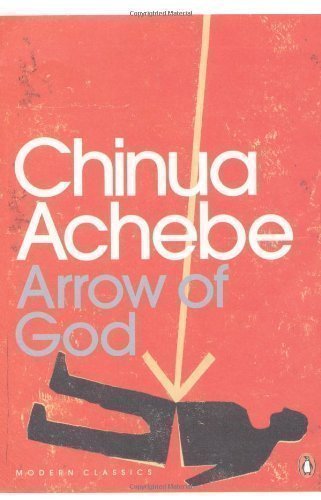
of Arrow of God, let us end by elaborating
more empirically on the lived Igbo Abame-upheavals
of 29 May 1966-12 January 1970 because this is precisely the outcome the
philosopher-priest has sought to prevent in Umuaro and what Obierika, hitherto,
had saved Umuofia from. If we recall those poignant words from Ezeulu to Umuaro, cited earlier, “[O]ur fathers have told us that it may even happen to an
unfortunate generation that they are pushed beyond the end of things, and their
back is broken and hung over a fire” (Achebe: 457), it suddenly dawns on us
that these appear to constitute a pre-dated epitaph for the 3.1 million
murdered Igbo in a generation just once or twice removed. As we can see, Chinua
Achebe’s predictive insights, here in Arrow
of God, are shatteringly breathtaking… Undoubtedly, the Nigeria genocide state, beginning on 29 May 1966, becomes
some haematophagous monster let loose on the Igbo and Igboland, slaughtering
away to the hilt … And just in case anyone doubts the endgame of this mission,
three shrilling, chilling proclamations, scripted with unmistakeable
Stheno-precepts of obliterating intent from one of the Gorgons stalking the
land, punctuate the scene as the following shows:
1. The
ghoulish anthem of the genocide, broadcast uninterruptedly on state-owned
Kaduna radio (shortwave transmission) and television and with editorial
comments on the theme, regularly published in both state-owned New
Nigerian (daily) newspaper
and (Hausa) weekly Gaskiya Ta
fi Kwabo during the period, has these lyrics in Hausa:
Mu je mu kashe nyamiri
Mu kashe maza su da yan maza su
Mu chi mata su da yan mata su
Mu kwashe kaya su
(English translation: Let’s go kill the damned
Igbo/Kill off their men and boys/Rape their wives and daughters/Cart off their
property)
2. Benjamin Adekunle,
one of the most notorious of the genocidist commanders in south Igboland, makes the following statement to the media, including foreign
representatives, in an August 1968 press conference: “I want to prevent even
one I[g]bo having even one piece to eat before their capitulation. We shoot at
everything that moves, and when our forces march into the centre of I[g]bo
territory, we shoot at everything, even at things that don’t move” (The
Economist [London], 24 August 1968).
3. Harold
Wilson, prime minister of Britain, the key “centre”-world power that crucially
supports the Igbo genocide militarily, diplomatically and politically right
from conceptualisation to actualisation, is totally unfazed when he informs Clyde
Ferguson (United States State Department special coordinator for relief to
Biafra) that he, Harold Wilson, “would accept half a million dead Biafrans if
that was what it took” the Nigeria genocidists to destroy the Igbo resistance
to the genocide (Roger Morris, Uncertain Greatness: Henry
Kissinger and American Foreign Policy, 1977: 122). For
the record, Wilson’s “a half a million dead Biafrans” represented 4.2 per cent
of the Igbo population then; by the time that that phase of the genocide came
to an end, 6-9 months after Wilson’s wish-declaration, 25 per cent of this
nation’s population or 3.1 million Igbo people had been murdered by the
genocidists. Harold Wilson’s “[W]ould accept a half a million dead
Biafrans”-wish is not a declaration made by some dictator, some leader of a loony
party, a fascist party or anything of that ilk; on the contrary, this is a
declaration made by an elected politician, a politician in an advanced western
democracy – the leader of the British Labour party, a party that prides itself
for having attracted leading thinkers to its ranks in the post-World War II
era. “[W]ould accept a half million dead Biafrans if that was what it
took”-declaration is made by the prime minister of Britain; not the prime
minister of some “peripheral”, inconsequential country but the prime minister
of a “centre” state and power that was part of the victorious alliance that
defeated a fascist global amalgam in a global war that ended barely 23 years
earlier. This is a prime minister of a “centre” state and power, the sixth to occupy
this exalted position since the end of the war, that was one of the key
countries that worked on the panel that drafted the historic 1948 United Nations “Convention on the
Prevention of the Crime of Genocide”, in the wake of the 1930s/1940s deplorable
perpetration of the Jewish genocide in Europe. 6 million Jews were murdered
then by Nazi Germany. It is to ensure that no human beings are ever subjected
to what the Jews went through in central Europe and
elsewhere that this genocide convention is rated as one of the key
international documents of the new age. Britain is a signatory to the convention. A
senior British Foreign Office official, who echoes Harold Wilson’s disposition
to the Igbo slaughter, is no less chilling in their own characterisation of Britain’s
strategic goal. Describing the British response to the concerted international
humanitarian effort to dispatch urgently needed relief material to the
blockaded Igbo, this official notes that the British government position is
designed to “show conspicuous zeal in relief while in fact letting the little
buggers starve out” (Morris: 122). In a courageous and admirable public
admission made in 1970, Colonel Robert Scott broke ranks with his employer, the
British diplomatic mission in Lagos where he worked as military advisor, to
acknowledge, gravely, that as the Nigerian genocidists unleashed their Adekunleist campaigns across Igbo towns and
villages, they were the “best defoliant agent known” (Sunday Telegraph, London, 11 January 1970).
4. In May 1969, Olusegun Obasanjo, who had recently
taken over the command of the Benjamin Adekunle-death squad, orders his air
force to shoot down any Red Cross planes flying in urgently-needed relief
supplies to the millions of surviving but encircled, blockaded and bombarded
Igbo. Within
a week of his infamous order, 5 June 1969, Obasanjo recalls, nostalgically, in
his memoirs, unambiguously titled My Command (1981),
genocidist air force pilot Gbadomosi King “redeem[s] his promise”, as Obasanjo
puts it (Obasanjo, 1981: 79). Gbadomosi King shoots down a clearly marked,
incoming relief-bearing International Committee of the Red Cross (ICRC) DC-7
aircraft near Eket, south Biafra, with
the loss of its 3-person crew. Obasanjo’s perverse satisfaction over the
aftermath of this crime is fiendish, grotesquely revolting. He writes: “The
effect of [this] singular achievement of the Air Force especially on 3 Marine
Commando Division [name of the death squad Obasanjo, who subsequently becomes
head of Nigeria regime
for 11 years, commands] was profound. It raised morale of all service
personnel, especially of the Air Force detachment concerned and the troops they
supported in [my] 3 Marine Commando Division” (79). The consequence of this act
of terror across the world is, of course, the expression of revulsion. What
does Obasanjo do in response? This is hugely revelatory. Olusegun Obasanjo
appeals to Harold Wilson, the British prime minister, as Obasanjo,
himself, scripts in his My Command (165), to “sort out” the raging international outcry generated by the destruction
of the ICRC aircraft. For the Nigerian génocidaires, the fact that, at the end, they
have Britain’s
back is critical in their pursuit of this gruesome campaign.
JUST IN CASE it isn’t quite obvious, Chinua Achebe publishes a sequel to Arrow of God 48 years later. Here in London. It celebrated its second publication
anniversary last week. The
sequel is appropriately called, There was
a Country.
*Paper
presented at the Arrow of God at 50
symposium, Centre for African Studies, School of Oriental and African Studies, University of London/Igbo Conference (symposium conveners: Dr Kwadwo Osei-Nyame Jnr and Dr Louisa Uchum Egbunike),
Saturday 4 October 2014.
Herbert Ekwe-Ekwe is visiting professor in the graduate
programme of constitutional law at Universidade de Fortaleza and specialist on the state and
on genocide and wars in Africa in the post-1966 epoch – beginning with the Igbo
genocide, 29 May 1966-present day, the foundational and most gruesome genocide
of post-(European)conquest Africa, carried out by Nigeria and its suzerain state, Britain. 3.1 million Igbo or 25 per cent of the Igbo population were murdered by the co-genocidists during phases I-III of the genocide, 29 May 1966-12 January 1970, and an additional tally of tens of thousands of Igbo have been murdered by the co-genocidists in phase-IV of the genocide, 13 January 1970-present day.
Select
Bibliography
Achebe,
Chinua. A Man of the People. London: Heinemann, 1966.
Achebe, Chinua.
Morning Yet on Creation Day. London, Heinemann
Education Books, 1975.
Achebe, Chinua.
The Trouble with Nigeria. Enugu: Fourth Dimensions, 1983.
Achebe, Chinua.
Hopes and Impediments. Oxford: Heinemann, 1988.
Achebe, Chinua.
The African Trilogy. London: Pan Books, 1988.
Achebe,
Chinua. Home and Exile. Oxford: Oxford
University, 2000.
Achebe, Chinua.
There was a Country. London: Penguin, 2012.
Afigbo, AE. The Warrant Chiefs. Harlow: Longman, 1972.
Afigbo, AE. Ropes of Sand. Oxford: Oxford University, 1981.
Ekwe-Ekwe, Herbert.
“Elections in Africa – the voter,
the court, the outcome”. PENSAR-Revisita de Ciêcias Jurídicas, Vol.
18, Número 3, 2013, pp. 804-836, http://www.unifor.br/images/pdfs/Pensar/v18n3_artigo6.pdf,
accessed 16 September 2014.
Ekwe-Ekwe,
Herbert. “The Achebean Restoration”. Journal of Asian and African Studies, Vol.
48, No. 6, 2013, pp. 698-709.
Ekwe-Ekwe,
Herbert. African Literature in Defence of
History: An essay on Chinua Achebe. Reading
and Dakar:
African Renaissance, 2001.
Ekwe-Ekwe,
Herbert. Readings from Reading:
Essays on African Politics, Genocide, Literature. Reading
and Dakar:
African Renaissance, 2011.
Emenyonu,
Ernest. The Rise of the Igbo Novel. Ibadan: Oxford
University, 1978.
Gikandi,
Simon. Reading Chinua Achebe. London: James Currey,
1991.
Innes,
CL. Chinua Achebe. Cambridge:
Cambridge University, 1990.
Ihekweazu,
Edith, ed. Eagle on Iroko. Ibadan: Heinemann
Educational Books, 1991.
JanMohamed,
Abdul. Manichean Aesthetics. Amherst: University
of Massachusetts, 1983.
Larson,
Charles. The Emergence of African
Literature, London and Basingstoke:
Macmillan, 1978.
Moore,
Carlos. “Conversation with Cheikh Anta Diop”. Présence Africaine, Nos 3/4, 1993.
Morris, Roger. Uncertain Greatness: Henry Kissinger and American Foreign Policy. London: HarperCollins, 1977.
Mudimbe, Valentine. “Reading There was a Country”. Journal of Asian and African Studies, Vol. 48, No. 6, 2013, pp. 671-682.
Ngara,
Emmanuel. Stylistic Criticism and the
African Novel. London:
Heinemann Educational Books, 1982.
Ngara,
Emmanuel. Art and Ideology in the African
Novel. London:
Heinemann Educational Books, 1985.
Nwoga,
Donatus. The Supreme God as Stranger in
Igbo Religious Thought. Ekwereazu: Hawk, 1984.
Obiechina,
Emmanuel. Culture, Tradition and Soceity
in the West African Novel. Cambridge: Cambridge University, 1975.
Omotoso, Kole. Achebe or Soyinka?. London: Hans Zell, 1996
Palmer,
Eustace. The Growth of the African Novel.
London:
Heinemann, 1979.
Priebe,
Richard. Myth, Realism and the West
African Writer. Trenton:
African World, 1988.
Ravenscroft,
Arthur. Chinua Achebe. Harlow: Longmans, Green,
1969.
Shatto,
Gakwandi. The Novel and the Contemporary
Experience in Africa. London:
Heinemann Educational Books, 1977.
Sunday Telegraph. London, 11 January 1970.
Williams,
Chancellor. The Destruction of Black
Civilization. Chicago: Third
World, 1987.
Wren,
Robert. Achebe’s World. Harlow: Longman, 1990.
Twitter @HerbertEkweEkwe