Showing posts with label NYAQ. Show all posts

Wednesday, 24 January 2018

Britain and the Igbo genocide – this annihilative mission, 29 May 1966-24 January 2018

(Harold Wilson: “would accept half a million dead Biafrans if that was what it took...”)
Herbert Ekwe-Ekwe

BRITISH SUPPORT FOR the perpetration of the Igbo genocide, this foundational genocide of post-(European)conquest Africa, 29 May 1966-Present Day, is driven principally by one factor: to “punish” Igbo people for playing the vanguard role in the mid 1930s-October 1960 movement to terminate 100 years of Britain’s conquest and occupation of the constellation of states and peoples of this southwestcentral region of Africa that it calls Nigeria. At the apogee of the genocide, 1968/1969, British Prime Minister Harold Wilson is adamant: “[I] would accept a half million dead Biafrans if that was what it took”  Nigeria to destroy the Igbo resistance to the genocide (Roger MorrisUncertain Greatness: Henry Kissinger and American Foreign Policy, London & New York: Quartet Books, 1977, p. 122).

HAROLD WILSON probably had the perverted satisfaction of having his Nigerian co-genocidist league of slaughters on the ground in SWC Africa, 3140 miles away from Britain, perform far in excess of their “massa”’s  grim target by murdering 3.1 million Igbo instead – an outcome coldly recounted indeed in Wilson’s own memoirs where he notes that the Nigerian génocidaires, duly led by Hausa-Fulani/islamists trenchantly opposed to the mid 1930s-1960 African peoples restoration-of-independence goal and therefore equipped zealously by Britain, expended more small arms ammunition in its campaign to achieve its annihilative mission in Biafra than the amount used by the British armed forces  “during the whole” of  the Second World War (Harold WilsonLabour Government, 1964-1970: A Personal Record, London: Weidenfeld & Nicolson, 1971, p. 630, emphasis added).
(New York Art Quartet plays “Mohawk”, a composition by Charlie Parker [personnel:  John Tchicai, alto saxophone; Roswell Rudd, trombone; Reggie Workman, bass; Milford Graves, drums; recorded: Nippon Phonogram, New York, US, 16 July 1965]) 
Twitter@HerbertEkweEkwe

Wednesday, 28 June 2017

FOR THE RECORD ... Shocking! Even genocidist Nigeria once envisaged permanent membership of the UN security council as the following commentary in dissidentvoice.org (12 May 2005) shows: “Nigeria does not deserve UN security council seat”


Herbert Ekwe-Ekwe

Nigeria does not deserve UN security council seat 

(originally published in dissidentvoice, 12 May 2005, and is republished here unedited as in the original)

IT NOW APPEARS very likely that Nigeria will, after all, hand over Liberian fugitive leader Charles Taylor (currently in exile in Nigeria) to the Freetown-based UN court investigating war crimes in conflicts in and around Sierra Leone. Thanks to the insistence of the US government, the Obasanjo regime is about to send Taylor to the Freetown court despite its long-held position to the contrary. The regime has until recently argued that it was against its “national honour” (whatever that means) to respond positively to the court’s request to extradite Taylor to face trial for overseeing the slaughter of 1.3 million Africans in the west central states of Liberia, Sierra Leone and southern Guinea while he was president of Liberia.

The irony is of course not lost on any keen observer of this development. Whatever may be the US’s strategic interests on this subject (possible Taylor links with al-Qaida, possible Taylor involvement in millions of dollars worth of money laundering, possible Taylor complicity in the January 2005 attempted coup in Conakry to remove the pro-American Guinean president), it has taken the intervention of a non-African power to force a disreputable African leadership to hand over the head of a fellow murderous African leadership to face trial for the murder of 1.3 million Africans – not 1.3 million non-Africans. African democrats are surely unencumbered by this irony. African leaderships have murdered 15 million Africans across the continent in the past 40 years in appalling spates of genocide. Even if the devil itself were to lecture African leaderships to stop murdering their peoples and, in the process, help prevent just one more African being annihilated by their depraved overlords, that would be readily welcome. African populations are under siege by brutal regimes replete across Africa. The peoples require unremitting support for their right to safeguard their lives and progress from wherever in the world. Not less.

If indeed the US administration has threatened to block Nigeria’s current so-called “bid” for a permanent seat on a possibly enlarged UN Security Council, if it continues to keep Taylor away from facing justice, as some press reports indicate, Washington has done very well. But the Americans shouldn’t lift their threat yet, even if Nigeria dispatches Taylor to Freetown. It is breathtakingly obscene for Nigeria to wish to be considered for a permanent seat at the Security Council given the ghastly human rights records of successive Nigerian regimes in the past 40 years including the current one where statecraft at best is run as some medieval baronial fiefdom. The US and the rest of the world should reject this “bid” out of hand. Not to do that would be to send the wrong signal to Africa – by rewarding a band of genocidist operatives who have the blood of Africans on their hands, and who have in tandem pillaged an economy whose resources alone could easily have transformed the entire continent.

Pestilence                 

IT MUSTN’T be forgotten that Nigeria inaugurated the current African “Age of Pestilence” when its leadership in 1966 embarked on the premeditated massacres of its Igbo population during a stretch of five months. One hundred thousand Igbo were killed during what emerged as the first phase of this genocide. The following year, the leadership expanded the territorial reach of this campaign into Igboland itself for the second phase. Three million Igbo, or one-quarter of the nation’s population then, were annihilated within 30 months. Most of Africa stood by and watched, hardly critical or condemnatory of this wanton destruction of human lives and the sacking and plundering of community after community. As the perpetrators appeared to have got off free from any forms of sanctions from Africa (and the rest of the world) for what were clearly crimes against humanity, several leaderships elsewhere in Africa were “convinced” of the lessons that they had drawn from the escapades of their Nigerian counterpart: “We can murder our peoples at will. There will be no sanctions from abroad”. As a result, the killing fields of the age stretched inexorably beyond the Nigerian frontiers: Liberia, Sierra Leone, southern Guinea, Guinea-Bissau, Ethiopia, Uganda, Zaïre/Democratic Republic of Congo, Republic of Congo, Rwanda, Burundi, Sudan.

In the past 40 years, Nigeria has been run by a succession of genocidist generals and other operatives (military and civilian alike) who planned, executed and sustained the Igbo genocide. The current head of state, Olusegun Obasanjo, commanded a notorious division in southern Igboland that committed indescribable atrocities as it overran cities, towns and villages. Neither he (who has been head of state for a total of nine years during the period) nor any of his colleagues (most of whom are still alive) has apologized or shown remorse for their crimes against humanity. On the contrary. In fact Yakubu Gowon, who was head of state and grand overseer of the genocide, only recently told the press in Enugu (political and cultural capital of Igboland) that he had “nothing to apologize” to the Igbo.

BEFORE he shot himself in a Berlin bunker in 1945, few would have expected Adolf Hitler to apologize or show remorse for his organized genocide of six million Jews across Europe during the Second World War. Hardly anyone, though, would wish to contemplate a Hitler traveling to Jerusalem today to address a press conference in which he would insist categorically: “I have nothing to apologize for the six million Jews my forces annihilated between 1939 and 1945. What I did was right”. That would be unimaginable monstrosity. But this was precisely what Gowon did at Enugu a fortnight ago.

Nigeria’s “bid” to join the Security Council could not have provided the world with a better opportunity to deal with the crux of contemporary Africa’s malaise: the non-accountability of African leaderships who employ genocide and mass murder as a twin-track instrument of power. No country in Africa is more appropriate for the world to enforce this accountability than where the disease emerged in the first place on the continent – Nigeria, the quintessentially failed and genocide-state.

NOW is the time for the US and the world to insist that each and every member of the Nigerian leaderships who participated in the murder of three million Africans 40 years ago, and who in effect triggered off the chain of mass killings of 12 million others elsewhere in the continent must be made to account for their action. Besides, if Nigeria is ultimately forced to hand over Taylor to face trial for the murder of 1.3 million Africans in the 1980s-1990s, then his current hosts (Obasanjo, Abubakar, Babangida, Buhari, Gowon, Danjuma and many many others) must also be apprehended for the murder of 3.1 million Africans in the 1960s-1970s.
(New York Art Quartet plays “Mohawk”, a composition by Charlie Parker [personnel:  John Tchicai, alto saxophone; Roswell Rudd, trombone; Reggie Workman, bass; Milford Graves, drums; recorded: Nippon Phonogram, New York, US, 16 July 1965]) 
Twitter@HerbertEkweEkwe
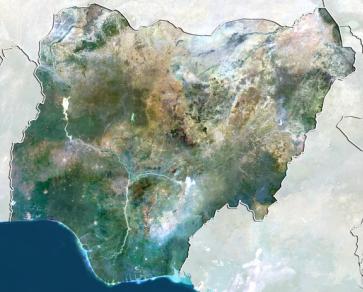
Tuesday, 24 January 2017

Britain and the Igbo genocide – this annihilative mission, 29 May 1966-24 January 2017

(Harold Wilson: “would accept half a million dead Biafrans if that was what it took...”)
Herbert Ekwe-Ekwe

BRITISH SUPPORT FOR the perpetration of the Igbo genocide, this foundational genocide of post-(European)conquest Africa, 29 May 1966-Present Day, is driven principally by one factor: to “punish” Igbo people for playing the vanguard role in the mid 1930s-October 1960 to terminate 100 years of Britain’s conquest and occupation of the constellation of states and peoples of this southwestcentral region of Africa that it calls Nigeria. At the apogee of the genocide, 1968/1969, British Prime Minister Harold Wilson is adamant: “[I] would accept a half million dead Biafrans if that was what it took”  Nigeria to destroy the Igbo resistance to the genocide (Roger MorrisUncertain Greatness: Henry Kissinger and American Foreign Policy, 1977: 122).

Harold Wilson probably had the perverted satisfaction of having his Nigerian genocidist subalterns on the ground in SWC Africa, 3140 miles away from Britain,  perform far in excess of their “massa”’s  grim target by murdering 3.1 million Igbo instead – an outcome coldly recounted in Wilson’s own memoirs where he notes that the Nigerian génocidaires, equipped zealously by Britain, expended more small arms ammunition in its campaign to achieve its annihilative mission in Biafra than the amount used by the British armed forces  “during the whole” of  the Second World War (Harold WilsonLabour Government, 1964-1970: A Personal Record, 1971: 630, added emphasis).
(New York Art Quartet plays “Mohawk”, a composition by Charlie Parker [personnel:  John Tchicai, alto saxophone; Roswell Rudd, trombone; Reggie Workman, bass; Milford Graves, drums; recorded: Nippon Phonogram, New York, US, 16 July 1965]) 
Twitter@HerbertEkweEkwe

Wednesday, 28 September 2011

Nigeria does indeed belong to a “G”!

(This commentary was first published on Thursday 16 April 2009 and is reissued here, unedited, in this season of intense reflections on the Igbo genocide, 29 May 1966-12 January 1970)

Herbert Ekwe-Ekwe

UNTIL A FORTNIGHT ago, 43 years to the day since the beginning of the Igbo genocide perpetrated by Nigeria and its allies, no head of regime in power in Nigeria had ever admitted, albeit unwittingly, the utter worthlessness of Nigeria in the pecking order of the countries of the world. On Nigeria’s non-invitation to the April 2009 G-20 London economic summit, regime head Umaru Yar’Adua notes mournfully: “Today is a sad day for Nigeria as a country. This is because we are not invited to a meeting of the 20 world leaders. We have the population, we have the resources and we have the potential”. Predictably, Yar’Adua refers to those hackneyed, bogus indices (“population”, “resources”, “potential”) that everyone knows obfuscate the immanent fragility, infamy and hopelessness that chart the Nigeria quagmire. In response to Yar’Adua’s pain, Kevin Ani, a commentator from the Nsibidi Press civil rights group, notes: “Even if one extends (sic) this list to G-1000, Nigeria still will not make it”.

It cannot be overstated that the Igbo genocide put paid to any Nigeria pretensions to transform itself to a serious state of global contention. Nigeria, which the Igbo had strategically led to liberate from 60 years of British occupation, collapsed, irremediably, in May 1966. This was when its troops, police, students, teachers, civil servants, community leaders, clergy, alimajiri and the like in north Nigeria planned and descended on Igbo children, women and men domiciled in the region – killing, raping, maiming, looting, destroying … A total of 100,000 Igbo were murdered between May and October (1966) in this first phase of the worst genocide in Africa since the 1900s. The Nigerians later expanded their murdering zones of operation to liquidate the Igbo by attacking the entire stretch of Igboland (from Issele-Ukwu, Agbo, Anioma, Ugwuta and Onicha in the west to Ehuugbo, Aba and Umuahia to the east; from Nsukka and Eha Amuufu in the north to Igwe Ocha/Port Harcourt, Umu Ubani/Bonny and Igwe Nga/Opobo to the south) between July 1967-January 1970. A total of 3 million Igbo were murdered during this third phase. Altogether, the Igbo lost one-quarter of their population as a result of the genocide.

On the morrow of this pulverising season of murdering, the only tangible capability that the murderers had acquired was one to commit even more murders – nothing else … definitely, not the more challenging capacity to develop and transform an economy to, in turn, attract and merit the accolades and recognitions from peers elsewhere. The tragedy of the otherwise farcical so-called “rebranding” of the Nigeria state, this Malebolge, is that the current “quest” is supposedly overseen by an Igbo academic (Dora Akunyili) who presumably is unaware of the catastrophic history of her people in Nigeria or is probably biding her time to tell her employers the blunt truth of Nigeria’s inexorable cascade into irrelevance.

Group-G

Yet contrary to Yar’Adua’s angst over Nigeria’s non-membership of the G-20, Nigeria actually belongs to a “G-” grouping. It is called Group-G and Yar’Adua must know that not only does his country belong to this outfit but it also heads it as its undisputed supremo presently.

IN THIS club, the “G” stands for the beginning of that dreadful word which Nigeria has at once operationalised and institutionalised as the legacy of its vicious existence and has since exported across contemporary Africa – Genocide.
(New York Art Quartet“Mohawk” [personnel: John Tchicai, alto saxophone; Roswell Rudd, trombone; Reggie Workman, bass; Milford Graves, drums; recorded: Nippon Phonogram, New York, US, 16 July 1965]) 
Twitter@HerbertEkweEkwe